Faster and more precise picking
The warehouse worker receives a picking list on a scanner or phone. Every location and barcode is confirmed by a scan.
We digitalize warehouses, picking, transport and returns. Lightweight WMS solutions, transport planners, mobile applications for drivers and warehouse staff — without heavy implementations.

The warehouse worker receives a picking list on a scanner or phone. Every location and barcode is confirmed by a scan.
Every receipt, issue and transfer updates the stock instantly. The end of monthly stocktakes.
A visual transport planner — automatic route calculation, order consolidation, minimizing empty runs.
The customer reports a return via a form, the system generates a label, the warehouse receives it, the complaints department decides — all in a single tool.
Goods receipt note with barcode, warehouse location, inbound quality control.
Optimal sequence, scan verification, packing list with documents.
Drag & drop routes, order consolidation, real-time execution control.
Return workflow from the customer’s request to a decision on complaint or resale.
Cyclical stocktakes of warehouse sections — without stopping operations.
Each module describes one process from input to output — with screens, the flow and the roles that work on it.
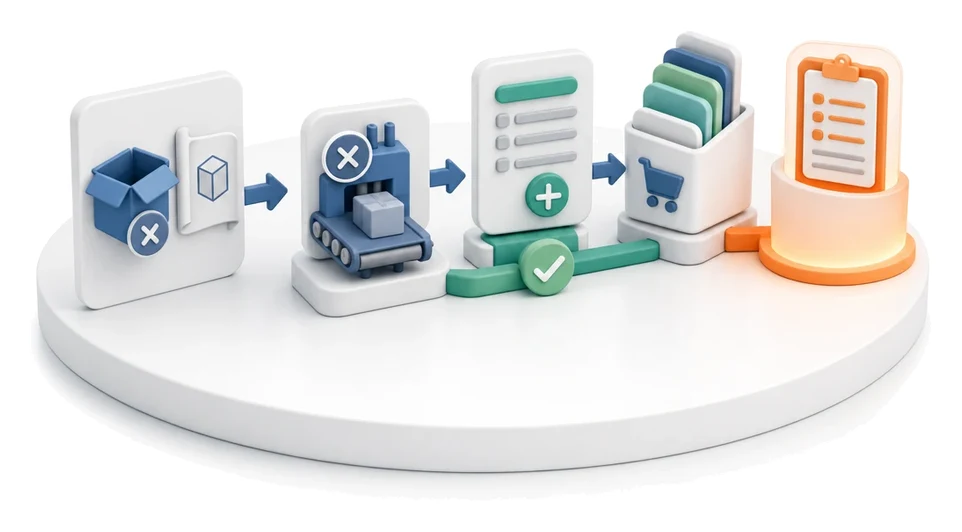
Does production sometimes stop because materials for a project suddenly run out? The Purchasing module lets production or the warehouse raise material requisitions fast and organizes them into a clear queue for buyers. AI algorithms continuously analyze order statuses and assortment shortages to help keep your processes running smoothly.
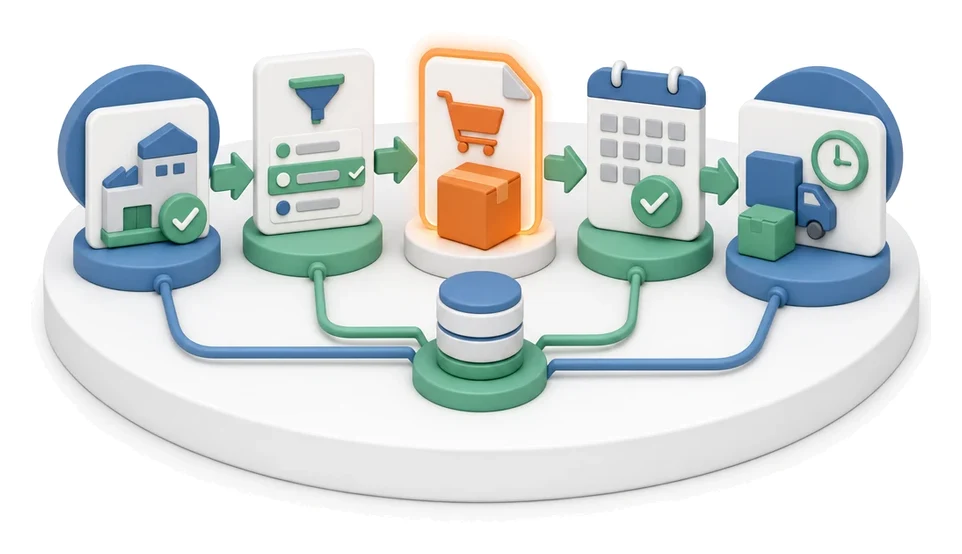
Losing control over delivery dates and material shortages on the shop floor? The Purchasing module lets you manage purchase orders, supplier master data and project demand in one place. Artificial intelligence analyses stock levels and automatically suggests the best time to place an order with a selected supplier.
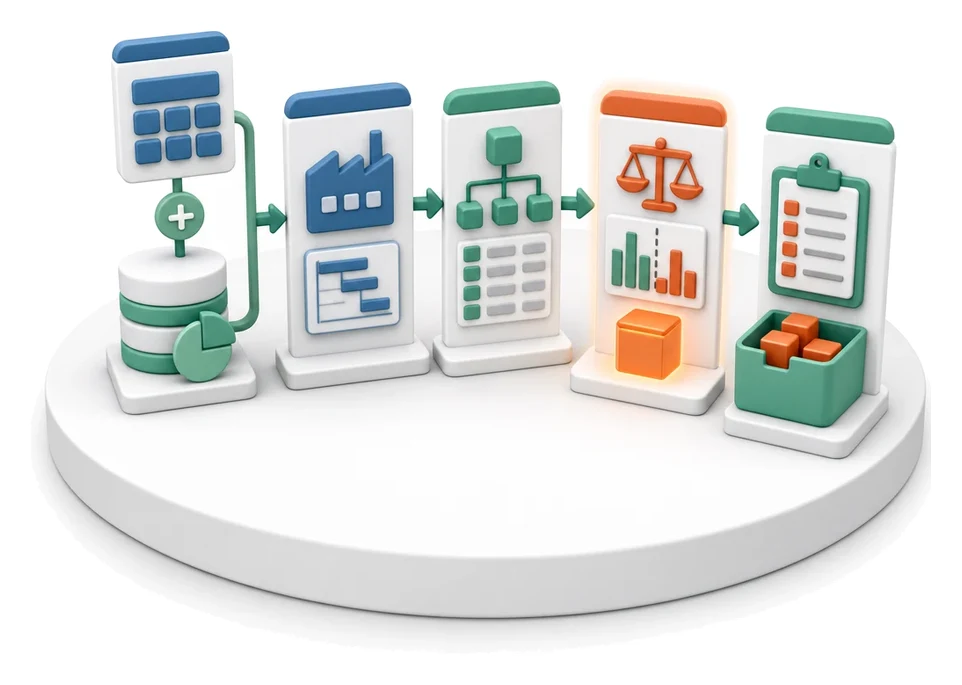
Missing materials at a critical production moment while the warehouse is overflowing with unnecessary stock? The Warehouse module matches the production plan with current inventory and BOM recipes, generating an accurate shortage list for purchasing. Built-in AI algorithms automatically calculate minimum stock levels based on historical movements and demand.
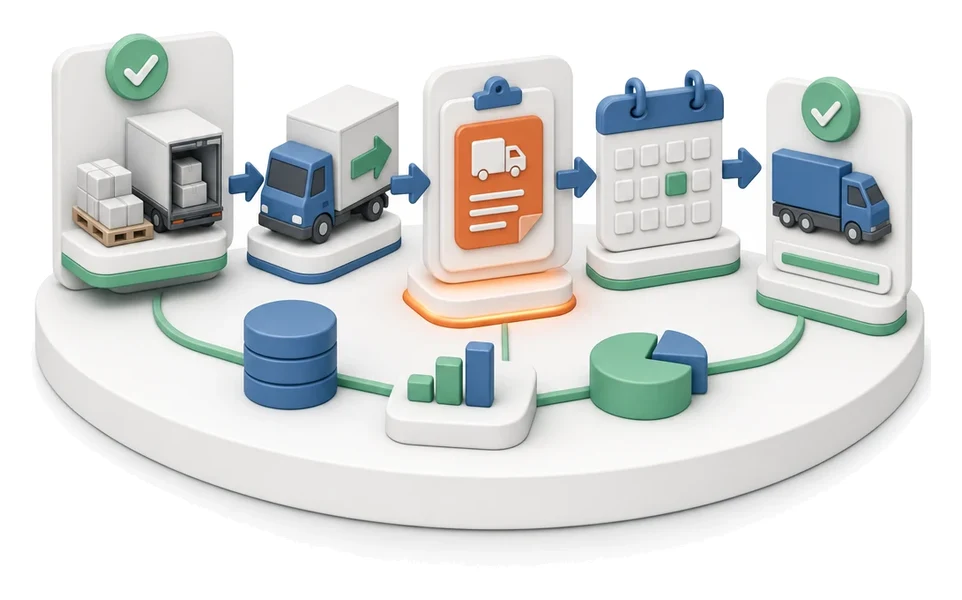
Wasting time manually matching carriers and tracking departure dates? The Transport module lets you comprehensively manage transport orders, fleet and request exchange in one place. AI analyses transport costs and supports choosing the most profitable carrier proposals.
Everything worth knowing before starting digitalization in your industry.
A free consultation: we will show you similar implementations and estimate the ROI for your warehouse.
Book a free consultation