How to Eliminate Paper from the Shop Floor and Automate Piecework Payroll
See it on video
A step-by-step walk through the module — the same screens this write-up describes.
What is in the recording
- 0:00No more paper on the production shop floor
- 0:05Real-time order and status overview
- 0:20Managing communication and contract changes
- 0:35Generating labels and barcodes
- 0:52Operation scanning by shop floor employees
- 1:53Automated piecework wage calculation
- 2:39Regain control over production
The Challenge
Replacing paper work cards with barcode scanners completely eliminates shop floor errors and automates the tedious calculation of piecework wages.
Before implementation, employees had to manually record completed operations, which led to errors and delays in the flow of information from the shop floor. The payroll department wasted time on tedious, manual recalculation of paper work cards to compute piecework wages at the end of each month.
Key challenges:
- Employees had to manually record completed operations, which led to errors and delays in the flow of information from the shop floor.
- The payroll department wasted time on tedious, manual recalculation of paper work cards to compute piecework wages at the end of each month.
How the deployment ran
A production module was implemented that enables order management and automatic generation of barcode labels. Traditional paper work cards were replaced with digital reporting – employees scan operation codes, and the payroll module automatically converts this data into ready-to-use payroll summaries.
Step by step
The steps taken by the implementation team — from mapping the process to going live.
The existing paper-based document workflow was mapped and the rules for calculating piecework rates were defined.
ProcessApp was then configured to match the company's order specifications, the company's email accounts were connected, and barcode scanners were installed at production workstations.
What works after go-live
What actually works in the system after the deployment — every one of these screens appears in the recording above.
Order overview
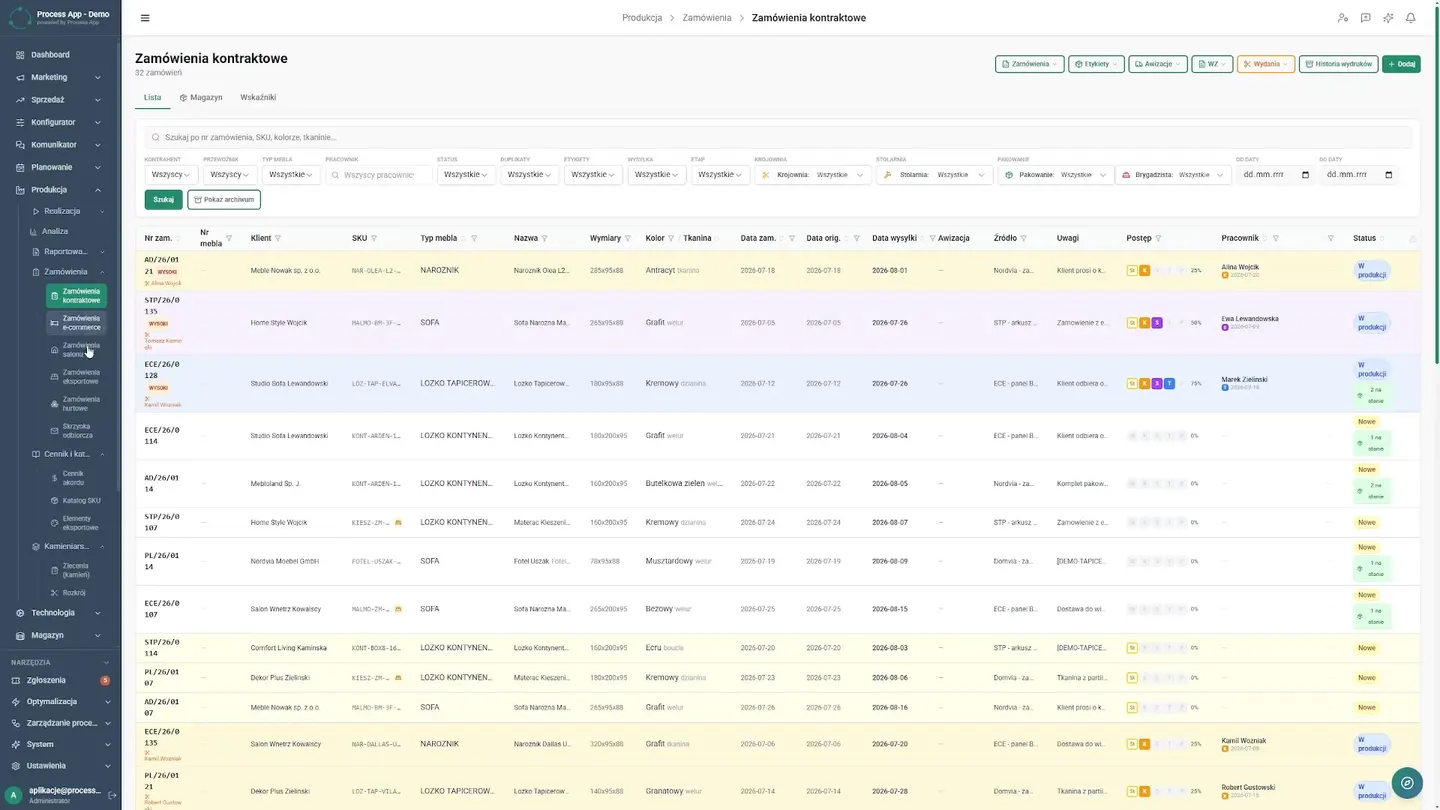
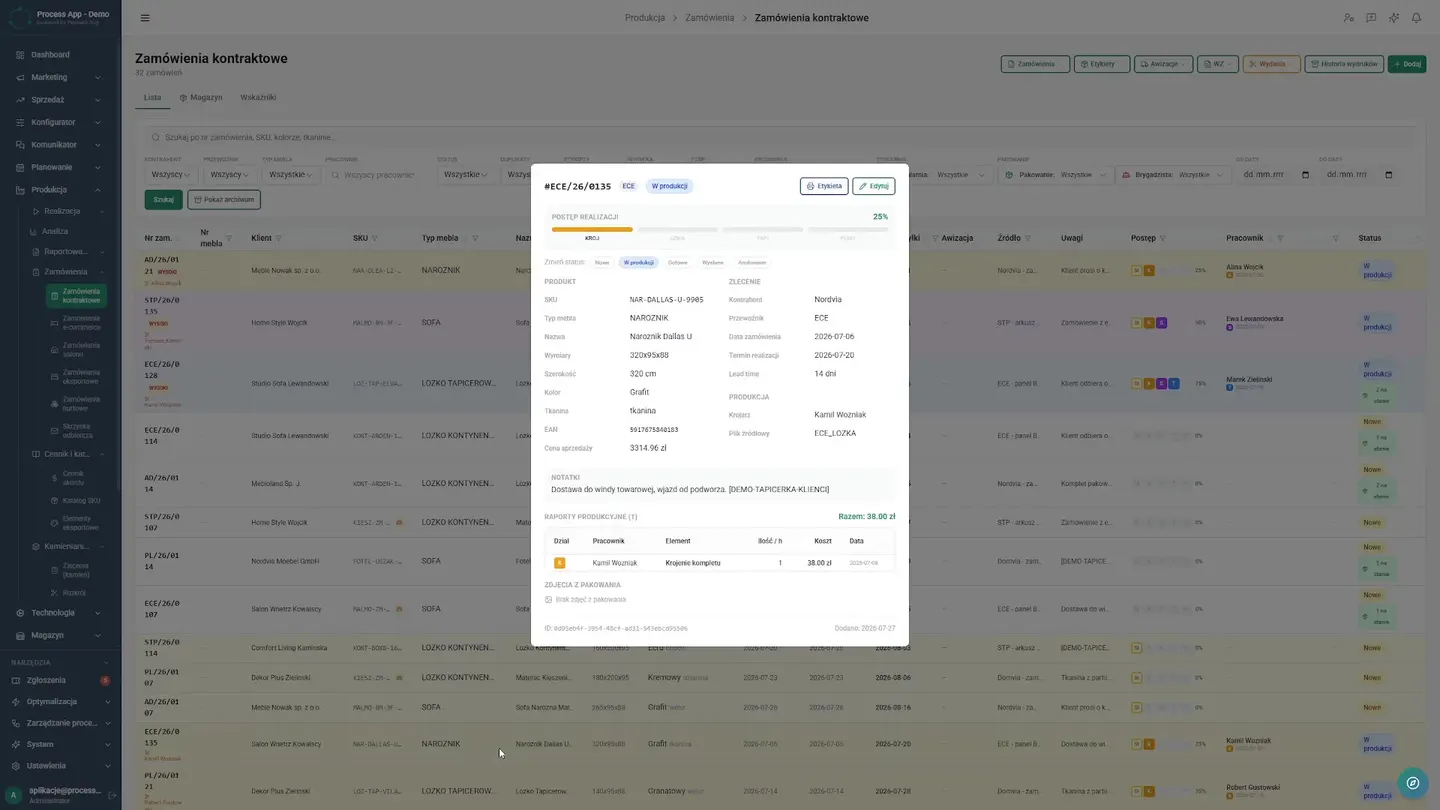
Today, the manager opens the production module and sees all contracts, numbers, clients, deadlines, and statuses in one place, always in real time.
Communication management
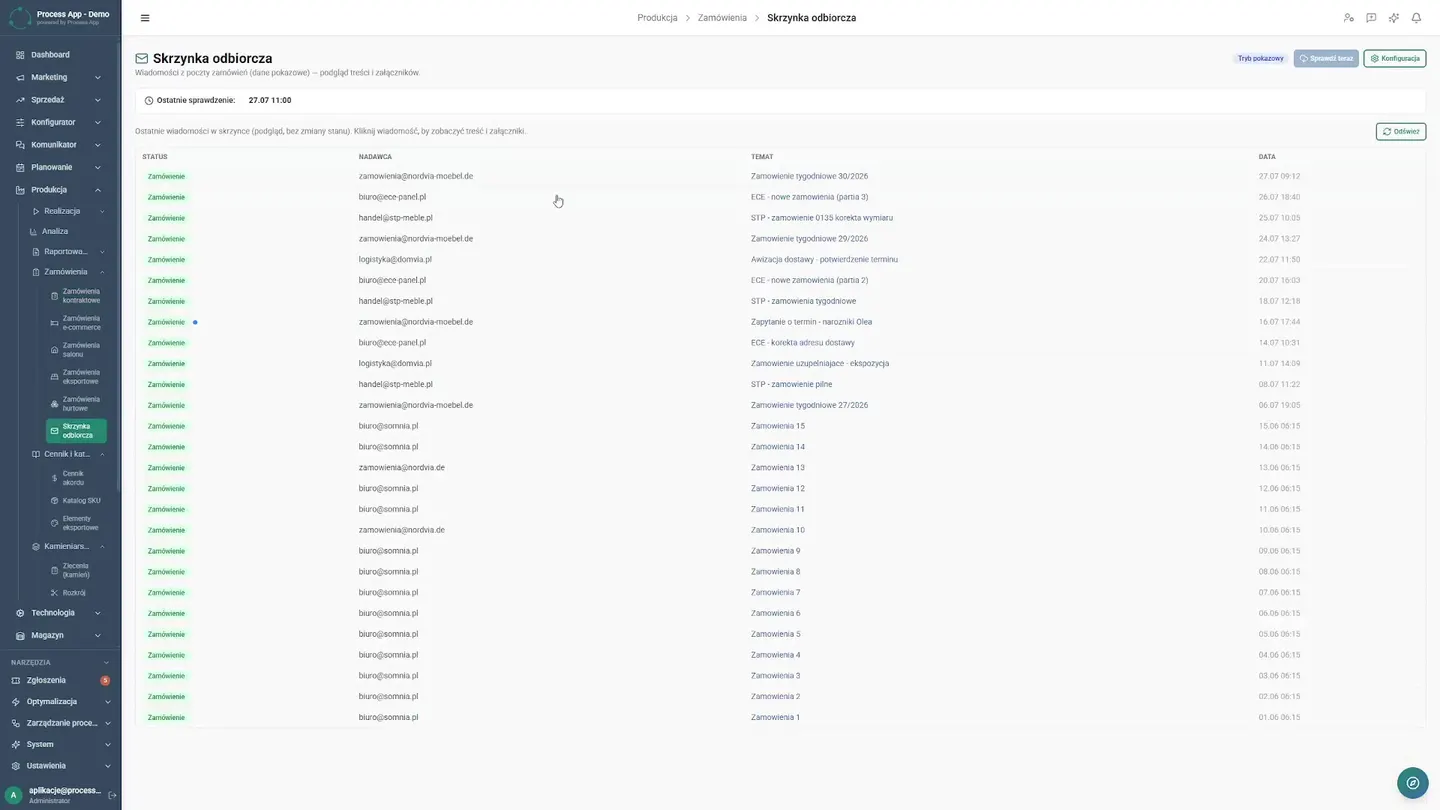
Previously, agreements with clients would get lost in inboxes; today all correspondence goes to an integrated inbox where the team can see changes linked to each order.
Label generation
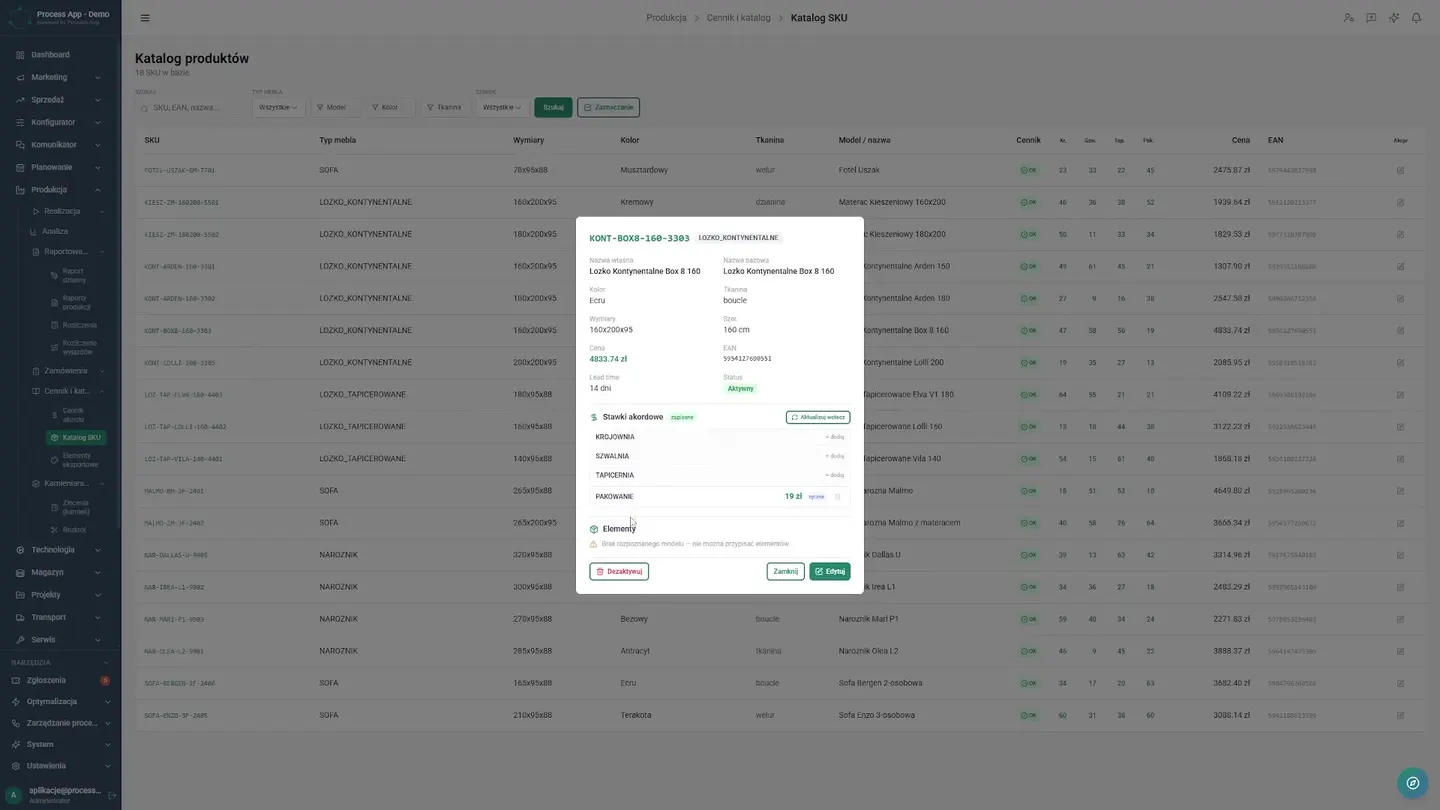
Manual paper work cards have been eliminated; instead, a ready-made barcode label with product data is printed with a single click, replacing the outdated paper-based workflow on the shop floor.
Operation scanning
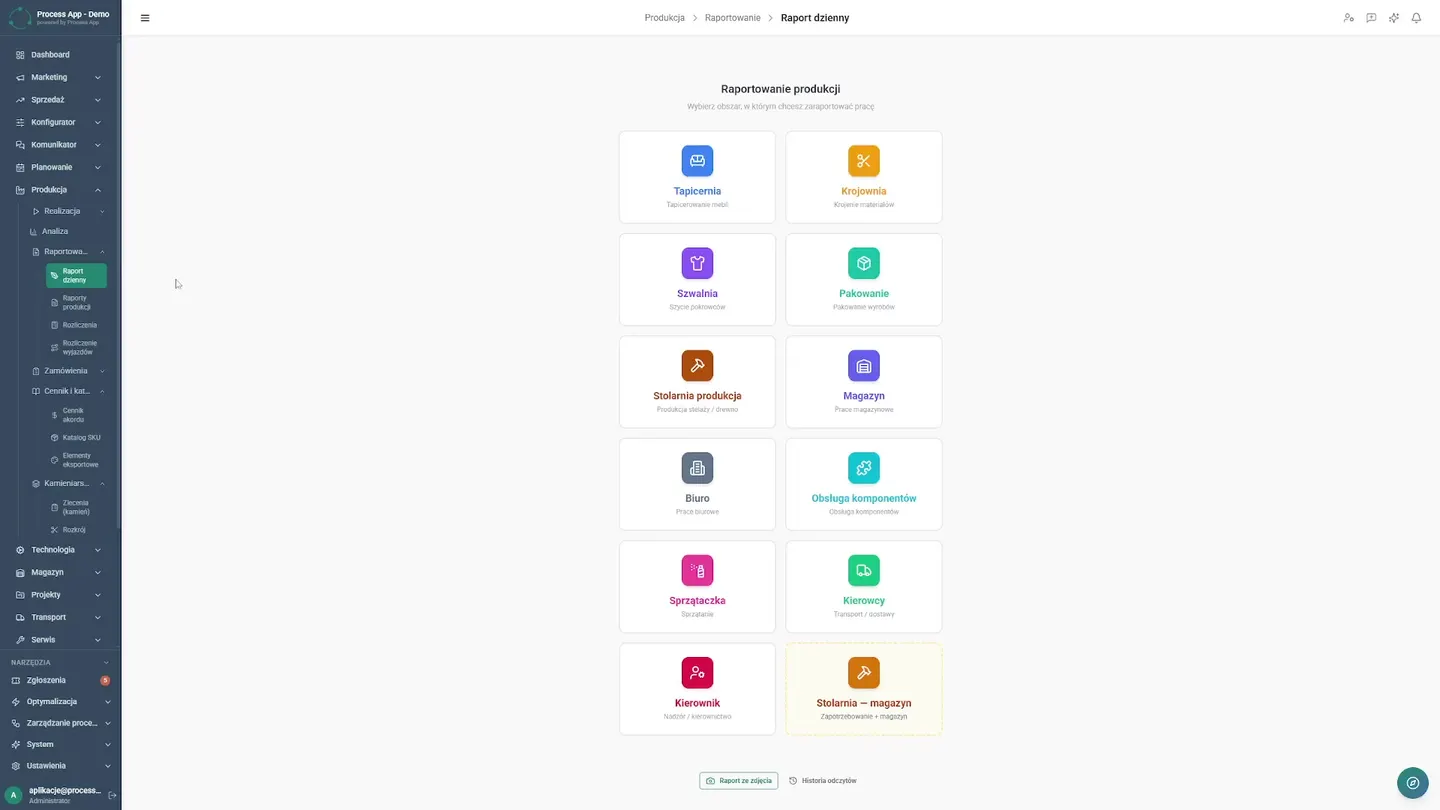
Previously, employees had to stop work to manually record operations on paper cards, which caused errors and delays in the flow of information. Today, in the daily report module, an employee simply selects their name and scans the barcode, and the system automatically adds the entry to the summary, displaying operation details including execution time and the assigned order. There is no longer any room for mistakes or illegible handwriting. The production manager no longer needs to walk out to the shop floor to check the progress of an order; sitting at their desk, they can see who is working on what in real time. This change has eliminated information chaos, giving the company full control over costs.
Automated payroll
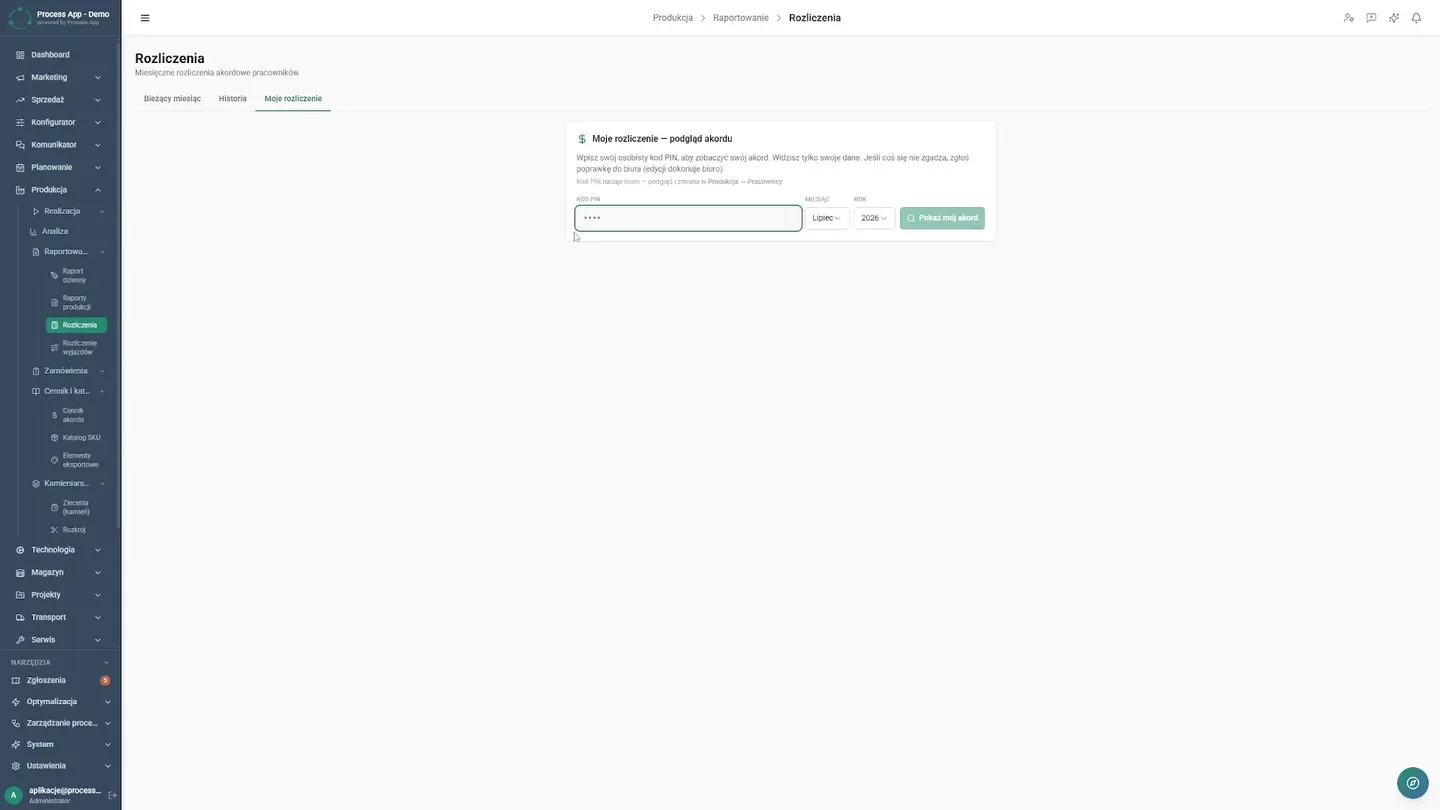
The payroll department feels the greatest relief after the implementation, because previously HR staff wasted time manually recalculating paper work cards to compute piecework wages. Now the payroll module works automatically; clicking on an employee's name displays a detailed settlement based on scanned operations. The system is flexible, allowing easy editing or deletion of entries, which enables quick correction of mistakes. At the end, a clear monthly summary is displayed, and the HR department receives ready, error-free payroll statements, putting an end to the problem of manual piecework calculation.
Results Achieved
What changed
Before the deployment
- Employees had to manually record completed operations, which led to errors and delays in the flow of information from the shop floor.
- The payroll department wasted time on tedious, manual recalculation of paper work cards to compute piecework wages at the end of each month.
After the deployment
- The company has completely eliminated paper reports, gaining real-time visibility into order status and costs.
- The payroll department receives ready, error-free monthly piecework wage summaries, relieving them of the obligation to calculate piecework manually.
Screens from the deployment