How a cabin manufacturer eliminated chaos in production planning
See it on video
A step-by-step walk through the module — the same screens this write-up describes.
What is in the recording
- 0:00Manual plans devour hours
- 0:05A manager's daily reality and the end of chaos
- 0:25All data and specifications in one place
- 0:41One-move planning on the Kanban board
- 1:01Resource analysis and bottleneck elimination
- 1:55Full operational control with Gantt charts
- 2:42The foundation of flexibility and simple configuration
- 2:48Reclaim your time for production management
The Challenge
Replacing scattered spreadsheets with a single visual system gives the team back their time and provides full control over plant efficiency.
Before implementation, production planning relied on scattered spreadsheets, making it impossible to quickly assess machine and employee workloads. Changing the deadline of a single order required manually updating numerous related documents and making phone calls. In addition, technical specifications stored as PDF files were kept separately, extending the time needed to access key order information.
Key challenges:
- Production planning relied on scattered spreadsheets, making it impossible to quickly assess machine and employee workloads.
- Changing the deadline of a single order required manually updating numerous related documents and making phone calls.
- In addition, technical specifications stored as PDF files were kept separately, extending the time needed to access key order information.
How the deployment ran
A ProcessApp system was deployed with a production planning module that fully replaced the existing files. An interactive Kanban board was launched for order forecasting, along with Gantt charts for operational task management using drag-and-drop. A resource load analysis module was also activated, providing live visualization of individual department availability on charts.
Step by step
The steps taken by the implementation team — from mapping the process to going live.
The implementation team mapped the company's production processes, with particular attention to the specific workflows of the welding and assembly departments.
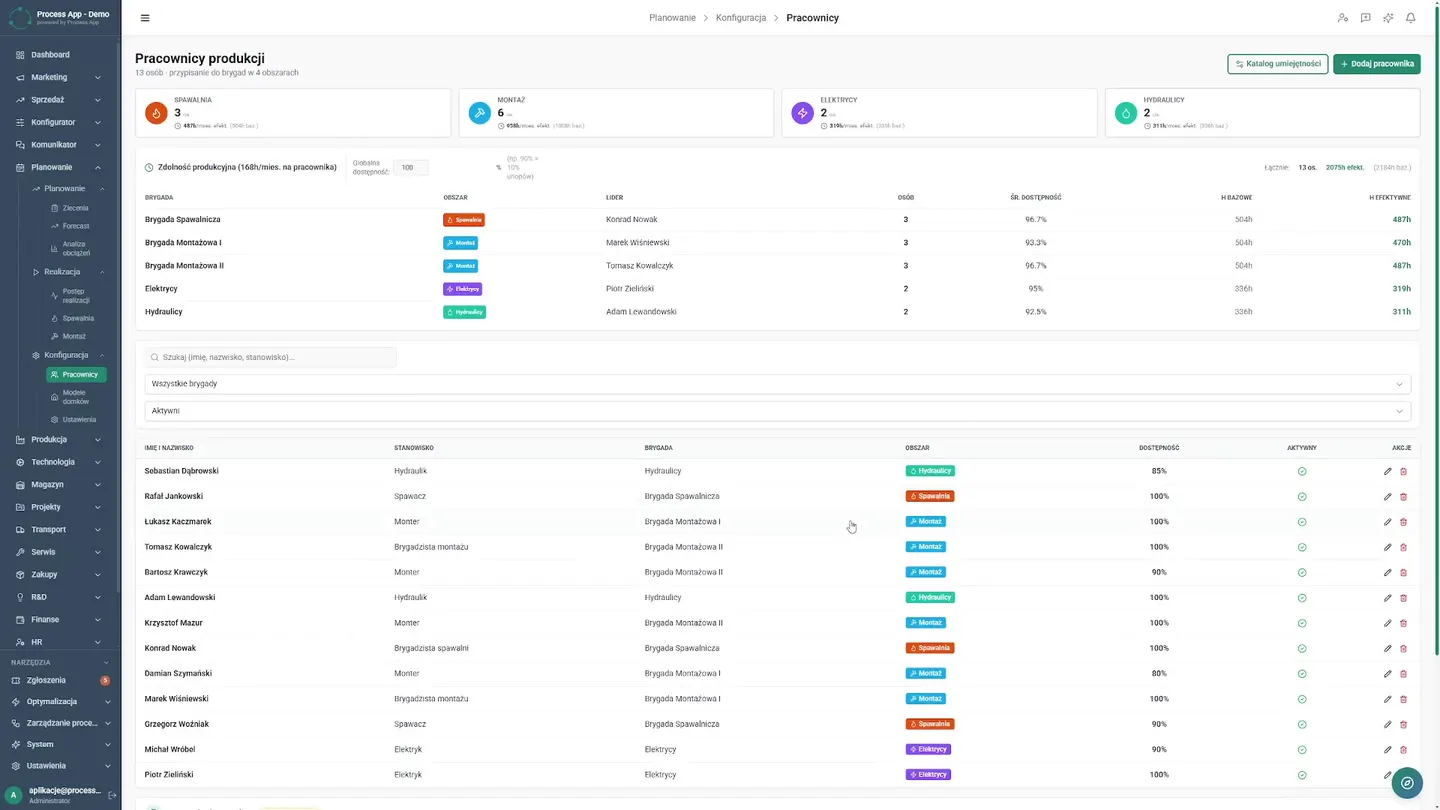
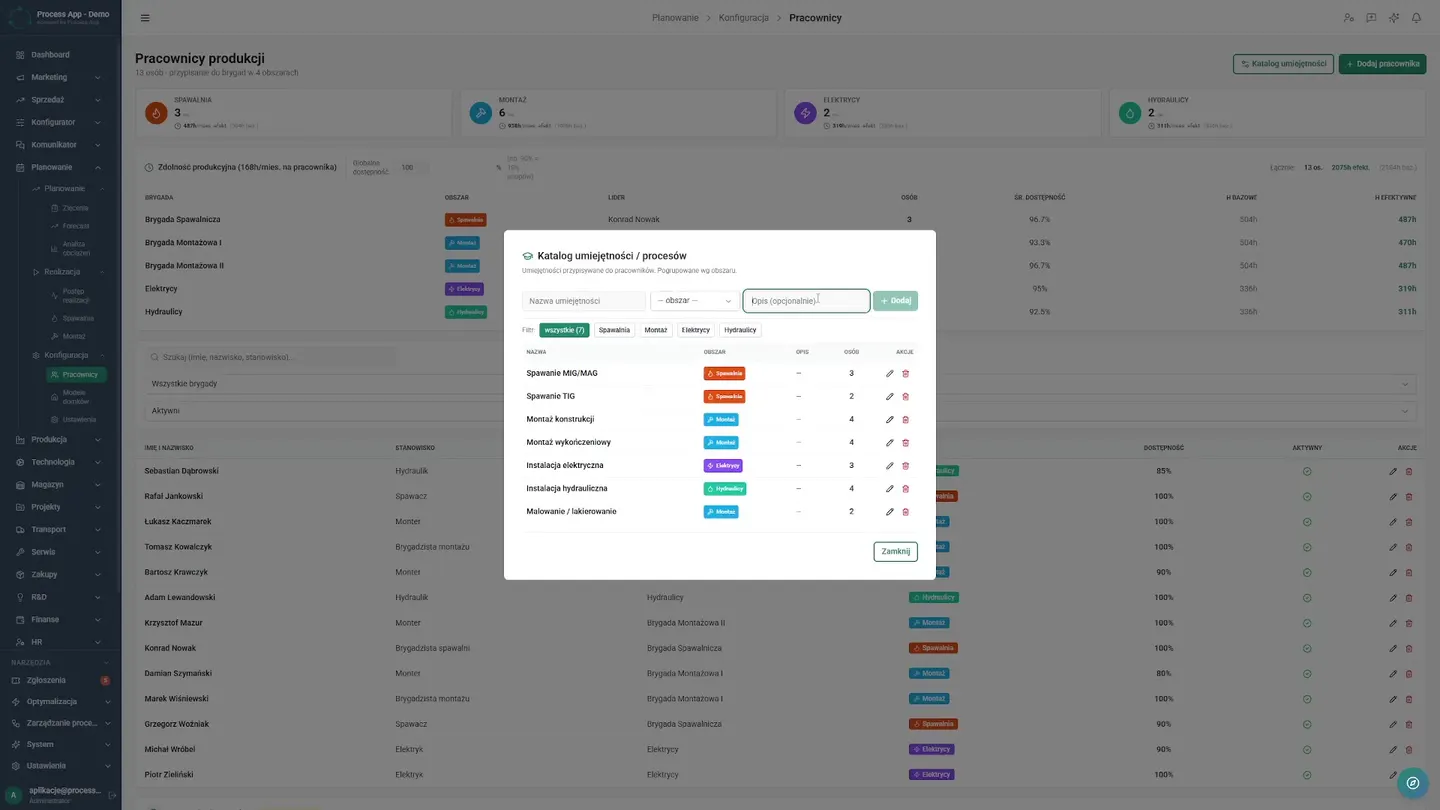
Employee profiles, their skills, and the parameters of the cabin models being produced were then configured in the system.
Finally, the order database along with all attachments was migrated into a single, centralized environment.
What works after go-live
What actually works in the system after the deployment — every one of these screens appears in the recording above.
Dashboard and start of the day
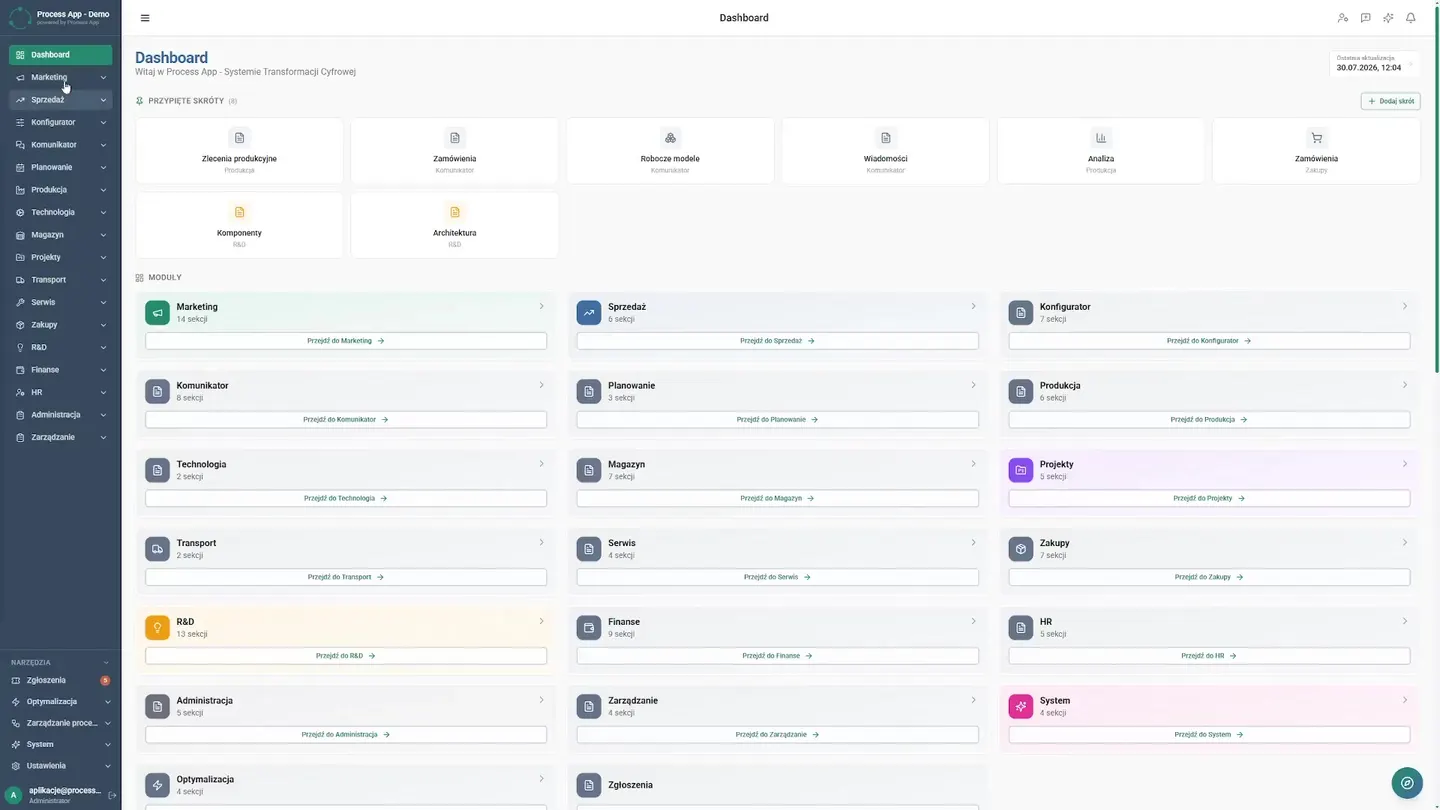
In the past, gathering data from the shop floor required dozens of phone calls. Today, the manager starts the day with a single, clear dashboard. The planning module immediately displays key metrics: the current number of orders, statuses, and material requirements. Instead of hunting for information across different departments, the team has a complete picture of the situation within seconds.
Competency mapping
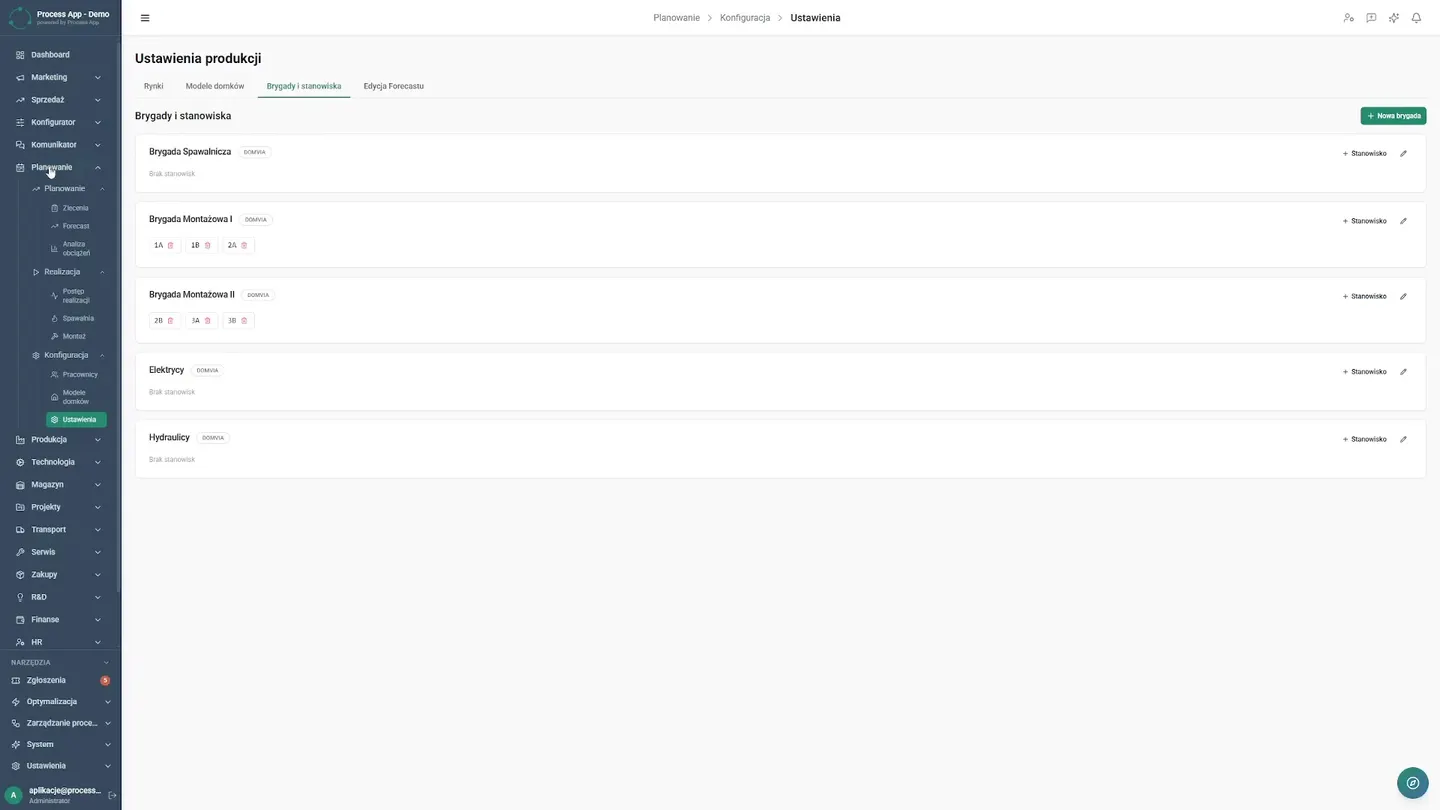
The foundation of the change became a digital database of employees, their skills, and the parameters of the cabins being produced.
Order centralization
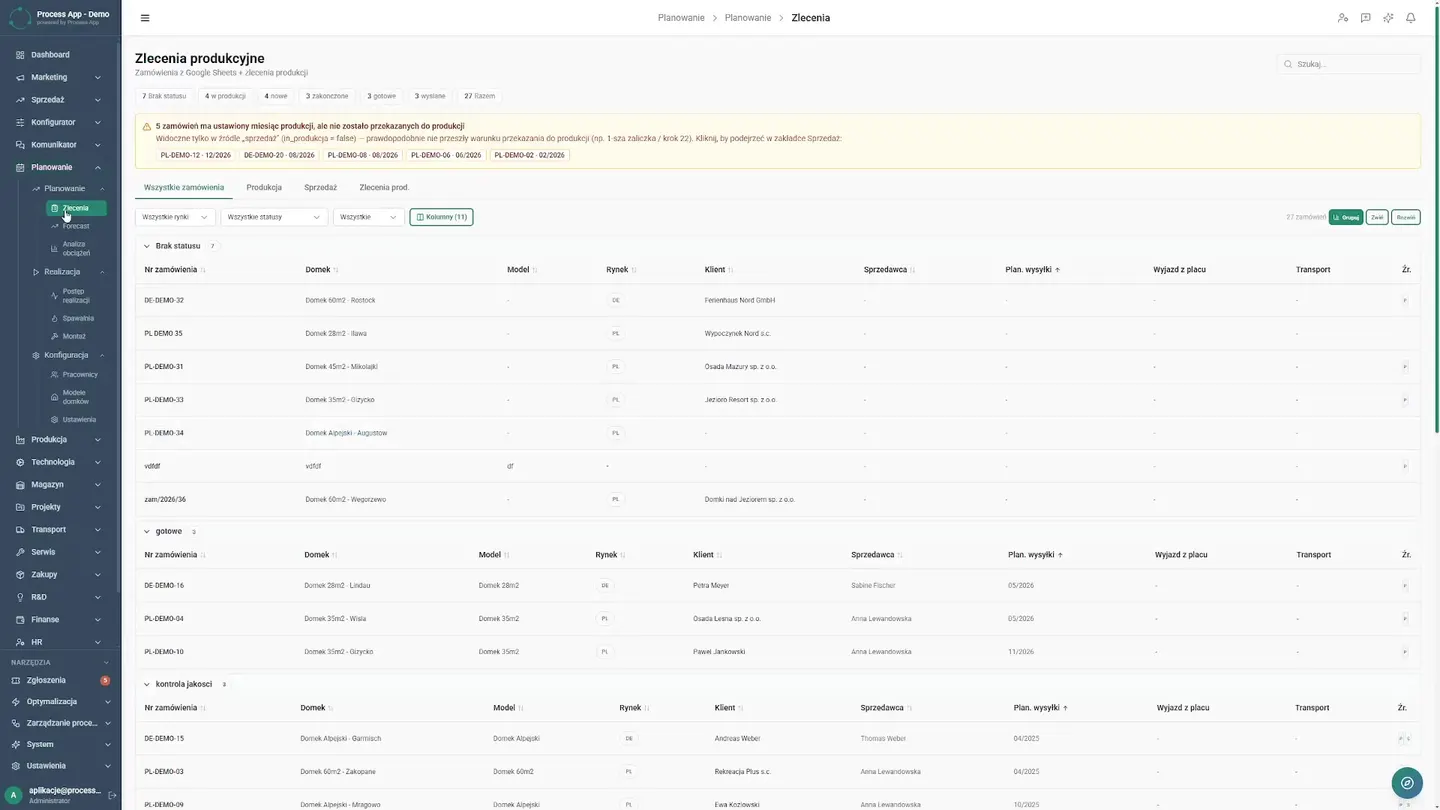
The problem of lost documents and emails is gone. By opening the order details on the list, the planner has everything in a single window. Customer data, current status, and technical specifications in PDF format are always at hand. No more searching through folders.
Kanban forecasting
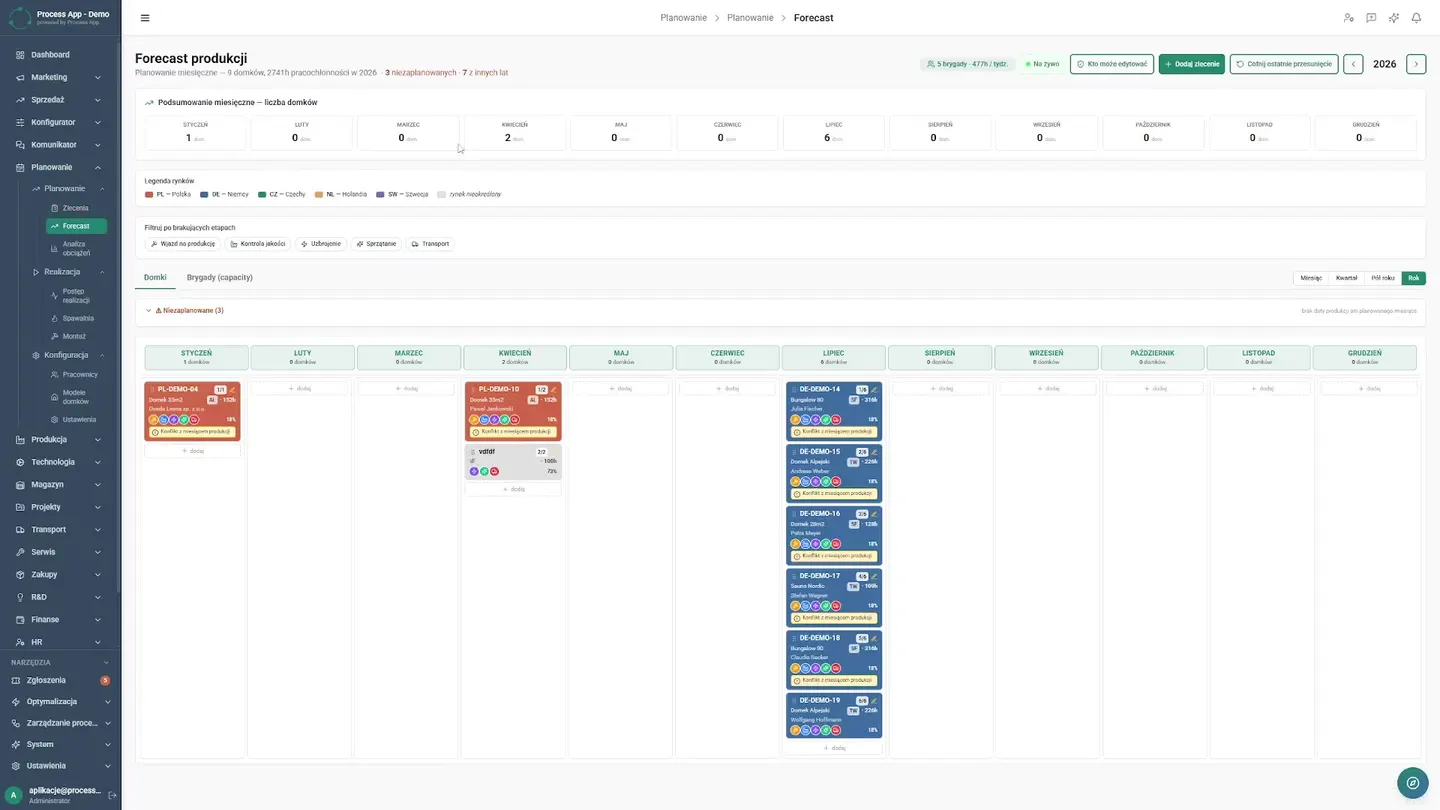
In the past, manually changing a schedule meant tediously rewriting spreadsheets. Now forecasting is smooth work on an interactive Kanban board. The planner simply drags an order card from the unscheduled pool to the appropriate month. A single click lets them preview the details. Planning has become visual, fast, and error-free.
Load analysis
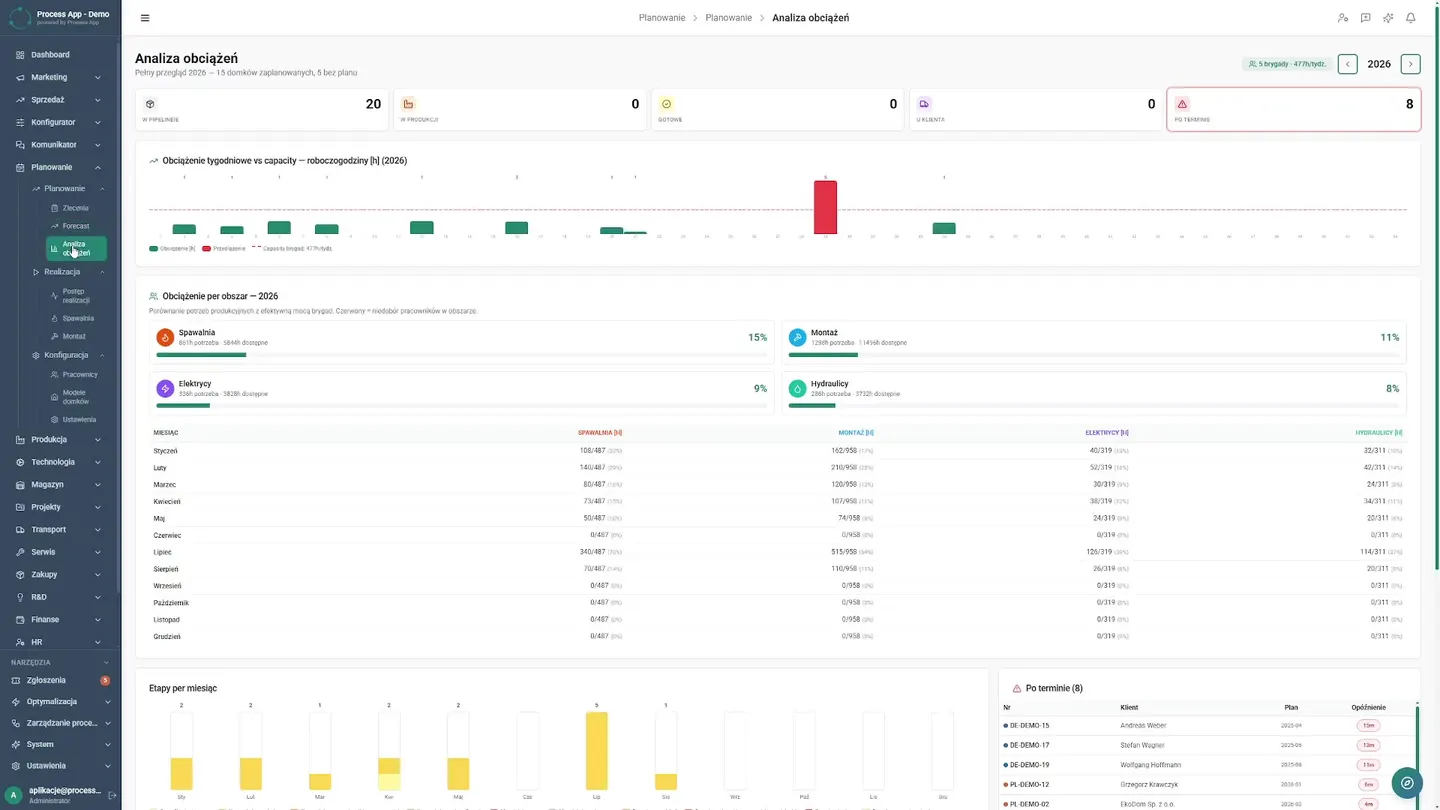
In the past, assessing production capacity was little more than guesswork, and staffing shortages were discovered too late. Today the system independently calculates the current load of all resources in real time. On the analytics dashboard, the manager gains clear charts and tables that precisely show the availability of individual departments. This instant feedback allows planners to react proactively, eliminating risks before bottlenecks form on the shop floor. Scheduling decisions are based on facts.
Gantt schedule
Previously, shifting even a single deadline triggered a flood of phone calls and the need to manually update dozens of related documents. Today it takes just one simple mouse movement. Opening the progress view on the Gantt chart, the planner smoothly browses and edits tasks. Dragging an element along the timeline instantly updates the company's entire operational plan. Every authorized employee immediately sees the new version of the schedule. This saves hours of unnecessary coordination and completely eliminates communication chaos.
Department management
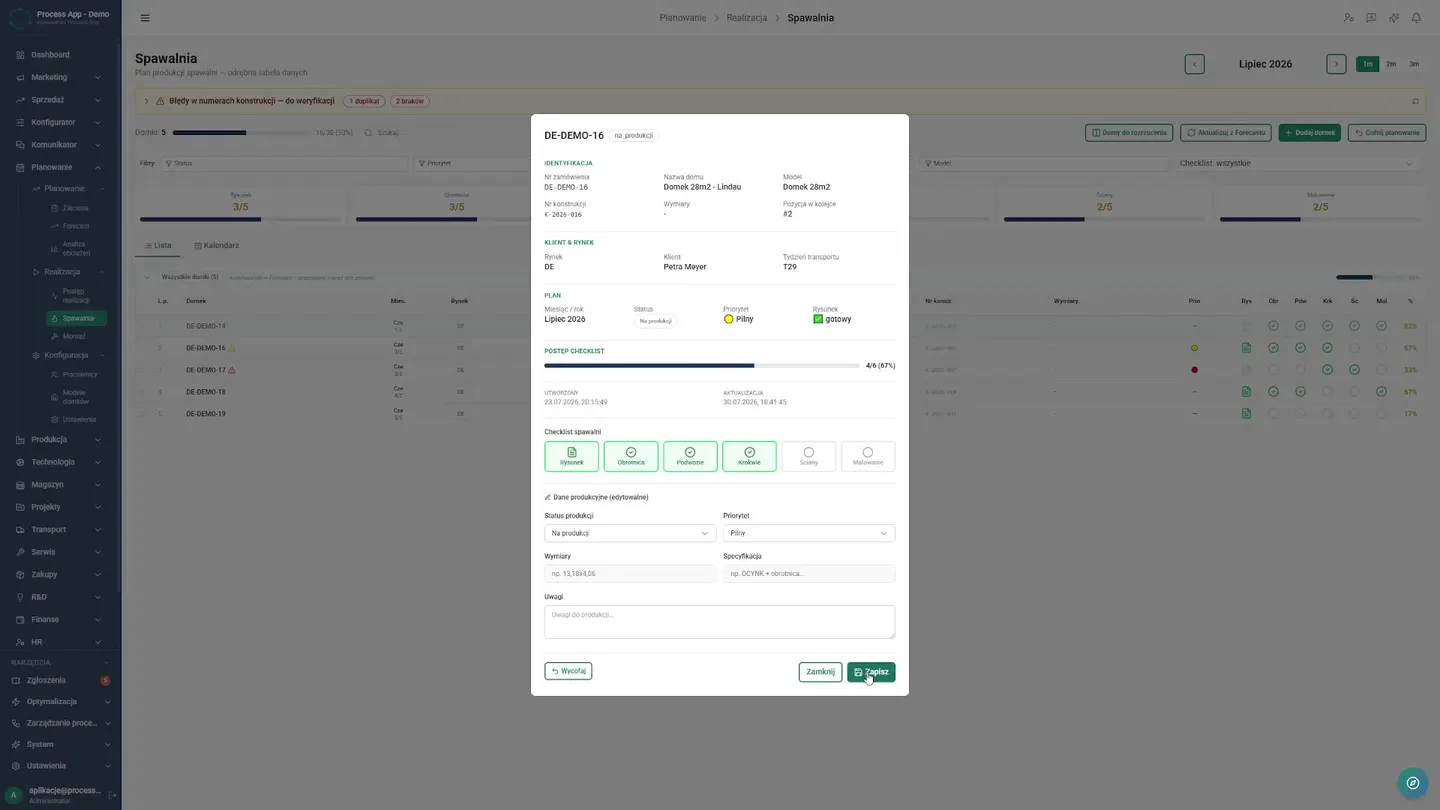
This digital order extends directly to the shop floor level itself. The manager gains dedicated views for key departments such as welding and assembly. The application allows real-time verification of operation completion reporting by individual teams. By analyzing work broken down by specialization, the manager smoothly shifts tasks on the chart, matching them to the actual capacity of the crew on any given day. This complete, unobstructed overview means the company eliminates production bottlenecks well in advance.
Results Achieved
What changed
Before the deployment
- Production planning relied on scattered spreadsheets, making it impossible to quickly assess machine and employee workloads.
- Changing the deadline of a single order required manually updating numerous related documents and making phone calls.
- In addition, technical specifications stored as PDF files were kept separately, extending the time needed to access key order information.
After the deployment
- Planners can now change schedules with a single mouse movement, and the system immediately reflects those changes in the operational plan.
- The production manager has real-time visibility into the workload of the welding and assembly departments, enabling proactive identification of bottlenecks and staffing shortages.
- All order data, including statuses, financials, and PDF specifications, is accessible to authorized employees directly from the planning view.
Screens from the deployment