How to Automate BOM and Quoting in Furniture Manufacturing
The Challenge
Replacing scattered spreadsheets with a single system enables automatic production cost quoting and error-free BOM structure management in a fraction of a second.
Before implementation, process engineers created bill-of-materials (BOM) structures and routings in spreadsheets, making updates difficult and leading to errors. Calculating production costs and margins required manually gathering data from various departments, while CNC machine programs and process documentation were scattered across multiple folders.
Key challenges:
- Process engineers created bill-of-materials (BOM) structures and routings in spreadsheets, making updates difficult and leading to errors.
- Calculating production costs and margins required manually gathering data from various departments, while CNC machine programs and process documentation were scattered across multiple folders.
How the deployment ran
The Technology module in ProcessApp was implemented, centralizing production preparation management. Digital product cards were launched, combining routings, multi-level BOM trees, assigned CNC programs, and documentation in a single location.
Step by step
The steps taken by the implementation team — from mapping the process to going live.
The implementation team mapped the entire machine park, production departments, and employee database into the system.
Product catalogs, process standards, operations, and associated machine files were then standardized and migrated into a single database.
What works after go-live
What actually works in the system after the deployment — every one of these screens appears in the recording above.
System Entry
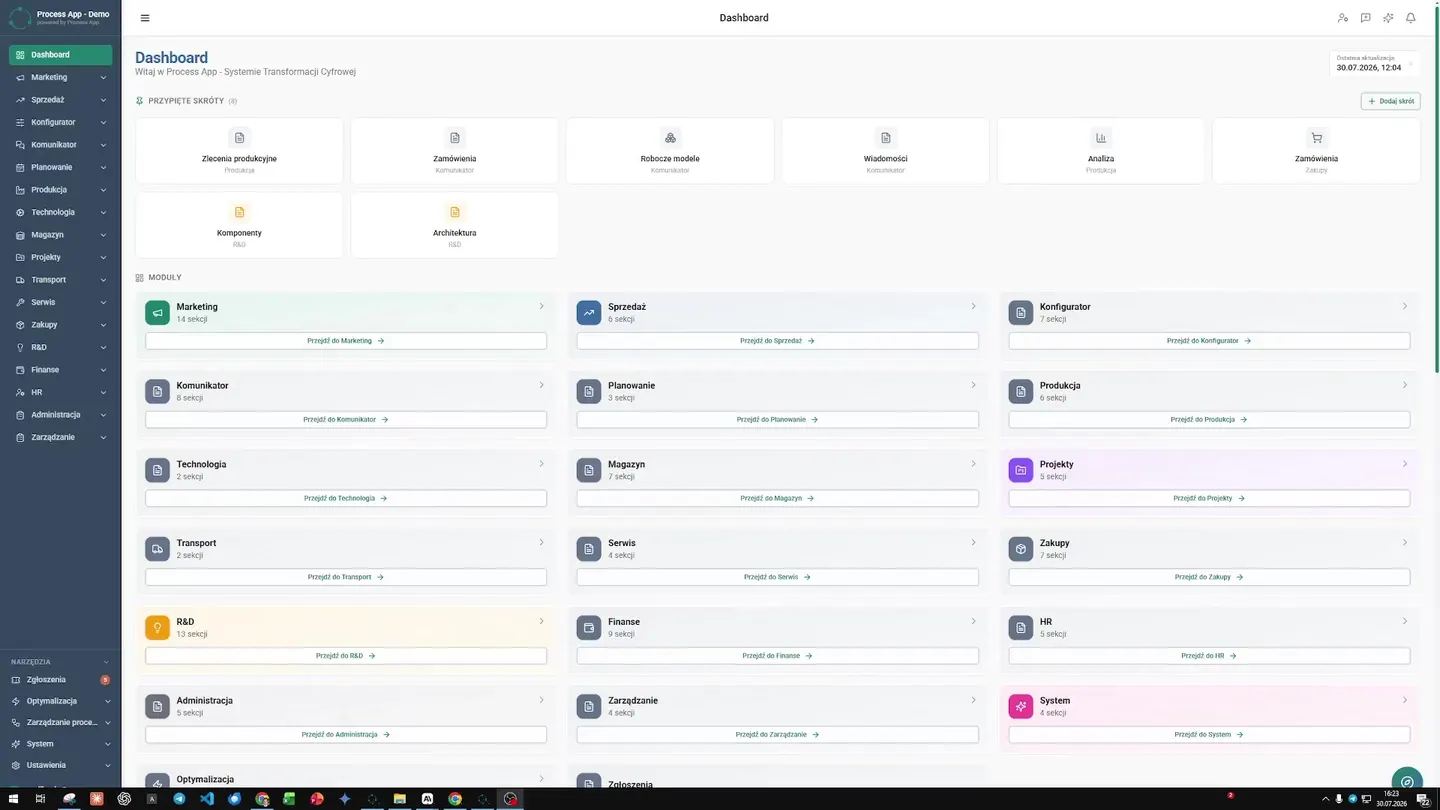
Today, the chief process engineer at a furniture manufacturer sees key indicators and summaries in one clear, unified dashboard.
All Resources in One Place
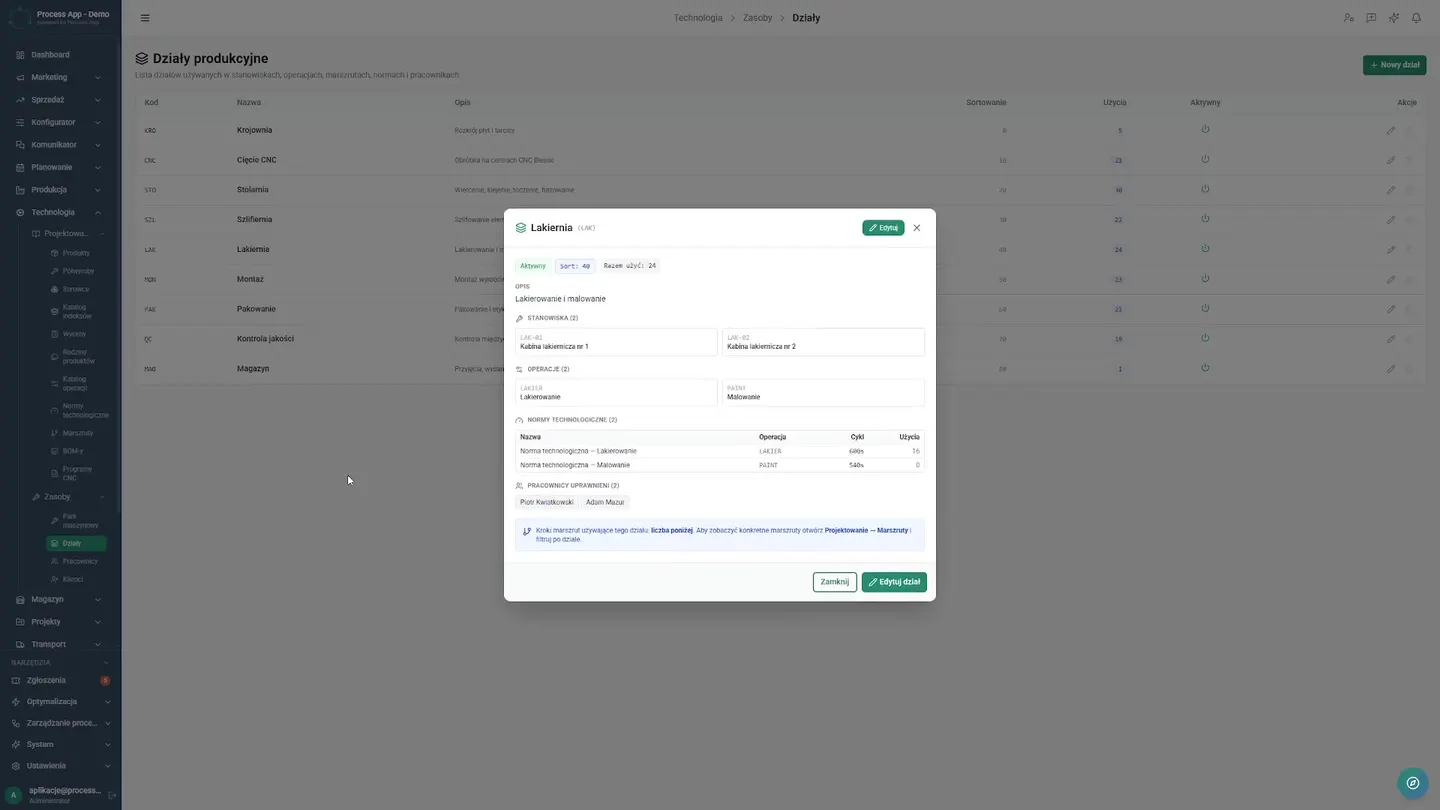
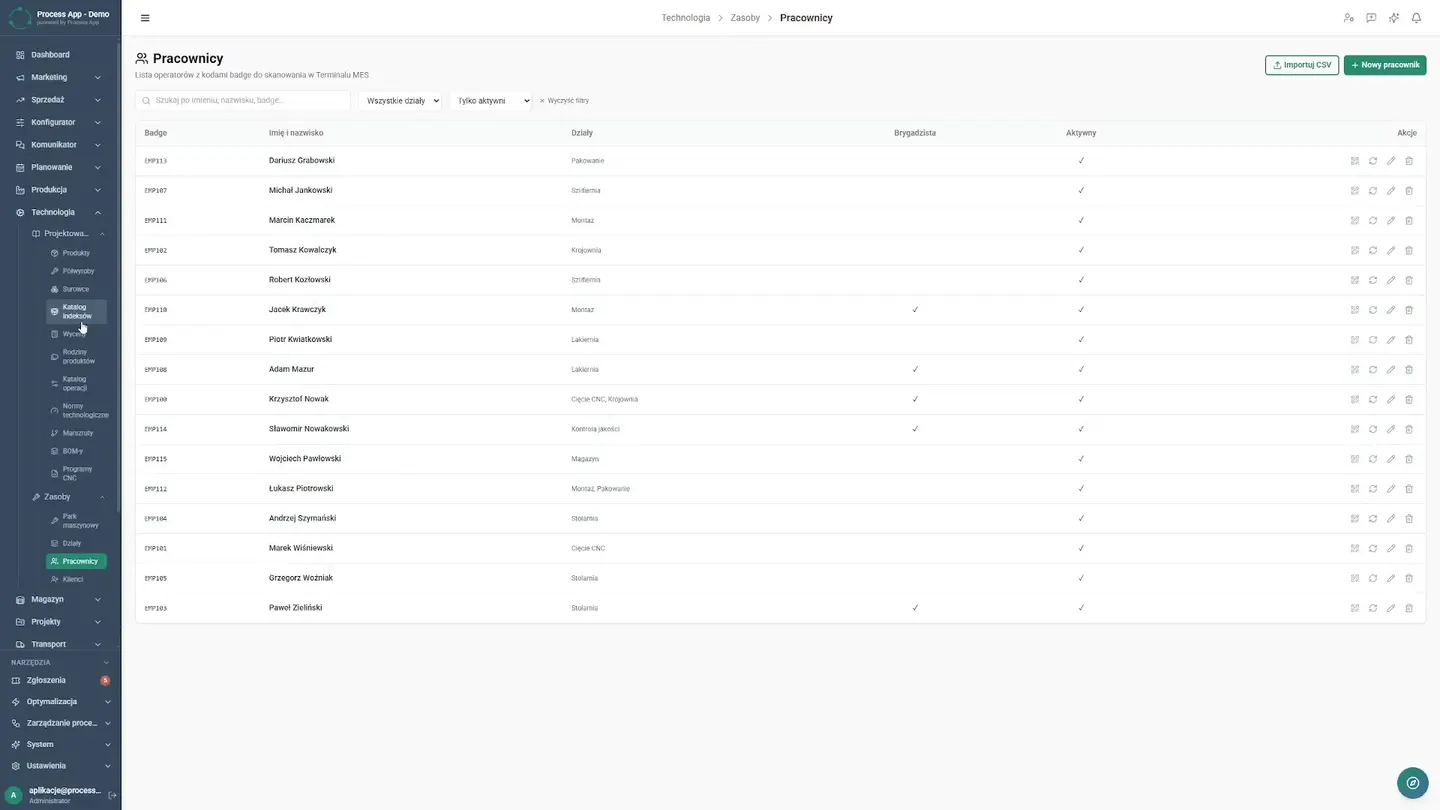
The implementation team said goodbye to scattered folders for good. All production departments, the entire machine park, and a complete employee database were mapped here. When a process engineer opens detailed resource views, they instantly see their status. From the profile of a selected employee, they can instantly generate a QR code. This completely eliminates paper documentation on the shop floor. A solid foundation was built, allowing the company to know exactly what production capacity it has when planning each order.
Organized Catalogs
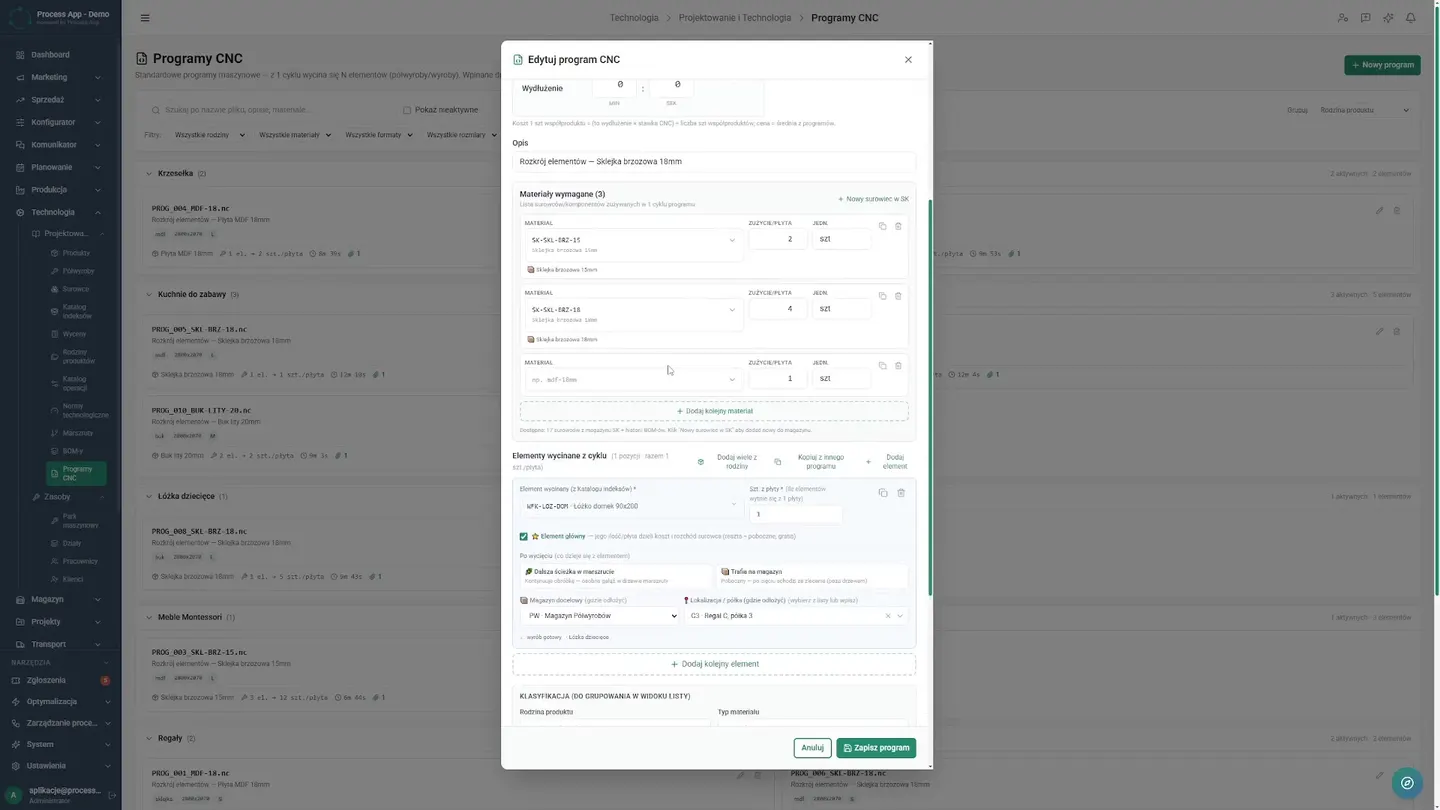
Knowledge is no longer locked inside employees' heads. The team standardized global catalogs of operations, product families, and process standards. Opening ready-made routings, the chief process engineer sees a consistent structure. Everything is in one database, which drastically eliminates the risk of errors in orders.
Digital Product Card
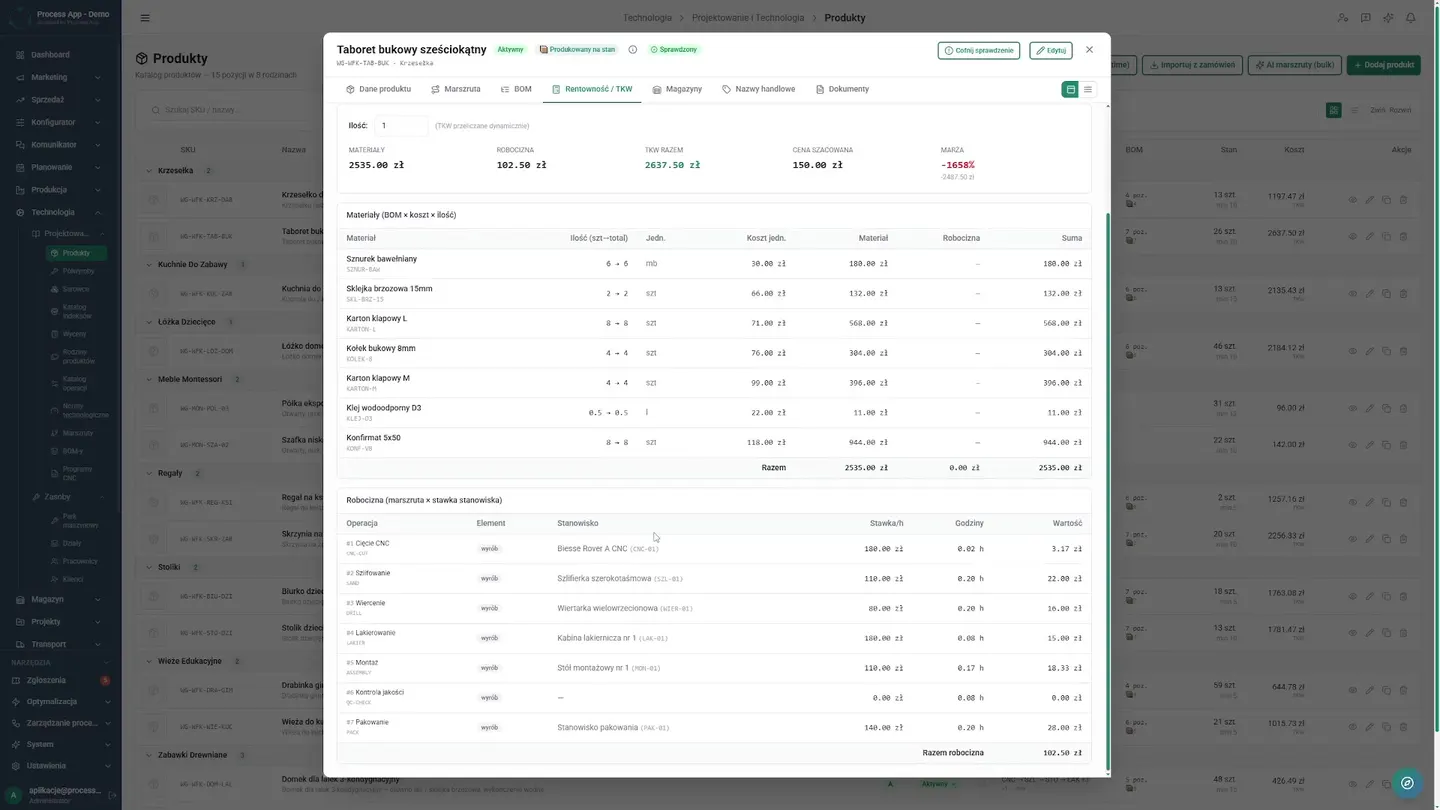
The real change happens with the digital finished-goods card. The chief process engineer, selecting a beech stool, has one up-to-date source of product information. Instead of searching for programs in hidden folders, they smoothly browse through tabs. In the routing section, they see the sequence of operations assigned to production cells. The integrated BOM tree enables quick material editing within the system, without opening external spreadsheets. When raw materials are added or changed, the application updates the relationships. The greatest relief for the quoting department is the summary tab, where cost, labor, and margin calculations happen automatically based on previously defined structures. What before implementation required manually gathering data from three departments and took long hours is now ready in a fraction of a second. The team saves time on recalculations, quotes are error-free, and the chief process engineer gets home on time.
Results Achieved
What changed
Before the deployment
- Process engineers created bill-of-materials (BOM) structures and routings in spreadsheets, making updates difficult and leading to errors.
- Calculating production costs and margins required manually gathering data from various departments, while CNC machine programs and process documentation were scattered across multiple folders.
After the deployment
- The company gained a single, always up-to-date source of truth about the manufacturing process for every product.
- Cost and profitability calculations now happen automatically based on entered BOM structures and routings, eliminating manual recalculations and speeding up the work of process engineers.
Screens from the deployment