How a furniture manufacturer gained full control over its warehouse
See it on video
A step-by-step walk through the module — the same screens this write-up describes.
What is in the recording
- 0:00No more searching for missing timber on the shop floor
- 0:05Overview of the main dashboard and company data flow
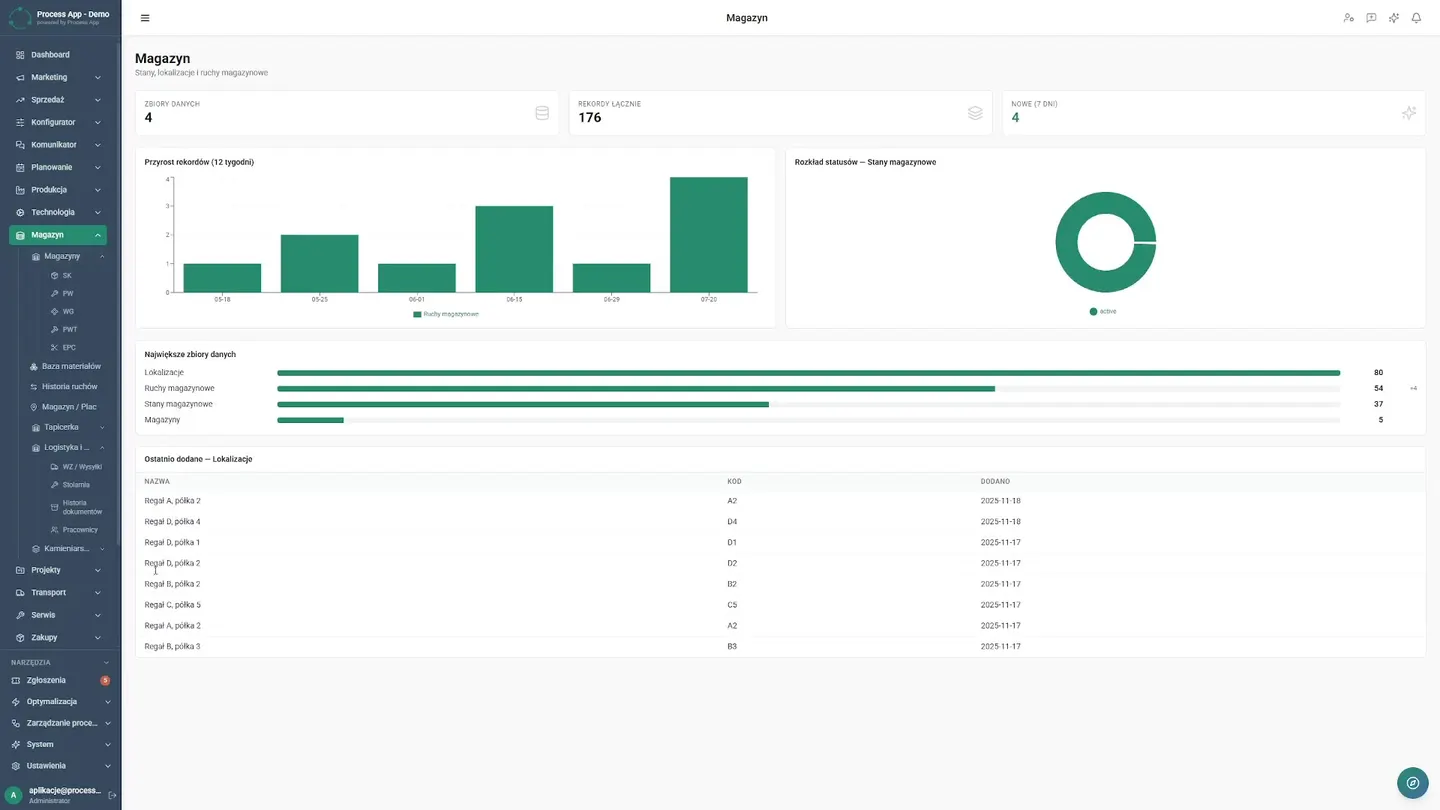
- 0:13Entering the warehouse module and analyzing key performance indicators
- 0:24Digital verification of BOM material structures
- 0:44Current warehouse stock levels visible in real time
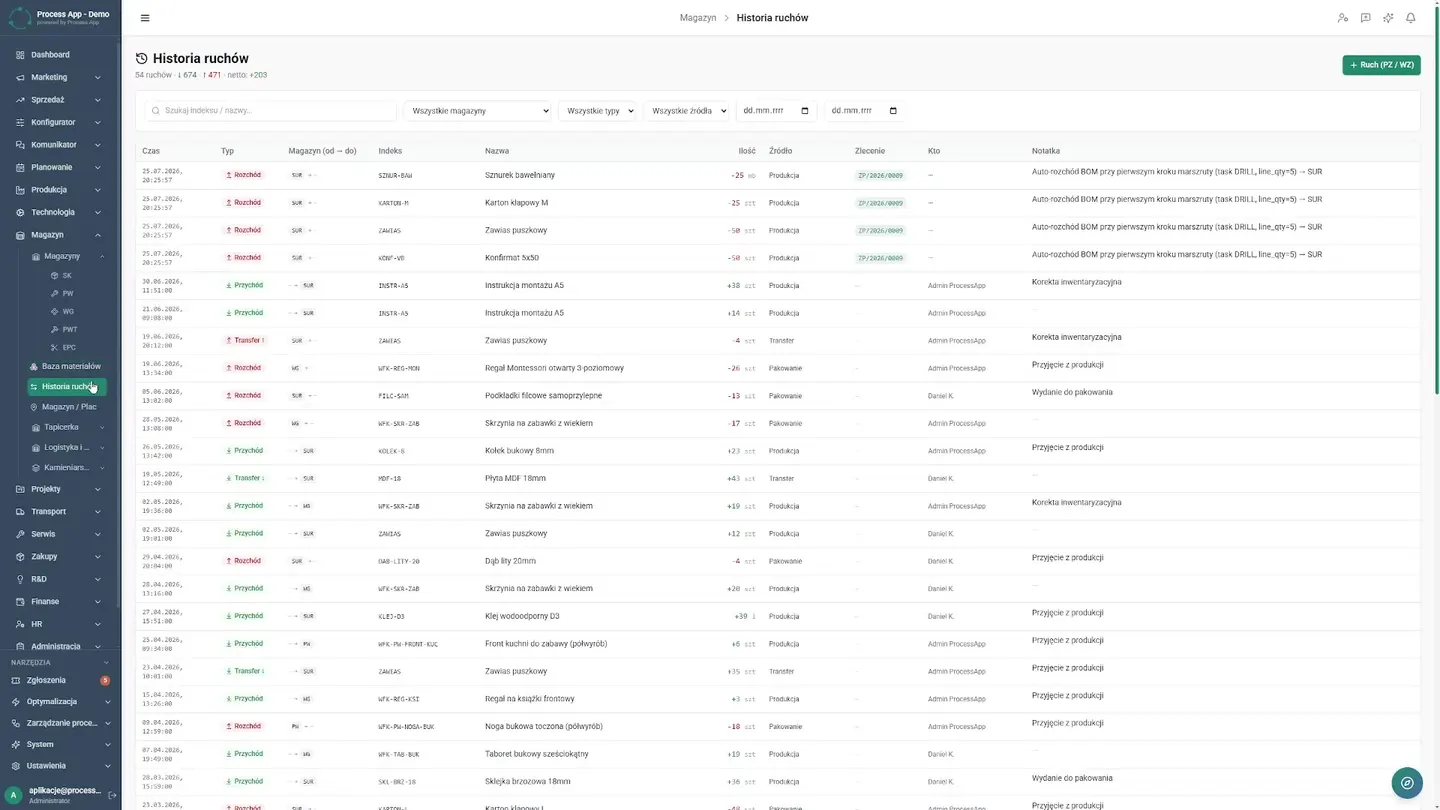
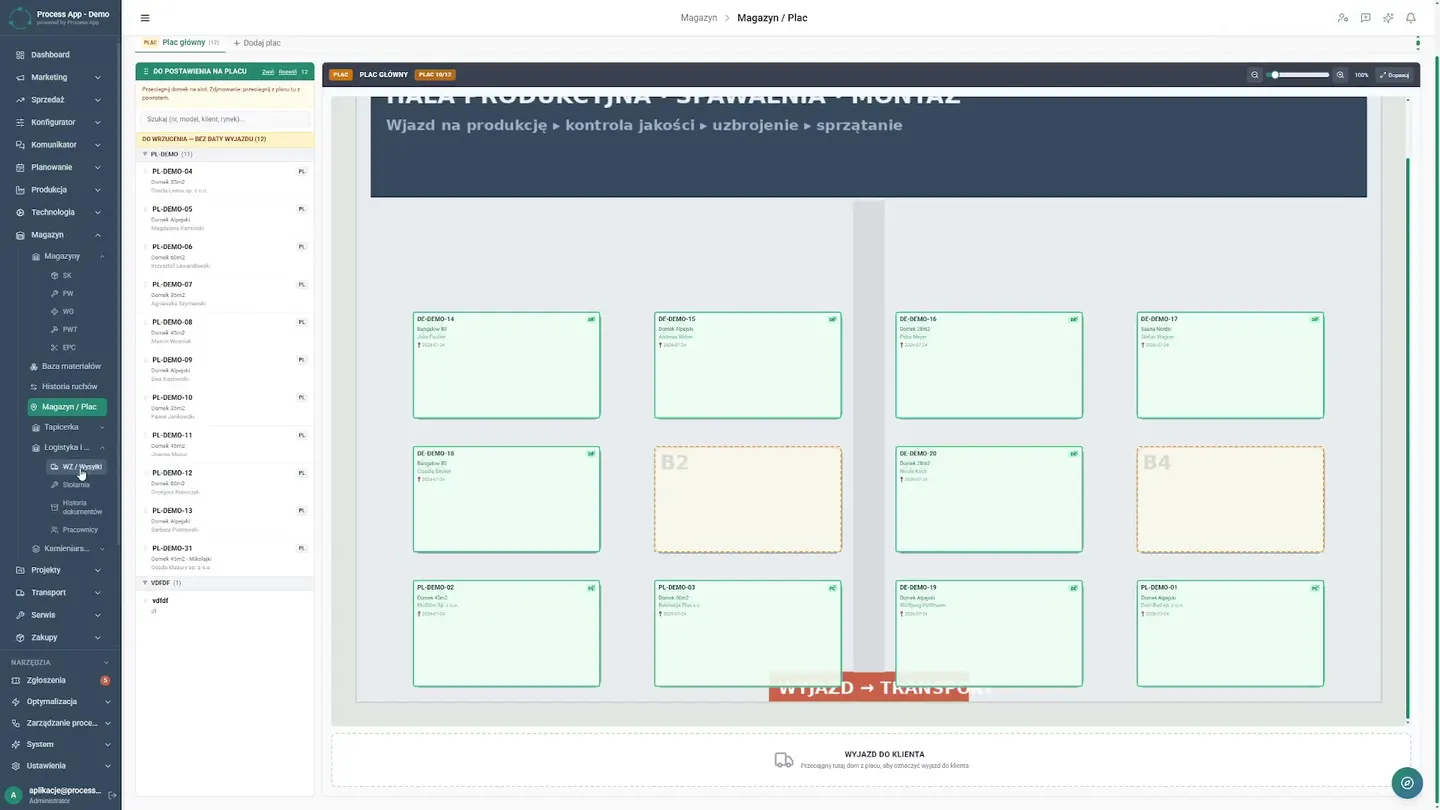
- 1:08Visual yard map and detailed goods movement history
- 1:29Fast shipment handling and digital goods-issue documentation
- 1:46Return to analytics and summary of time saved
- 1:53Implementation summary and next steps for your company
The Challenge
A centralized system and visual warehouse map eliminate errors, save time, and provide full control over material flow from raw material to shipment.
Before implementation, the company struggled with a lack of consistent information about current stock levels of raw materials, semi-finished goods, and finished products. Tracking movement history, verifying bill-of-materials structures (BOM), and managing shipping documentation required manually transcribing data between spreadsheets, generating errors and extending processing time.
Key challenges:
- The company struggled with a lack of consistent information about current stock levels of raw materials, semi-finished goods, and finished products.
- Tracking movement history, verifying bill-of-materials structures (BOM), and managing shipping documentation required manually transcribing data between spreadsheets, generating errors and extending processing time.
How the deployment ran
The Warehouse module was launched in the ProcessApp system, centralizing inventory and logistics management. Employees now use a single tool to view stock levels broken down by category, verify BOM structures, track movement history, and handle shipping documents (goods-issue notes).
Step by step
The steps taken by the implementation team — from mapping the process to going live.
The implementation team mapped the goods-flow processes, from raw material receipt through to finished furniture shipment.
The existing material database was then imported, BOM structures for products were replicated, and the visual warehouse yard map was configured.
What works after go-live
What actually works in the system after the deployment — every one of these screens appears in the recording above.
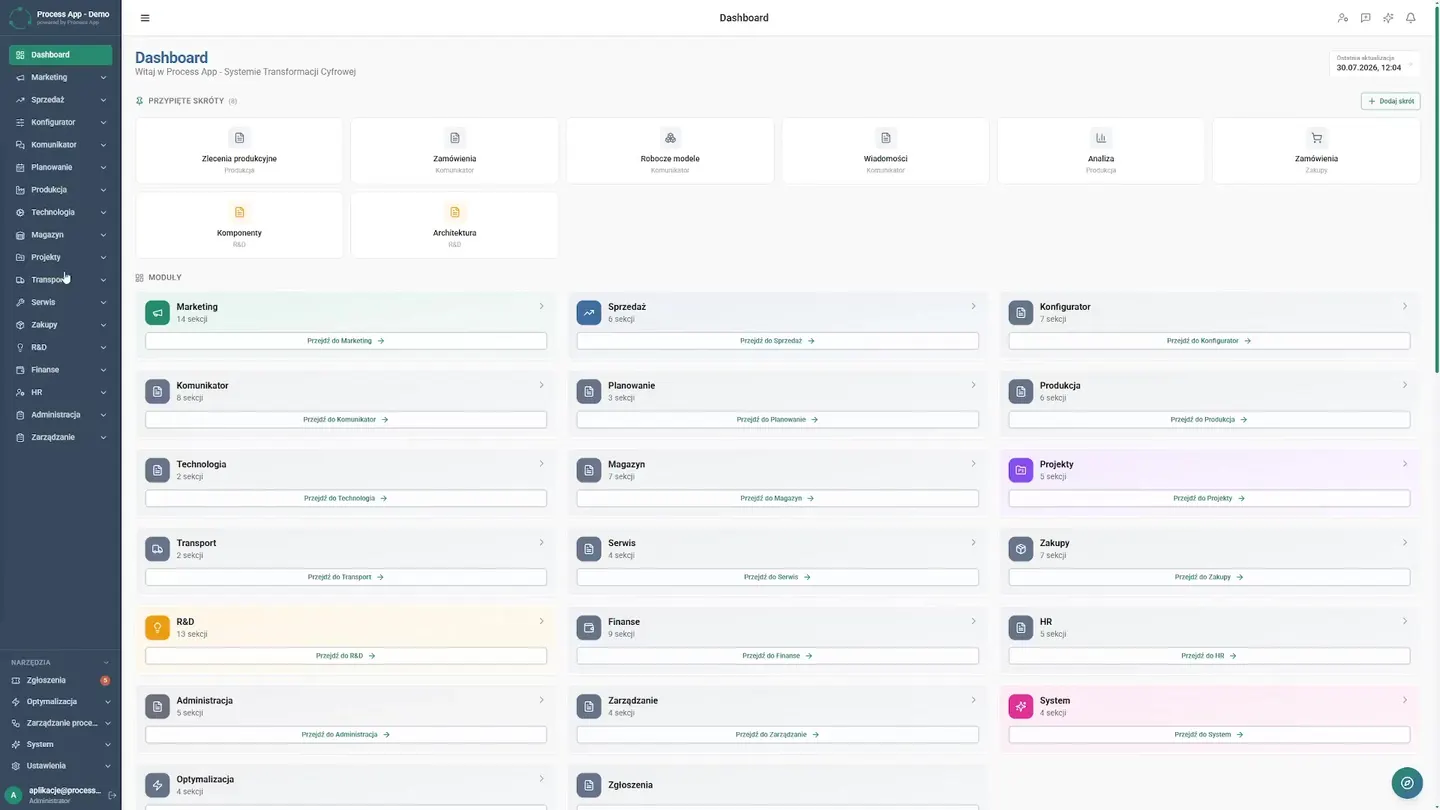
Main dashboard
The entire furniture company uses a single system, viewing data from sales through to transport.
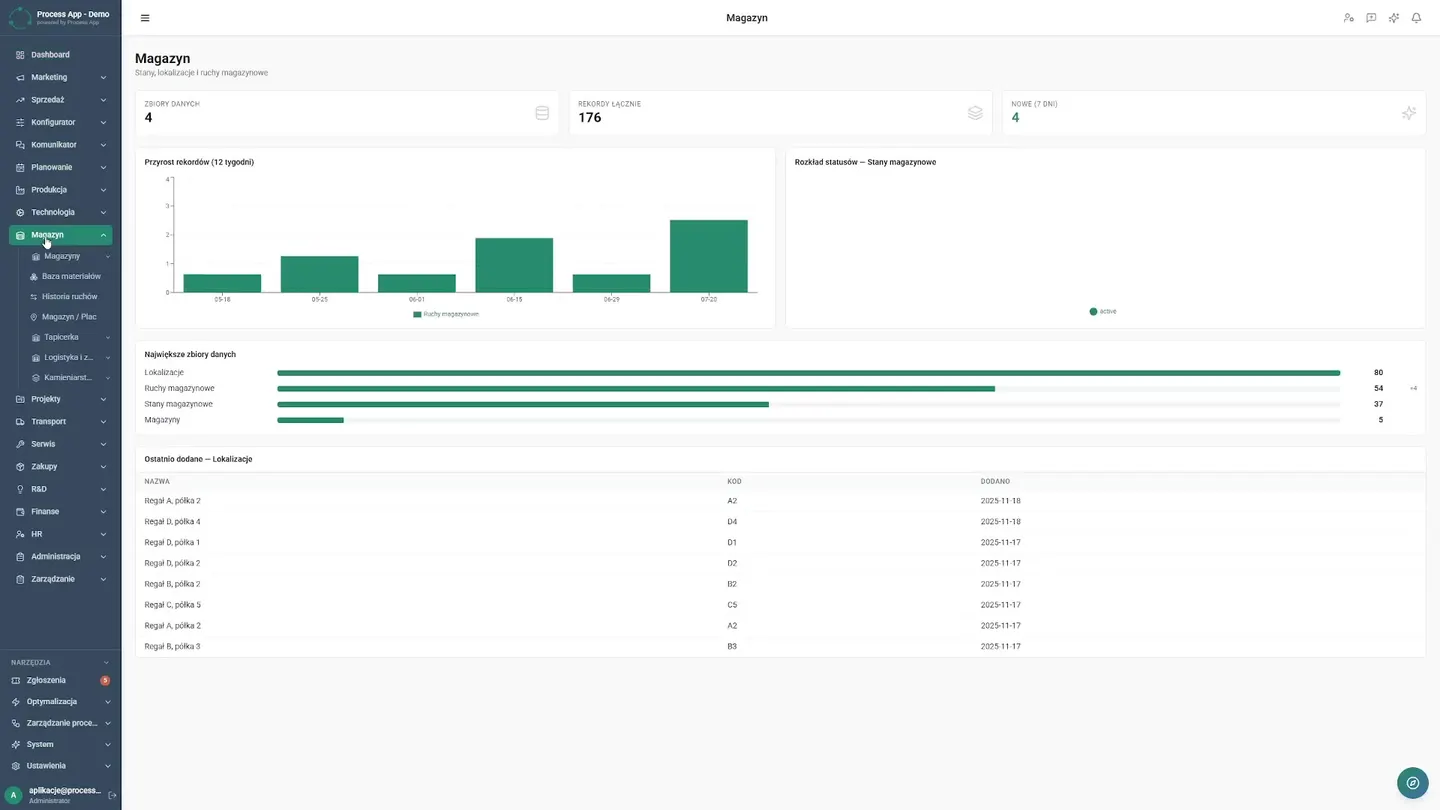
Module entry
The manager opens the warehouse module, analyzes KPIs and charts, and then reviews finished goods, semi-finished goods, and raw materials.
BOM structures
The planner now enters the database, filters the list, and selects an item — for example, the side panel of a Montessori shelf unit. The system verifies the relationships, eliminating errors and saving hours of data comparison before production is launched.
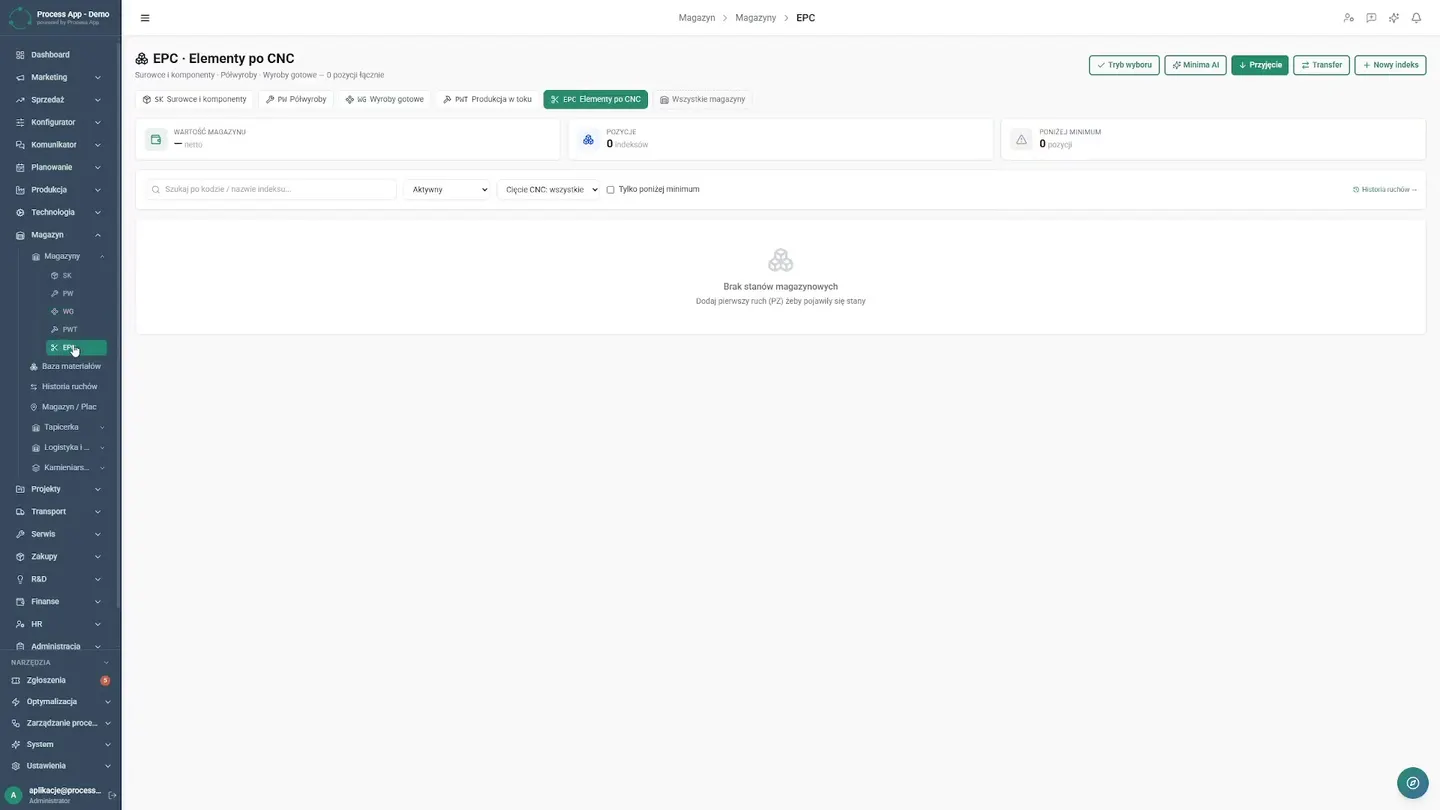
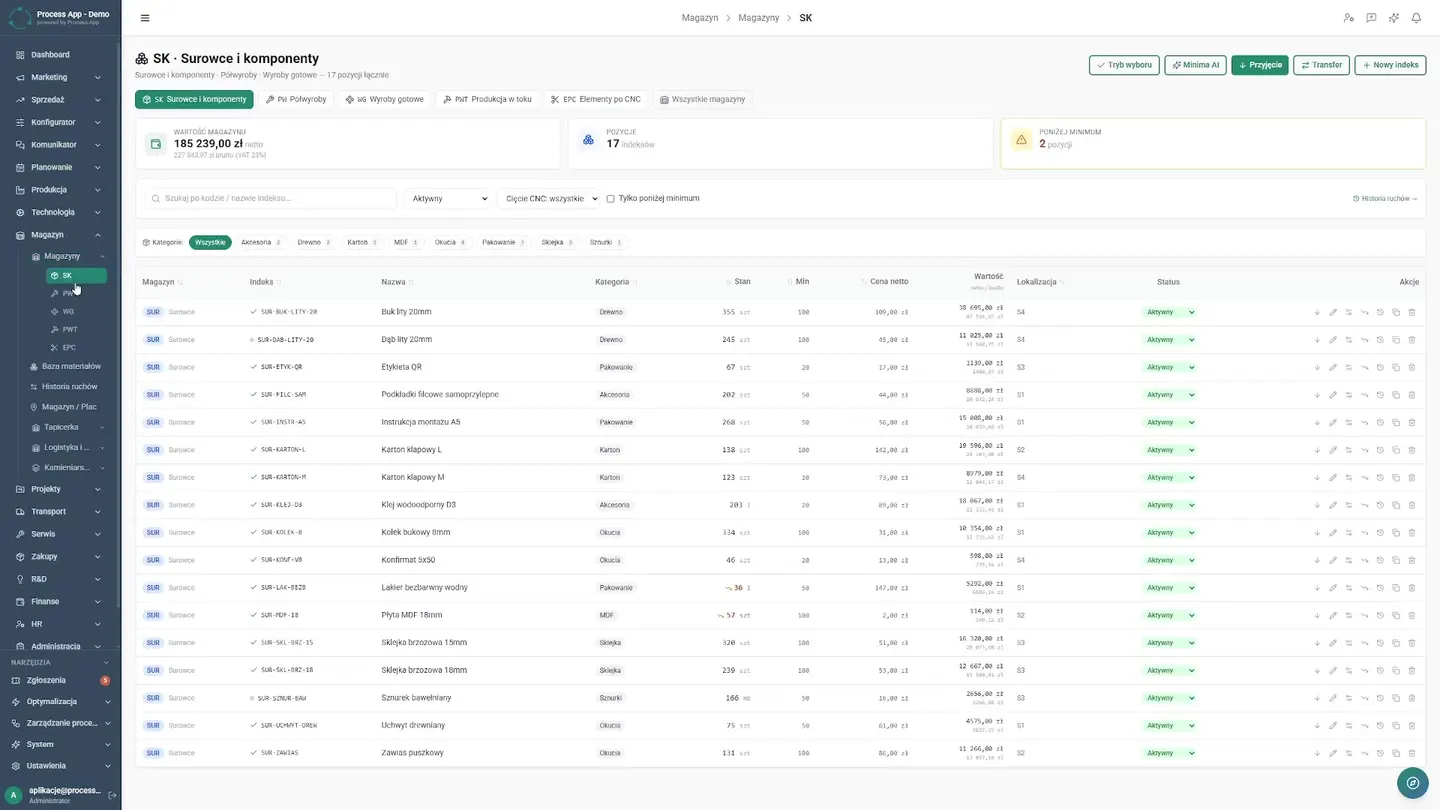
Detailed stock levels
The team has a complete picture of the situation before their first coffee. They review raw material, production, semi-finished, and finished goods levels. Opening a record card is all it takes to learn every detail of a batch. Nobody needs to call other departments because data is visible in real time.
Yard map
Instead of searching for goods on the shop floor, employees check the digital register, which records every change. The visual warehouse map indicates the pallet location, shortening handling time. The logistics coordinator looks at the overview and knows exactly where to send the forklift.
Shipment handling
No more lost paperwork. The shipping department verifies the issue list and opens the goods-issue note details, while the document history provides access to all transport files, ensuring smooth collaboration with logistics.
Return to analytics
The manager regains control and saves hours of work every week.
Results Achieved
What changed
Before the deployment
- The company struggled with a lack of consistent information about current stock levels of raw materials, semi-finished goods, and finished products.
- Tracking movement history, verifying bill-of-materials structures (BOM), and managing shipping documentation required manually transcribing data between spreadsheets, generating errors and extending processing time.
After the deployment
- The company gained a real-time, centralized view of warehouse stock levels at every stage of production, from raw material to finished product.
- Yard visualization makes it easy to quickly locate material batches, and the digital history of movements and shipping documents has eliminated the problem of lost information.
Screens from the deployment