How to Eliminate Material Shortages in Projects | Case Study
See it on video
A step-by-step walk through the module — the same screens this write-up describes.
What is in the recording
- 0:00A lost order and on-site downtime
- 0:16Central order dashboard for the procurement department
- 0:31Standardized catalog and purchase requisitions
- 1:11Lightning-fast goods receipts and warehouse stock levels
- 1:37Proactive purchasing planning and supplier evaluation
- 2:03Organize your procurement processes
The Challenge
Centralizing the procurement process in a single system eliminates ordering errors, ensures continuity of work on-site, and enables proactive stock replenishment.
Before implementation, the ordering process relied on scattered communication and spreadsheets, causing discrepancies between warehouse stock and actual demand. Project coordinators wasted time manually verifying whether materials for their tasks had already been ordered and delivered. There was also no central registry for supplier history and evaluation.
Key challenges:
- The ordering process relied on scattered communication and spreadsheets, causing discrepancies between warehouse stock and actual demand.
- Project coordinators wasted time manually verifying whether materials for their tasks had already been ordered and delivered.
- There was also no central registry for supplier history and evaluation.
How the deployment ran
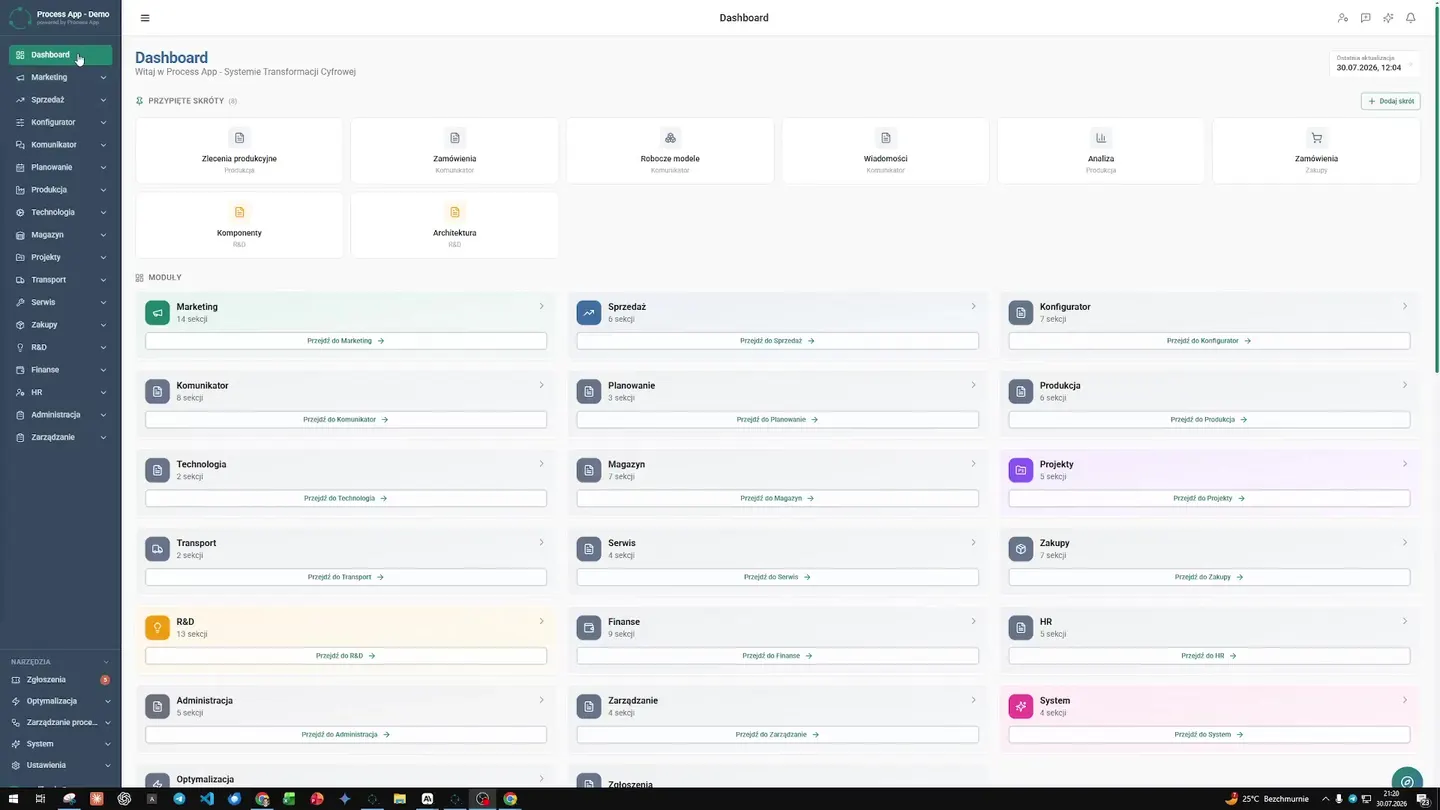
The Procurement module was launched within the ProcessApp system, integrating order management, purchase requisitions, and project management in a single environment. Digital delivery acceptance forms, interactive material shortage lists, and a central catalog with real-time warehouse stock visibility were implemented. An integrated supplier database with a supplier rating system was also added.
Step by step
The steps taken by the implementation team — from mapping the process to going live.
The implementation team mapped the existing order workflow and linked it to the structure of ongoing projects.
The supplier database and materials catalog were then standardized and imported, organized into clear categories.
Finally, the team was trained on handling digital purchase requisitions and recording warehouse goods receipts in the application.
What works after go-live
What actually works in the system after the deployment — every one of these screens appears in the recording above.
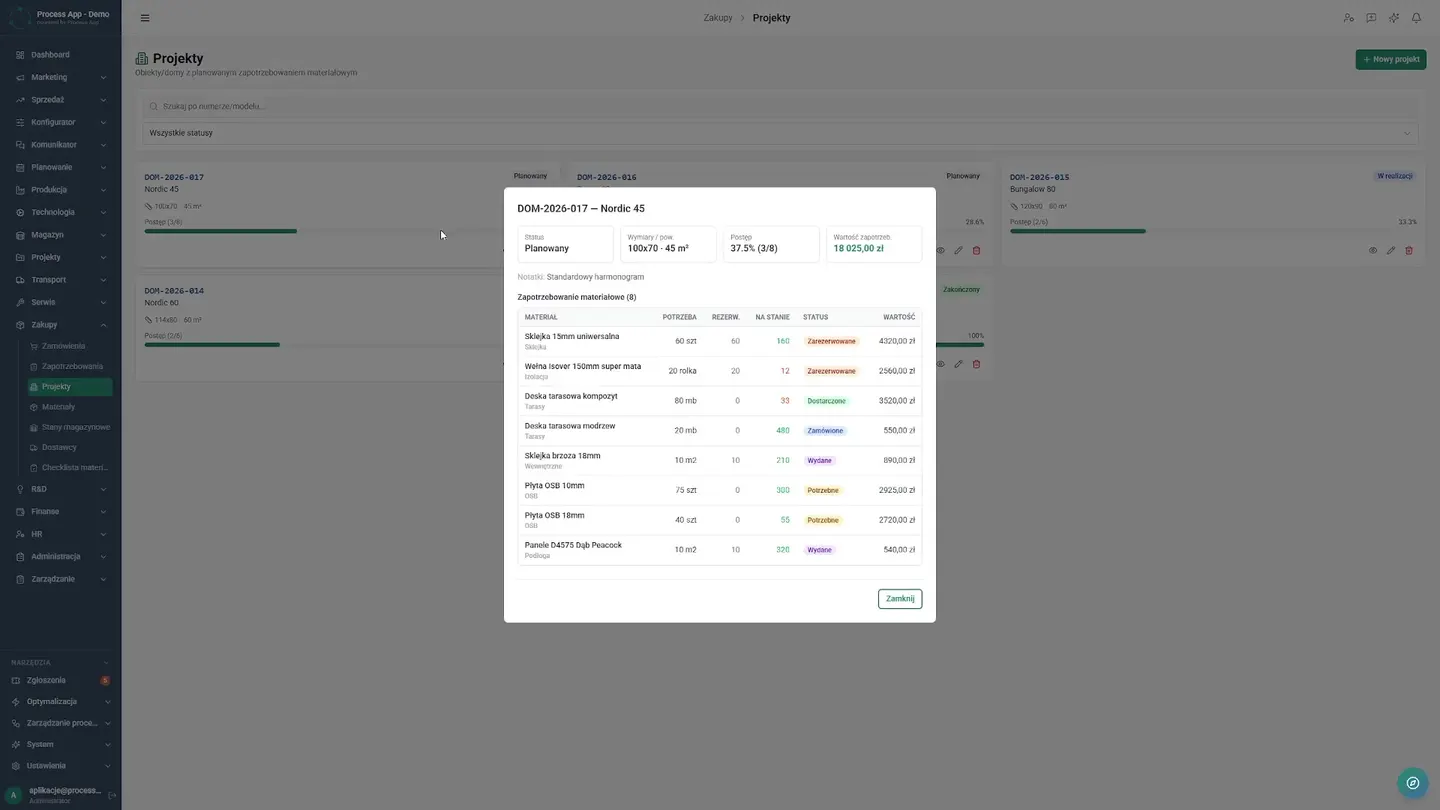
Projects and Shortages
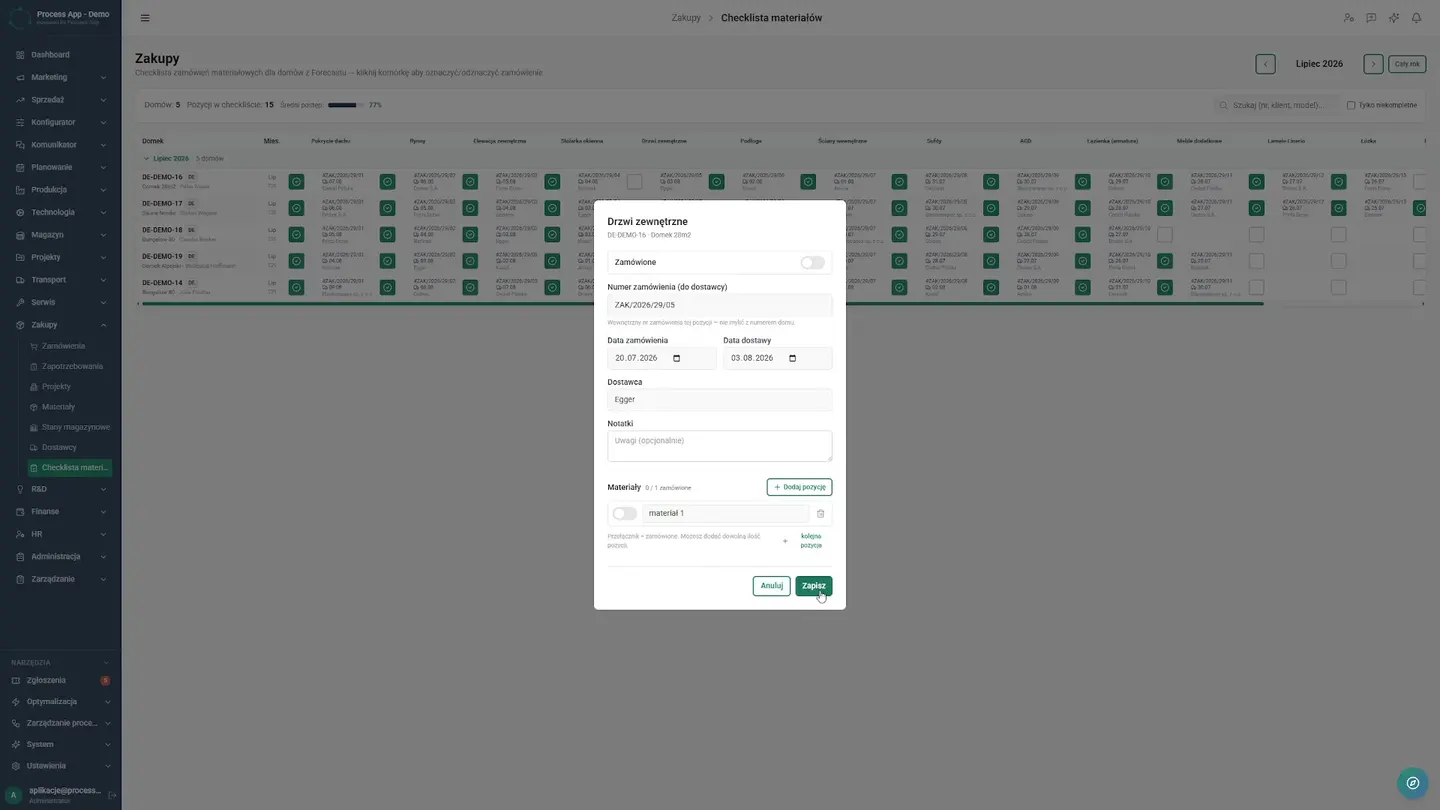
In the past, coordinators spent hours checking whether materials had arrived at all. Today they open the project card and immediately see the exact procurement status for every task.
Central Order Dashboard
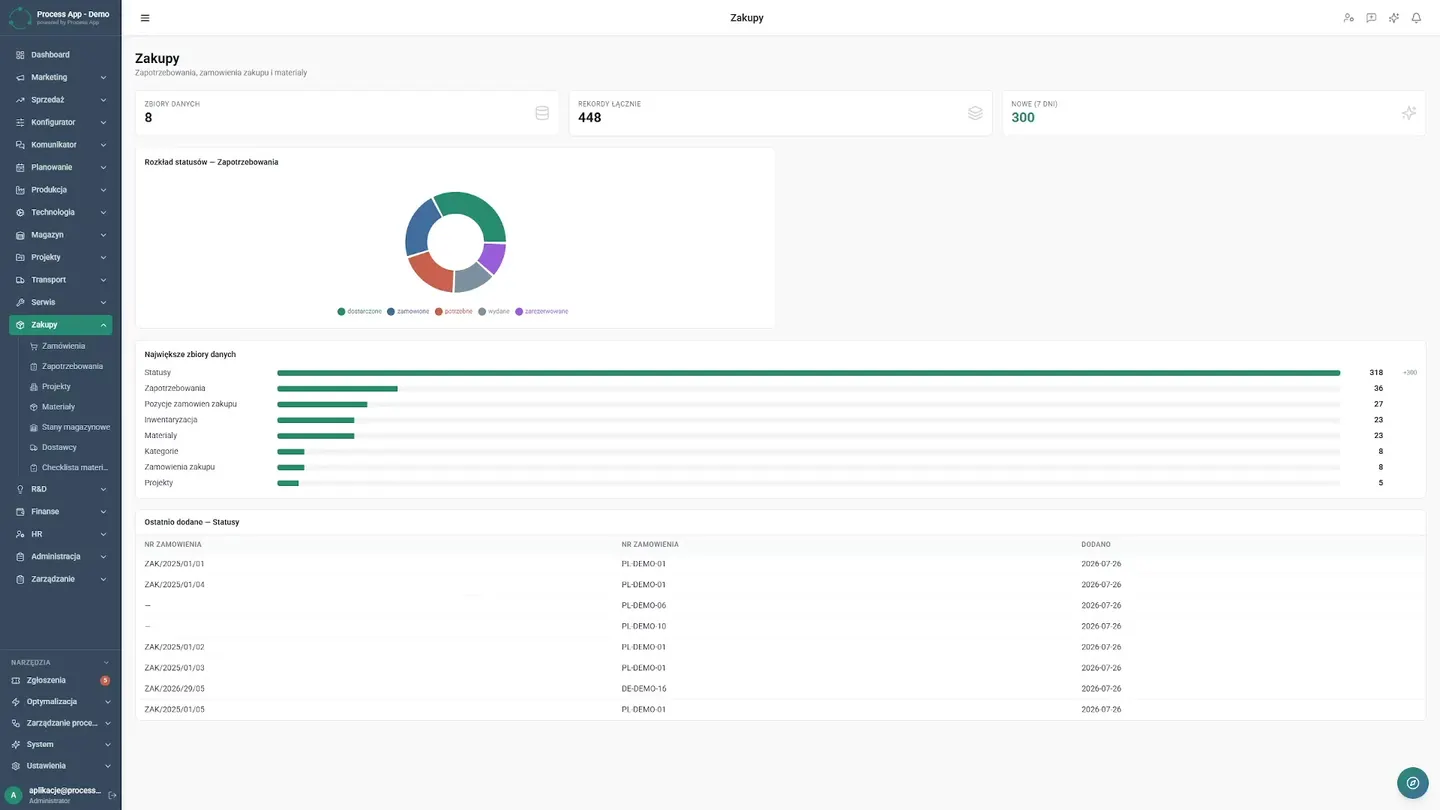
Emails and phone calls to suppliers were replaced by a central dashboard, giving the procurement manager a clear order list and quick access to delivery details — without wasting time.
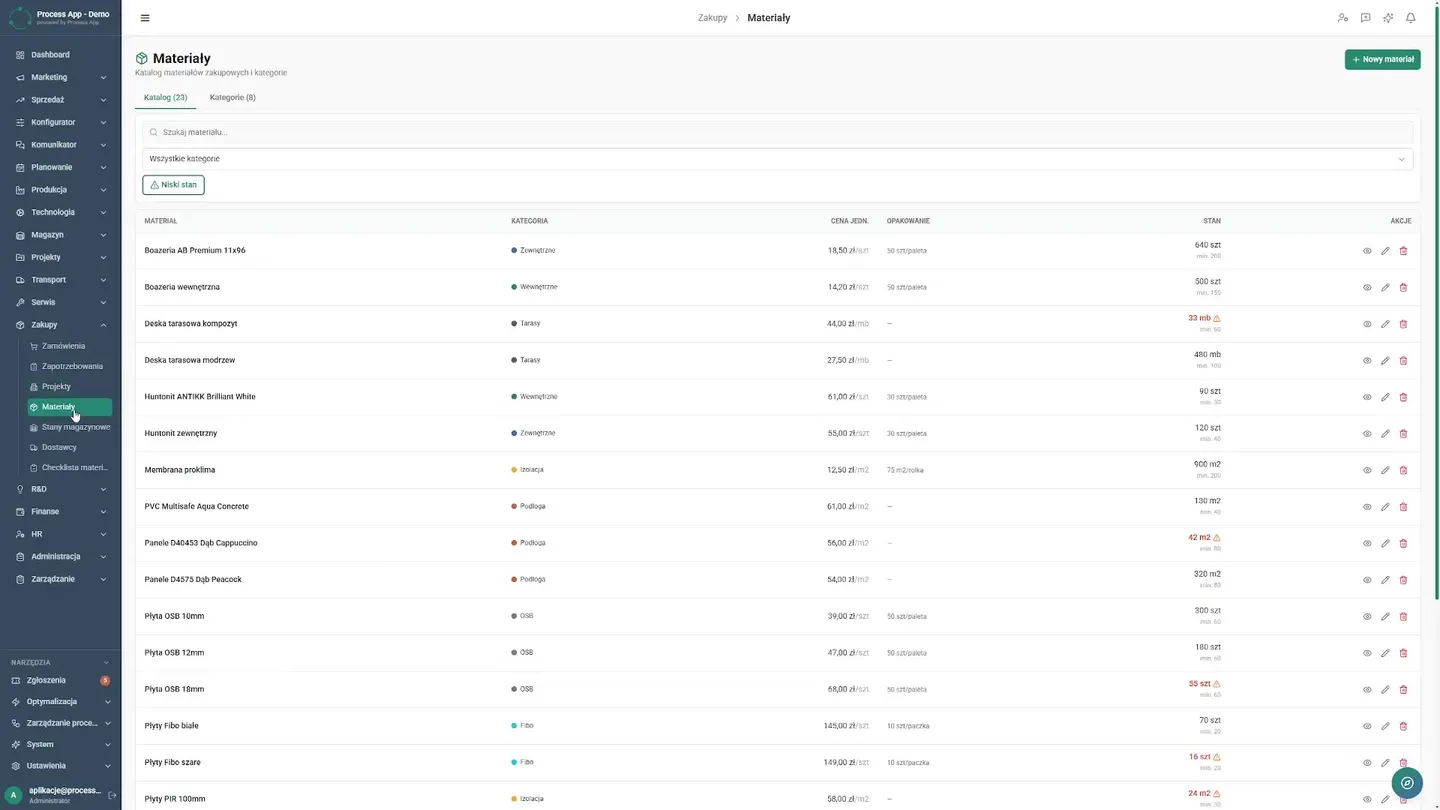
Standardized Catalog
Previously, everyone ordered the required equipment in their own way, creating chaos and costly mistakes on the floor. The implementation team standardized the entire database. Now employees simply browse a clear catalog of available products. Instead of guessing item codes, they navigate smoothly through a logical material category tree. This definitively eliminated ordering errors, and coordinators instantly find exactly what the construction technical specification requires.
Digital Purchase Requisitions
Requisitions from the construction site come in digitally, and the procurement department sees the shortage list, enabling them to make confident decisions about what to buy and when.
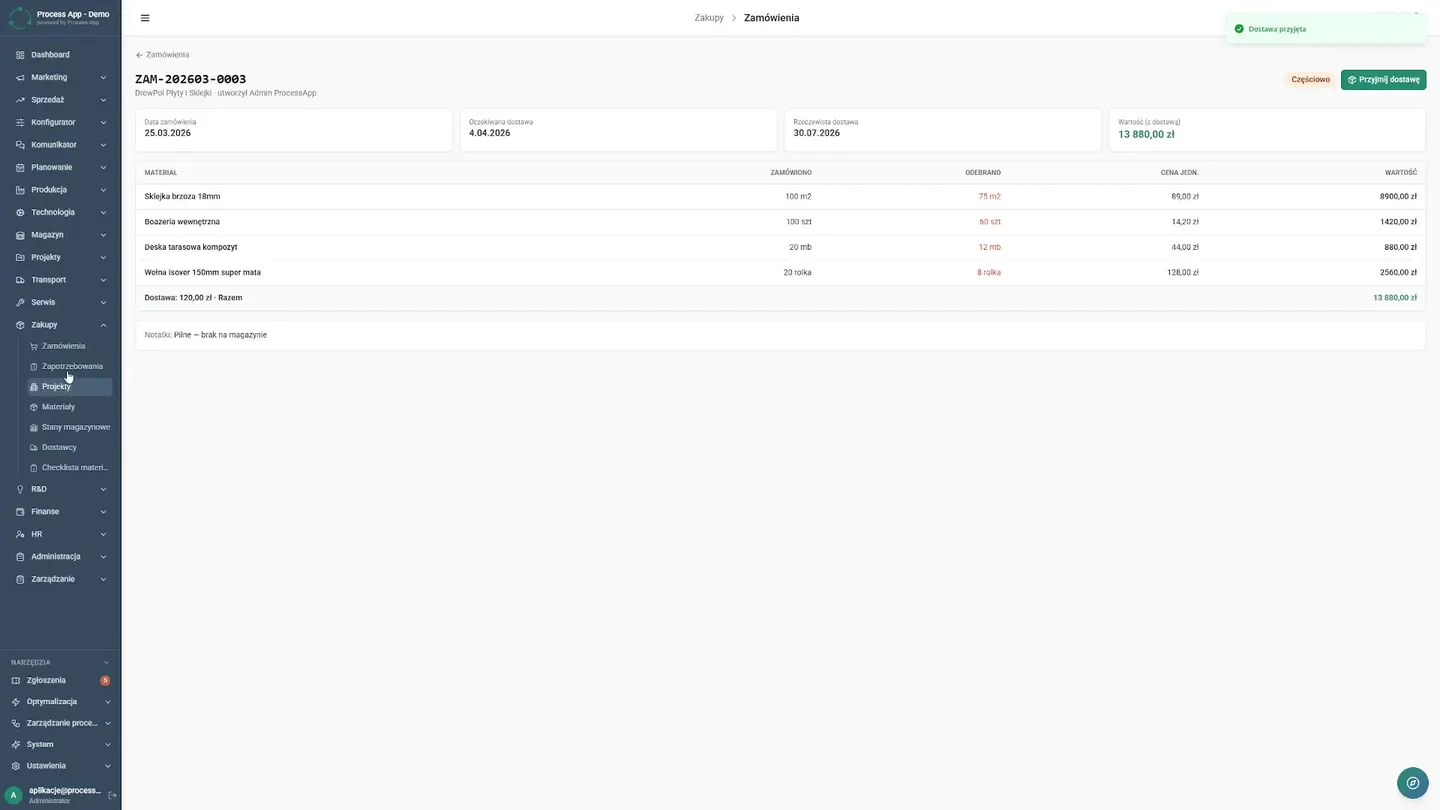
Lightning-Fast Goods Receipts
Today the warehouse worker fills in a short digital delivery acceptance form, and the order status updates in a fraction of a second.
Up-to-Date Warehouse Stock
The team has full confidence in material availability, and the main list shows quantities in stock. Digital goods receipt instantly updates stock levels and eliminates discrepancies.
Proactive Planning
Always up-to-date warehouse data has transformed the company's approach to procurement. The clear category tree enables analysis of key component consumption. The company has shifted to proactive purchasing planning, replenishing stock before physical shortages occur. This guarantees continuity of work on installation projects and builds a competitive advantage.
Supplier Database
Supplier evaluation.
Results Achieved
What changed
Before the deployment
- The ordering process relied on scattered communication and spreadsheets, causing discrepancies between warehouse stock and actual demand.
- Project coordinators wasted time manually verifying whether materials for their tasks had already been ordered and delivered.
- There was also no central registry for supplier history and evaluation.
After the deployment
- The company gained real-time control over the entire procurement process, from submitting a requisition to receiving goods.
- Project coordinators can see the exact material completion status on task cards, enabling them to avoid work stoppages.
- Stock replenishment has become proactive thanks to interactive checklists and always up-to-date warehouse data.
Screens from the deployment