
From Paper to the Cloud – A History of Business Process Digitalization – Part 1
📋 Table of Contents

- Why Is It Worth Understanding the History of Digitalization?
- The Paper Era – The Origins of Process Management
- The Limitations of Paper-Based Processes
- Computerization – First Steps Toward Digitalization
- Spreadsheets and the Rise of ERP Systems
Understanding the evolution of business process digitalization is the key to effective transformation for any organization. From traditional paper-based management methods, through the limitations they imposed on efficiency and security, to the breakthrough brought about by the introduction of computers and ERP systems – this history illustrates the dynamics of change in business. In the digital age, particularly in the wake of the COVID-19 pandemic, understanding these changes has become not just valuable, but truly essential for maintaining competitiveness. A detailed look at these transformations can provide valuable guidance. How can organizations effectively adopt modern digital tools that support both project management and business model optimization? I invite you to take a deeper look at this fascinating journey from paper to the cloud – one that has undoubtedly ushered in a new era of business process management.
-
Why Is It Worth Understanding the History of Digitalization?
-
The Paper Era – The Origins of Process Management
-
The Limitations of Paper-Based Processes
-
Computerization – First Steps Toward Digitalization
-
Spreadsheets and the Rise of ERP Systems
Why Is It Worth Understanding the History of Digitalization?
Understanding the history of digitalization is crucial for any organization that wants to adapt effectively to an ever-changing technological landscape. By tracing the path from paper documents to digital solutions, we gain valuable insights that can help us better understand and implement modern technologies.
Idbs, for example, demonstrates how changes in data management can be applied in practice. This, in turn, has a direct impact on the effectiveness of projects carried out by companies. On the other hand, the COVID-19 pandemic illustrates how economies must rapidly adapt to remote working models, while support measures for hospitals and other institutions became critically important.
In the context of digitalization, it is worth highlighting the diverse impacts that technology has had on business:
Digital transformation – this is often not a one-time change, but rather a continuously evolving process that requires ongoing adaptation and updating.
Impact on efficiency – we observe how the digitalization of business processes introduces faster, more accurate, and less costly ways of working.
Changes in social relations – these affect the way we communicate at work and how we manage business relationships.
At the same time, by analyzing the history of digitalization, we can clearly see how companies such as feng, or a newly acquired startup, leverage innovative solutions to survive and grow in a green economy.
Furthermore, by understanding how cybersecurity has become a key aspect of digitalization, companies can better protect their data. This is especially important in the face of growing cyber threats. It is also worth noting how digital tools have enabled the introduction of new business models that were previously unattainable due to technological or cost constraints.
Understanding the history of digitalization is therefore not just a matter of understanding the past, but also the key to effective planning and implementation of future strategies. Of course, achieving this in Poland requires both an understanding of global trends and an awareness of the specificities of the local market.
Recently, in the context of digitalization's growing role, preparing for its challenges and opportunities has become not so much an option for companies, but a necessity.
The Paper Era – The Origins of Process Management
In the development of business procedures, the era dominated by paper laid the foundation for methods of organizing and managing documents. Control over the multitude of written records within a company proved to be of paramount importance. Although this reality brought many challenges, it also served as the basis for the digitalization that followed.
The approach to process management in the paper era had its own distinct characteristics. Some of the typical requirements and practices included:
-
Archiving and storage: The proper storage of documents, often in paper form, required considerable warehouse space.
-
Internal communication: Paper-based procedures necessitated the physical transfer of documents between departments, which placed a burden on employees and extended the time needed to fulfill responsibilities.
-
Document control: Ensuring the consistency and currency of documentation was another challenge, particularly in the case of manual corrections and revisions.
-
Data security: Protecting paper documents from loss, damage, or theft became a key task for companies.
While these methods were effective in their time, they were undoubtedly also a burden, particularly in terms of process speed and efficiency. As a consequence, the search for new, more efficient models of information management eventually began. In the same way, the need for digital transformation arose, supported by technological advances.
Ultimately, the continuous drive to optimize work processes and the growing availability of software led to a gradual shift in how organizations approached document management. Now, with the benefit of hindsight, it is clear that the paper era of management was merely a transitional phase that paved the way for modern, digital solutions in business operations. This change demonstrated just how important it is to adapt to rising expectations – both from employees and from customers – which decisively shaped the current economic and technological landscape.
The Limitations of Paper-Based Processes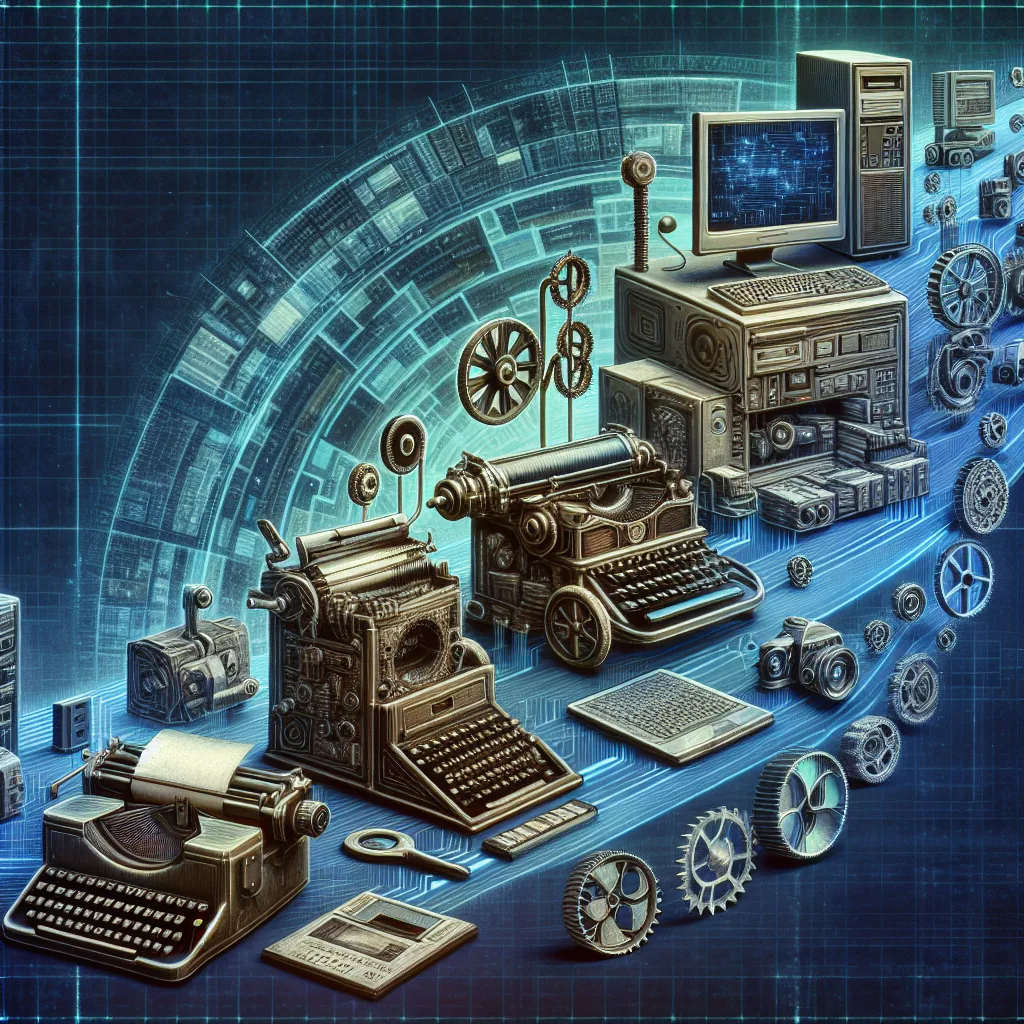
Traditional paper-based methods of managing documentation and business processes face numerous limitations that can significantly impact a company's efficiency and scalability. Transitioning to digitalization represents a key solution for organizations seeking to modernize and streamline their operations.
Restricted access to and sharing of information: In traditional paper-based systems, access to documents is typically limited to their physical storage location. This makes it time-consuming and inefficient to collaborate and share important information with other departments or with external business partners.
Vulnerability to damage and loss. Paper documents are susceptible to damage from physical factors such as fire, water, or even ordinary wear and tear. The loss of important data can have serious consequences for the continuity of business operations.
- Increased operational costs: Maintaining paper-based documentation incurs additional costs associated with printing, archiving, and storing documents. While digital solutions offer more cost-effective models, paper storage generates constant, unavoidable expenditure.
Limited data analysis capabilities: Analyzing paper documents is a manual process that is time-consuming and prone to errors. Digital systems enable the automated analysis of large datasets, which in turn contributes to better management and a faster response to changes in the business environment.
Compliance challenges. Storing documentation in paper form makes it difficult to meet ever-evolving regulatory requirements, which often demand rapid access to accurate and up-to-date data.
In the face of these challenges, an increasing number of organizations are choosing to digitalize their business processes. Digital transformation not only minimizes the limitations outlined above, but also opens up new opportunities – both in terms of data analysis and collaboration – which is truly invaluable in today's rapidly changing economic and technological world. In this way, the transition from paper-based to electronic documentation systems represents a critical step toward greater operational efficiency and the effective management of a modern enterprise.
Computerization – First Steps Toward Digitalization
The introduction of computers into business data management was initially met with a mixture of enthusiasm and skepticism. The pioneers of digitalization quickly recognized the potential benefits, yet the road to full transformation was far from smooth. Here are the key steps that defined the beginnings of this revolution:
-
– Development of dedicated software: Programs such as databases enabled the rapid processing and analysis of large volumes of information.
-
– Automation of business processes: Invoicing, human resources management, and logistics – all of these areas gained in efficiency.
– Supporting reporting and strategic decision-making. Access to fast and precise reports contributed to better planning and the ability to respond to changing market conditions.
The first phase of digitalization also had its challenges. Not every company was ready for change, and some lacked the necessary resources. Nevertheless, contrary to initial concerns, companies that chose to embrace digital technology began to notice significant benefits.
While most of the initial technology adoptions took place before the COVID-19 pandemic, an even greater acceleration has been observed since then. The pandemic acted as a catalyst for the industry and further reinforced the need for remote access to information and services.
Subsequently, at the forefront of innovation, increasingly integrated management systems have emerged that are capable of delivering comprehensive, cross-cutting solutions. Such platforms offer not only operational support, but also critical cybersecurity safeguards.
Thanks to this approach, every element of IT infrastructure becomes more transparent and easier to maintain. Ultimately, the new digital era opens up possibilities for business that were previously unattainable – navigating dynamically changing economic and social landscapes. These transformations are visible not only in the area of data management, but also in the way companies communicate with customers and manage their internal and external processes.
Spreadsheets and the Rise of ERP Systems
The introduction of spreadsheets revolutionized the way companies manage their data and conduct analysis. Subsequently, driven by a growing need to coordinate and integrate various business functions, integrated software solutions began to be developed. ERP (Enterprise Resource Planning) systems became a key element of digital transformation for companies around the world.
Previously, financial data analysis, human resources management, and logistics operations each required separate tools. ERP software unified these functions, offering a coherent overview of an enterprise's activities. This in turn contributed to better management and faster access to the information needed – something that proved especially important during and after the COVID-19 pandemic.
Examples of the impact of ERP systems on business:
They enable faster and more precise invoicing## They support digital supply chain tracking## They automate reports for better performance monitoring
They integrate data from different departments, facilitating decision-making
While spreadsheets were initially revolutionary, ERP systems brought about a change of a scale that transformed enterprise management in a way previously unattainable. On one hand, manual processes were cumbersome and error-prone. On the other hand, ERP systems reduced these problems by providing automation and decision support at every stage of operations.
Likewise, the implementation of these systems became not just a trend, but a necessity for companies striving for efficiency. In the current decade, the adoption of ERP systems will continue to grow, supported by the need for greater integration and automation at a global level. Ongoing digitalization and the optimization of business processes will likely contribute to the further development of this technology.
In conclusion, the transition from simple spreadsheets to comprehensive ERP systems is a pivotal moment in the history of the digital transformation of business processes. Although it may initially have appeared to be only a modest change, it in fact revolutionized the way companies approach data management and analysis, permanently transforming the face of the modern economy.
Summary
Understanding the history of digitalization is crucial for organizations adapting to an ever-changing technological environment. This process, starting from paper documents, evolved toward digital applications – as demonstrated by Idbs – influencing the effectiveness of projects carried out. During the COVID-19 pandemic, rapid adaptations to remote working and support for hospitals underscored the importance of digital transformation for maintaining business continuity. By enabling more efficient ways of working, digital transformation also impacted communication and management in business. In light of these changes, understanding the past of digitalization becomes key to planning for the future and implementing effective digital strategies, especially in the context of the growing importance of cybersecurity.


