
Introduction to Management in SMEs
In an era of dynamic market changes, effective management in small and medium-sized enterprises (SMEs) has become a key factor determining their success. SMEs, which form the backbone of many national economies, must face growing competition and rapidly changing customer expectations. Sound management not only affects day-to-day operations, but also long-term financial results and growth strategy.
Digital transformation—understood as the integration of digital technologies across all areas of a company's operations—is gaining increasing importance in the context of management. It encompasses not only the introduction of modern tools, but also a shift in organizational culture and working practices. It is worth noting that the digitalization of processes enables greater operational efficiency, which is critical at a time when order lead times and customer service quality have a direct impact on competitiveness.
The benefits of effective digitalization include, among others, the automation of routine tasks, which reduces human error and accelerates turnaround times. Moreover, it enables the creation of a coherent data ecosystem that supports data-driven decision-making. As a result, managers can more effectively monitor process performance and respond quickly to emerging issues, which over the long term increases the productivity and profitability of businesses.
Understanding the Challenges Facing SMEs in the Context of Digitalization
Small and medium-sized enterprises (SMEs) encounter a range of specific challenges when implementing digital transformation, which can significantly affect their ability to compete effectively in the market. One of the key issues is a lack of digital competencies among employees. Many SMEs do not have sufficient technological skills, making it difficult for them to understand and leverage modern digital tools. For example, a manufacturing company wishing to implement a process management system may struggle to train its employees, delaying the rollout and generating additional costs.
Another challenge is limited human and financial resources. SMEs frequently face a shortage of IT-qualified staff, meaning that digital transformation demands greater involvement from existing employees who may already be overloaded with responsibilities. As a result, even if a company wants to introduce innovative solutions, budget constraints may lead to delays or the abandonment of certain projects—which is why it is worth understanding the real costs of implementing digitalization.
The final significant factor is resistance to change within the organization. Shifting organizational culture and employee habits is never easy. For instance, in a family-owned retail business where traditional sales methods are deeply ingrained, the introduction of modern e-commerce tools may be met with reluctance from the team. It is therefore essential for SME managers to actively engage their employees in the digitalization process, providing them with the support and education needed to adapt to new conditions.
Key Aspects of Effective Management in SMEs
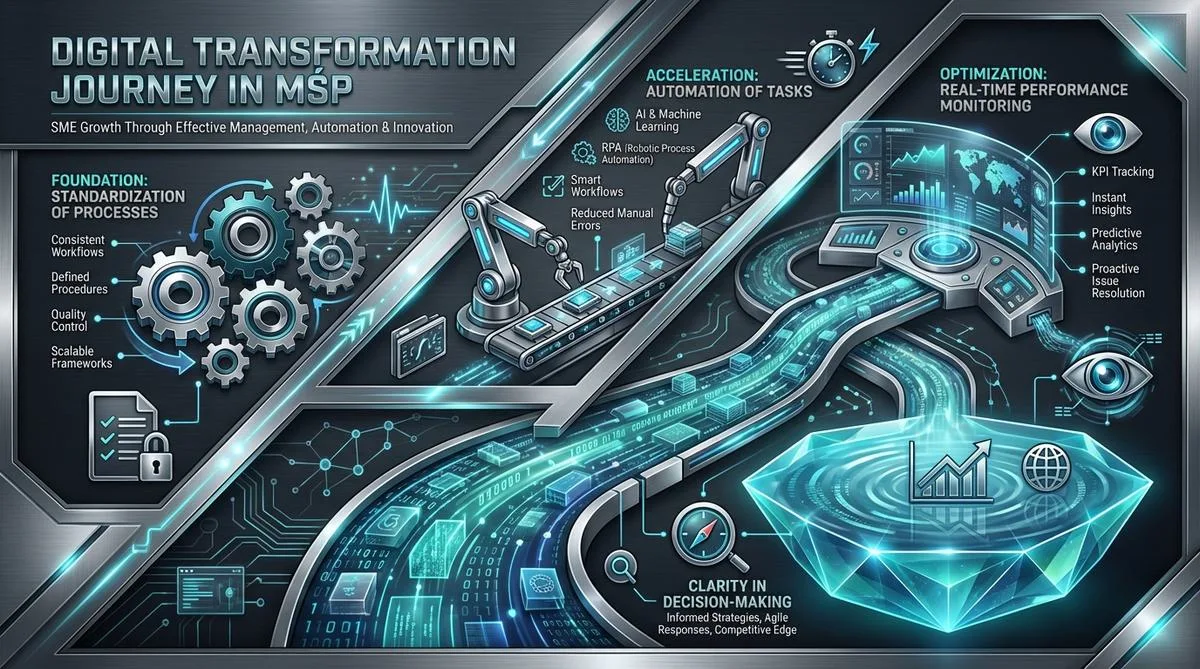
When implementing digital transformation in small and medium-sized enterprises, it is essential to understand several fundamental aspects that can significantly influence the success of the entire process. The first of these is defining a digital vision and strategy. Companies should clearly identify what goals they wish to achieve through digitalization—for example, increasing operational efficiency, improving customer communication, or optimizing costs. Without a clear vision, organizations can easily become lost in the vast array of available technologies and tools.
Another critical element is building a culture of innovation. In SMEs, it is vital that all employees feel engaged in the process of change. Regular workshops and meetings at which staff can share ideas for improvements are one example, as these foster an atmosphere of openness and creativity. Shifting the organizational mindset toward innovation makes it easier to adopt new technologies and enhances the overall effectiveness of the entire team.
The final—but equally important—aspect is process management and optimization. Implementing a process management system such as Process App enables the standardization and automation of activities (if you are looking for practical guidance, see how to automate processes in a small business), which reduces errors and increases efficiency. For example, a manufacturing company that introduces such a solution can cut order lead times and improve the quality of customer service. Through these measures, businesses can gain a competitive edge and better adapt to the evolving needs of the market.
The Role of Technology in the Digital Transformation of SMEs
In the digital transformation process of small and medium-sized enterprises (SMEs), modern technologies play a pivotal role—enabling process automation, data integration, business analytics, and the optimization of business processes through artificial intelligence. Contemporary tools such as low-code platforms allow applications for process management to be built quickly, without the need to engage an IT team. This enables companies to introduce organizational changes in a flexible manner tailored to their specific needs. For example, a clothing manufacturer can rapidly deploy an order management application, speeding up order fulfillment and boosting customer satisfaction.
The integration of ERP and CRM systems is another key aspect that supports operational efficiency. With integrated systems, SMEs have access to unified data, which facilitates decision-making. For instance, a company involved in the distribution of electronic equipment can monitor inventory levels and sales in real time, enabling better stock management and reducing costs associated with excess inventory.
Data analytics is also a vital component of transformation. In the age of Big Data, the ability to analyze information can give companies a significant competitive advantage. With analytical tools, SMEs can identify market trends and gain a deeper understanding of customer behavior, enabling them to tailor their offerings more effectively to customer needs. A catering company, for example, can analyze data on customer preferences to introduce new menu items, leading to increased sales and greater customer loyalty. In this way, technology becomes not merely a tool, but a key element of the growth strategy for SMEs in the digital era.
Examples of Digital Transformation in SMEs
The introduction of digital transformation in small and medium-sized enterprises (SMEs) delivers tangible benefits. For example, a furniture manufacturing company decided to implement a process management system. By using a low-code platform, production processes and order management were automated. The result was a 30% reduction in order lead times and a significant decrease in errors, which in turn increased customer satisfaction.
Another example can be found in the logistics sector. A large transport company introduced a system for real-time fleet monitoring and management. Through integration with an ERP system, full operational visibility was achieved, enabling faster decision-making and route optimization. As a result, fuel costs were reduced by 15% and delivery efficiency improved.
In the financial sector, a mid-sized consulting firm invested in analytical tools, gaining a better understanding of client needs. Data analysis enabled the development of personalized offers, contributing to a 25% increase in the client base over the course of a year. These examples illustrate how diverse industries are leveraging digitalization to transform their operations into more efficient and agile ones.
However, the transformation process is not without its challenges. The furniture company mentioned above had to contend with resistance from employees who were apprehensive about the changes. Team training and open communication proved to be key, helping to build a culture of innovation. By learning from both mistakes and successes, SMEs can better align their strategies with the challenges of the market.
Change Management in SMEs
Change management in small and medium-sized enterprises (SMEs) is a critical component of successful digital transformation, requiring the commitment of the entire team. Communication is the foundation of this process. Regular meetings and open communication channels help employees understand the purpose of the transformation and their role within it. For example, at one manufacturing company, the introduction of a new process management system began with workshops at which employees could ask questions and share their concerns. This made them feel like part of the change, which increased their motivation to learn new skills.
The second key aspect is training and competency development. Implementing new technologies requires employees to acquire new skills. SMEs often opt for training programs tailored to the needs of the team. For instance, one logistics company invested in training on how to use the new software, enabling employees to adapt to the change quickly and avoid frustration with the system.
The final—but equally important—element is monitoring progress and adapting. Regular assessments and feedback allow the approach to change to be adjusted on an ongoing basis. At one financial sector company, managers regularly analyzed implementation results, which helped identify areas requiring additional attention and support. This improvement cycle ensures that transformation is not a one-off event, but a continuous process that fosters innovation and operational efficiency. It is also valuable to introduce a reward system for employees who actively engage in the transformation, providing additional motivation to take action.
Summary and the Future of Digital Transformation in SMEs
In the face of growing competition and dynamic shifts in the market environment, digital transformation is becoming an essential step for small and medium-sized enterprises (SMEs). In the previous sections of this article, we discussed the key aspects of management in SMEs and the importance of process digitalization. It is now time to summarize and reflect on what the future holds in this regard.
Digital transformation in SMEs is not simply a matter of implementing new technologies—it is above all a shift in organizational culture and management approach. Examples of companies that have successfully introduced modern solutions show that team engagement is the key element. Many SMEs that have invested in developing their employees' competencies are seeing significant gains in operational efficiency. Training and workshops that help employees acquire new skills are fundamental to ensuring that the transformation process is smooth and effective.
It is also worth paying attention to systems integration as a key aspect of the future for SMEs. Companies that are able to effectively connect different applications and systems gain full visibility into their processes, enabling faster decision-making and the elimination of bottlenecks. Examples from the logistics and manufacturing sectors show that operational efficiency increases when companies invest in integrated solutions. These allow organizations to adapt to changing market needs and respond quickly to emerging challenges.
The future of SMEs in the context of digital transformation will also be shaped by the growing importance of data analytics. The use of advanced analytical tools will enable companies to better understand customer needs and anticipate shifts in market behavior. Companies that can effectively analyze data will be able to develop personalized offers, increasing their competitiveness. One example is a mid-sized manufacturing company that, through the analysis of marketing data, grew its customer base by 30% in the space of a year.
In light of the above, we encourage all SMEs to take action toward digitalization. There has never been a better time to embrace change than now. Implementing process management systems such as Process App can significantly streamline operational processes and accelerate digital transformation. Companies that take this step will gain not only a competitive advantage, but also greater flexibility and the capacity to adapt in an ever-changing environment.
In summary, the future of digital transformation in SMEs is full of challenges, but also of enormous opportunities. Investment in new technologies, continuous process improvement, and employee engagement are the key elements that can contribute to the success of any organization. Regardless of industry, SMEs that make the decision to digitalize will become leaders in their sectors, and their growth will be dynamic and sustainable.


