
Introduction: SME Management Challenges
In the face of growing market competition, small and medium-sized enterprises (SMEs) encounter numerous challenges that can hinder effective management. The increasing number of players across the industries in which they operate forces SMEs to constantly seek innovative solutions to maintain their market position. In particular, operational efficiency becomes a critical success factor, as it enables cost reduction and optimization of order fulfillment times.
Against this backdrop, technology plays an indispensable role in transforming SME processes. Process management tools, automation solutions, and data analytics are becoming essential for identifying and eliminating operational bottlenecks. One example is the implementation of a project management system that allows real-time tracking of task progress and team performance, resulting in better coordination of activities.
Ultimately, for SMEs to compete and grow effectively, they must be prepared to adapt to a changing market—which requires not only investment in modern technologies but also in developing the digital competencies of their employees. Only through proper management and the strategic use of technology, taking into account the key aspects of digital transformation, can organizations achieve their desired success and build a solid foundation for future growth.
Why Are Technologies Critical for SMEs?
In the era of digital transformation, technologies have become a cornerstone of operational strategies in small and medium-sized enterprises (SMEs). The automation of operational processes is one of the most important factors contributing to increased efficiency. By leveraging automation tools, SMEs can reduce the time spent on routine tasks such as data entry and document management. A prime example is the implementation of a CRM system that automates sales processes, allowing teams to focus on building client relationships rather than administrative tasks.
Improved data quality and accessibility represent another key benefit of technology investment. Many SMEs struggle with the absence of consistent, up-to-date information, which hampers decision-making. Cloud-based solutions enable data centralization, not only enhancing data quality but also providing easy access to real-time information. A project management platform that consolidates progress data, for instance, allows teams to identify potential issues more quickly.
Finally, technology significantly improves team communication. Online collaboration tools such as Slack and Microsoft Teams enable employees to share information and coordinate activities in real time, leading to greater productivity. Modern SMEs that invest in technology are able not only to reduce operational costs but also to strengthen their competitive position in the market. Implementing the right digital tools allows for flexible adaptation to changing market conditions—an increasingly essential element of growth strategy in an ever more complex business environment.
Examples of Technologies Supporting SME Management
In today's dynamic world, technology plays a pivotal role in managing operational processes within small and medium-sized enterprises (SMEs). Deploying the right technological tools can significantly impact operational efficiency and service quality. Below are several examples of solutions that can support SMEs in their day-to-day operations.
ERP systems (Enterprise Resource Planning) are among the most important tools, integrating various business processes on a single platform. They enable data synchronization across departments such as finance, logistics, and production, facilitating better resource management and process optimization. For example, a manufacturing company that implemented an ERP system reported a 30% reduction in time spent on reporting and cost control, which contributed to improved profitability.
CRM tools (Customer Relationship Management) focus on managing client relationships. These systems help SMEs better understand customer needs, enabling offer personalization and improved service quality. For instance, a leading logistics service provider that deployed a CRM solution increased customer satisfaction by 25% through faster response to inquiries and issues.
Data analytics is another critical element supporting decision-making in SMEs. Analytics tools allow for the collection, processing, and real-time analysis of data, enabling trend identification and forecasting of future results. As an example, a retail company used analytics to optimize its marketing campaigns, resulting in a 20% increase in sales within just one quarter.
All of the technologies mentioned above not only contribute to greater operational efficiency but also enable SMEs to adapt flexibly to changing market conditions. Investments in these technological solutions are becoming essential for maintaining competitiveness and achieving continued growth.
How to Implement Technologies in SMEs?
Implementing technology in small and medium-sized enterprises (SMEs) is a process that requires careful planning and a well-considered strategy. The critical first step is analyzing the organization's needs and objectives. It is worth examining which areas of the business present the greatest gaps and what goals the company aims to achieve—such as increasing operational efficiency, improving service quality, or optimizing costs. This approach enables the identification of specific solutions that best address the diagnosed needs.
The next step is selecting the right software. The market offers a wide variety of systems—from ERP to CRM—that differ in functionality and cost. It is worth investing time in testing several solutions to select the one that best aligns with the company's strategy. For example, a manufacturing company that implemented an ERP system improved process efficiency by 30% within just a few months, confirming the importance of choosing the right technological tools.
Once a solution has been selected, change management and team training become essential. Introducing new technology is often accompanied by employee concerns and resistance to change. It is therefore crucial to involve the team in the implementation process, clearly explaining the benefits of the new system. Training programs should be tailored to employees' knowledge levels and the specific nature of their tasks. For instance, a logistics company that conducted training on a new warehouse management system observed a 20% increase in productivity among operational staff within the first month alone.
Finally, it is important to monitor the outcomes of the implementation. Regular analysis of results enables ongoing process adjustments and the resolution of any emerging issues. As one example, a service-sector company that introduced a data analytics tool identified inefficient procedures and made the necessary changes, achieving 15% savings in operational costs over the course of a year. Implementing technology in SMEs is not merely a matter of investment—it is a question of strategic thinking about the company's future.
Examples of SME Successes Through Technology
The introduction of technology in small and medium-sized enterprises (SMEs) delivers measurable benefits, as demonstrated by numerous case studies. One manufacturing company, specializing in metal products, implemented a production management system that increased output efficiency by 40% in just six months. By automating order processes and integrating with an ERP system, the company reduced order processing time by 30%, enabling faster order fulfillment and greater customer satisfaction.
Another example is a logistics company that deployed advanced supply chain management tools. By introducing IoT (Internet of Things) technology to monitor shipments in real time, the business significantly improved its operational efficiency. This enabled faster identification of problems and bottlenecks in the delivery process, resulting in a 25% improvement in on-time order fulfillment. Customers grew to trust the company more, translating into increased loyalty and repeat orders.
In the area of sales and marketing, a mid-sized food production company invested in a data analytics platform. By leveraging advanced analytics, the company gained a deeper understanding of its customers' needs, enabling offer personalization. The result was a 15% increase in sales over the course of a year, significantly improving the company's financial performance. This example highlights the importance of using technology for data analysis, which allows for faster decision-making and better alignment of marketing strategy with evolving market trends.
All of these cases illustrate how technology can serve as a key driver of SME transformation. Implementing the right solutions not only enhances operational efficiency but also boosts market competitiveness—leading, in the long run, to significant revenue growth and a stronger market position.
Summary and Conclusions
In the age of digitalization, technology has become a critical factor shaping the development of small and medium-sized enterprises (SMEs). This article has demonstrated how effective business process management, supported by modern technological solutions, can contribute to significant efficiency gains within organizations. Success stories from companies across various industries show that technology investments not only accelerate processes but also enable better resource management and increased customer satisfaction.
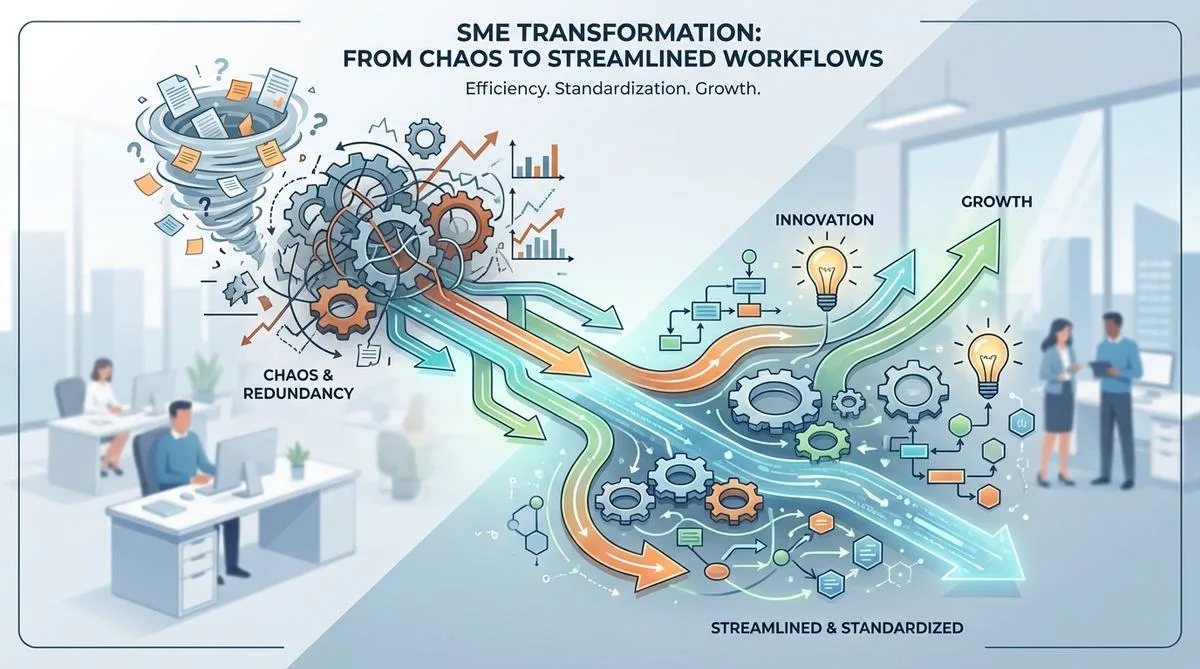
One of the key conclusions drawn from the analysis is that technology can reduce operational chaos and introduce standardization—both of which are essential for SME growth. Companies that have implemented process management systems, such as Process App, have observed improvements in documentation practices, leading to greater consistency and repeatability of operations. This, in turn, reduces the risk of errors and delays, which is particularly important in the context of intensifying market competition.
It is also worth emphasizing that technology enables the creation of a coherent data ecosystem within a company. Through system integration, managers can make decisions based on current and accurate information, leading to better resource management and more effective planning. Companies that have invested in data analytics have been able to identify bottlenecks in their processes, enabling rapid implementation of improvements. An example from the manufacturing sector demonstrates that applying technology to data analysis delivers tangible benefits—such as a 15% increase in productivity over the course of a year.
In terms of encouraging action toward digitalization, it is worth highlighting the resources available to support SMEs in this process. Many institutions offer financial and advisory support to companies choosing to implement modern technologies. Organizations should also consider partnering with technology providers that offer ready-made solutions, flexible enough to be tailored to specific business needs. It is important to remember that successful technology implementation requires the right approach and the commitment of the entire team—both of which significantly increase the likelihood of success.
In summary, implementing technology in SME operational processes is not only an opportunity to improve efficiency but also the key to long-term growth and market competitiveness. Managers should therefore invest the time and resources needed to digitalize their processes—not only to meet today's market challenges but also to capitalize on emerging opportunities for continued business development.


