
Introduction: Why Whiteboards Are No Longer Enough in the Modern Warehouse?
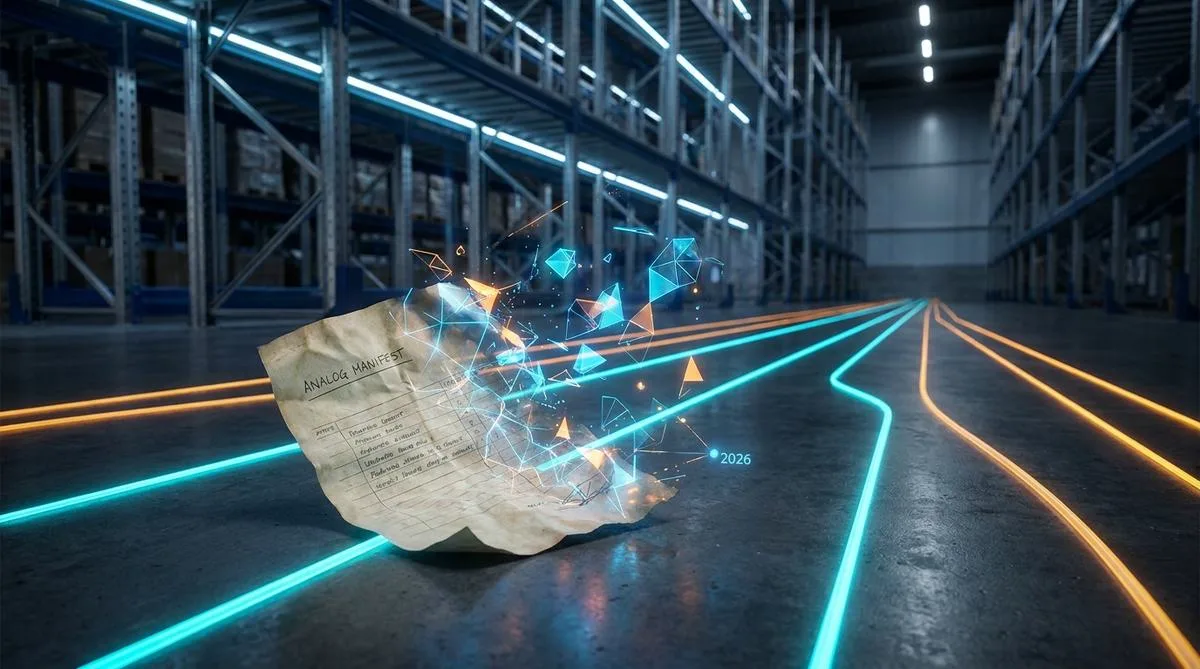
The Lean Management philosophy has served as the cornerstone of optimization in the logistics and transportation sector as well as the manufacturing industry for decades. Traditional methods — relying on physical whiteboards, manually written Kanban cards, and paper-based shift reports — worked exceptionally well in the past. However, modern supply chains demand decisions made in fractions of a second. The collision between the traditional approach and the demands of real-time logistics brutally exposes the inadequacy of analog tools.
The Limitations of Paper-Based Information Flow
The limitations of paper-based information flow on the warehouse floor have today become a barrier to growth. Physical boards don't update themselves, and the information on them becomes outdated the moment it is written down. The lack of immediate access to data on inventory levels, downtime, or bottlenecks leads to delays that are simply unacceptable in today's market environment. A large automotive manufacturing plant or a leading logistics operator cannot base their survival on a misplaced piece of paper or an illegible note on a whiteboard.
What Is the Digitalization of Lean Processes?
The solution to this growing problem is the comprehensive digitalization of lean processes. This concept refers to the seamless transfer of proven continuous improvement methodologies — such as Kaizen, 5S, and Kanban — into an integrated digital environment. In practice, this means that modern warehouse management software completely takes over the role of physical information carriers, simultaneously automating data collection and analysis. Instead of manually transcribing KPIs from a board into a spreadsheet, managers gain instant access to interactive dashboards.
When carried out correctly, digitalization integrates with the company's existing IT infrastructure. An advanced ERP system for manufacturing, in close conjunction with dedicated process applications, enables full operational transparency at every level. Workers on the production line or in the picking zone can report issues with a single tap on a tablet, rather than wasting time searching for a shift supervisor.
Digital Lean is not about rejecting the traditional values of continuous improvement — it is about equipping them with a modern, data-driven engine. It is a necessary transition from reactive firefighting to proactive value stream management.
In the era of Industry 4.0, maintaining a competitive advantage requires not only optimizing processes themselves, but above all ensuring their full, uninterrupted real-time visibility. Whiteboards must ultimately give way to intelligent systems that not only report a problem when it occurs, but also help identify and resolve it immediately.
Muda 4.0: How Digitalization Eliminates Hidden Waste in Logistics?
The classic concept of Muda, defining eight types of waste, remains highly relevant — yet in the era of Industry 4.0, it takes on an entirely new form. In the traditional view, the focus was on material losses visible to the naked eye. Today, in the modern supply chain, the greatest and most costly waste is the absence of information flow and the untapped potential of data. The digitalization of lean processes makes it possible to identify these hidden gaps, transforming inefficient habits into optimized, automated operations.
8 Types of Waste in the Warehouse Environment
Translating the eight classic wastes into the context of large-scale warehouses clearly illustrates how technology addresses everyday challenges. Unnecessary motion is no longer just a matter of poorly designed workstations — it is primarily the kilometers traveled by forklift operators due to suboptimal picking routes. Defects and errors are picking mistakes that generate enormous reverse logistics costs. Waiting manifests as downtime at loading docks caused by a lack of time-window synchronization. Advanced warehouse management software continuously monitors these areas, using algorithms to calculate the shortest routes and verify scanned barcodes, which drastically reduces both empty runs and human errors.
The Cost of the Lack of Real-Time Information
An invisible yet extremely painful financial burden for companies in the logistics and transportation sector is the absence of real-time information flow between departments. When the receiving area does not communicate instantly with the sales department, and the ERP system for manufacturing lacks up-to-date data on raw material levels, costly bottlenecks emerge. Teams make decisions based on delayed reports, leading to excessive buffer stock accumulation or, worse, production line stoppages. Digital integration eliminates these information silos, ensuring full operational transparency at every stage of the supply chain.
Digital Standardization and Rapid Onboarding
Another key aspect of waste elimination is the optimization of human resource management, particularly in the context of growing staff turnover. The impact of digital standardization on reducing the onboarding time for new employees is invaluable in today's environment. Instead of multi-day training sessions with paper-based instruction manuals, a new warehouse operative receives an intuitive terminal or an industrial tablet. The device guides them step by step through the entire picking process, displaying product images and their exact locations on the warehouse floor.
By implementing a digital work standard based on clear, visual instructions, leading distribution centers are able to reduce full employee onboarding time from several weeks to just a few days, while minimizing the risk of costly errors during the critical initial phase of employment.
Business practices and analyses show that in large distribution centers, deploying modern systems integrated with process applications can reduce unnecessary movement by as much as thirty percent. Meanwhile, systematic verification at every stage of the picking process can reduce the number of erroneous shipments to nearly zero. Investing in advanced technology is therefore not merely a matter of modernizing a company's image — it is above all a hard financial calculation, in which the elimination of hidden waste directly and rapidly translates into a measurable increase in the company's operating margin.
Category 1: Next-Generation Advanced Warehouse Management Software (WMS)
The foundation on which effective digitalization of lean processes in modern distribution centers rests is reliable and scalable cloud-based warehouse management software. It is precisely next-generation WMS (Warehouse Management System) solutions that serve as the central nervous system of logistics operations. The shift from on-premise solutions to cloud architecture enables the processing of vast amounts of data in real time. As a result, space management, inventory control, and human resource management reach an unprecedented level of precision, eliminating waste at the very source.
Tool 1: Cloud-Based WMS and Algorithmic Picking Route Optimization
The first key tool in our overview is cloud-based WMS equipped with advanced pick-path optimization algorithms. In the traditional model, warehouse workers waste a great deal of time moving inefficiently between aisles — a classic example of motion waste. Modern warehouse management software analyzes all active orders and batches them in a way that minimizes the distance traveled by operators. Furthermore, seamless integration — in which the WMS and the ERP system for manufacturing exchange data without delay — ensures that raw materials reach assembly lines in precisely the right sequence. This drastically reduces the hidden costs associated with unnecessary movement and waiting.
Tool 2: Dynamic Slotting Management Modules
The second tool, without which it is difficult to imagine implementing Lean concepts in intralogistics, is the dynamic slotting module. Traditional fixed-location assignment for specific SKUs often leads to suboptimal use of valuable space. Dynamic slotting is an intelligent solution that continuously analyzes product turnover, seasonality, and demand forecasts. Based on these variables, the system automatically suggests optimal product placement. The highest-turnover items are assigned to the so-called golden zone, maximizing the efficiency of retrieval.
Just-In-Time at the Level of a Single Rack
Combining route optimization with dynamic slotting enables flawless implementation of the Just-In-Time principle at a micro scale. Advanced systems not only manage the entire warehouse floor — they effectively dictate the pace of operations at the level of a single rack.
By deploying next-generation cloud-based WMS solutions, leading logistics operators stop managing only goods and begin managing time and space in real time. This represents the highest level of operational maturity.
As a result, every pallet put-away and retrieval operation is precisely planned, eliminating the need to repeatedly reposition the same stock. The warehouse thus becomes a smoothly running mechanism, ready for rapid adaptation to dynamic market changes and sudden demand spikes.
Category 2: ERP System for Manufacturing and Logistics as the Central Nervous System
Effective digitalization of lean processes requires more than simply optimizing individual workstations. To achieve full synergy, an integrated ERP system for manufacturing and logistics is essential — one that serves as the central nervous system of the entire enterprise. This powerful software seamlessly connects the production floor with the finished goods warehouse and the picking zone. The foundation of this approach is the concept of a Single Source of Truth (SSOT). Thanks to SSOT, all departments work from the same real-time data, which drastically reduces communication errors and eliminates overproduction. Optimizing buffer stocks then becomes a precise science rather than guesswork based on historical, already-outdated spreadsheets.
Tool 3: Agile ERP System Integrating Demand Forecasting with Production Scheduling
The third key solution on our list is a modern, agile ERP system. Its primary strength lies in the advanced integration of demand forecasting modules with dynamic production scheduling. In traditional business models, planning is often based on rigid cycles, leading to capital being locked up in excessive inventory. An agile ERP system for manufacturing analyzes market trends, current orders, and raw material availability, automatically adjusting production plans. A prime example is a large automotive manufacturer that, following the implementation of such a solution, reduced work-in-process inventory by nearly thirty percent. The smooth flow of data between production and intralogistics takes place here without any information silos.
Tool 4: Digital Value Stream Mapping (VSM) Platforms
The fourth tool brings classic Lean Management techniques directly into the Industry 4.0 era. Digital Value Stream Mapping (VSM) platforms replace traditional sticky notes and whiteboards with interactive, data-driven models. Digital VSM enables process engineers to rapidly identify bottlenecks and map the flow of materials and information in real time.
Eliminating information silos through digital value stream mapping enables an immediate response to disruptions — which is the foundation of the modern Lean approach in complex supply chains.
The integration of VSM platforms with the central management system means that every modification on the assembly line is immediately reflected in logistics requirements. Leading distributors of electronic components use these tools for continuous process improvement (Kaizen), basing their decisions on hard streaming data. This architecture ensures that logistics and production speak the same language, maximizing the overall operational efficiency of the facility.
Category 3: E-Kanban and Digital Material Flow Management
The next critically important step in the evolution of supply chain management is the transition from traditional physical cards to fully automated replenishment signals. Effective digitalization of lean processes in this area enables a radical acceleration of information flow between production cells and the warehouse. Physical document circulation gives way to instantaneous digital messages, eliminating the risk of losing or delaying critical demand signals.
Tool 5: E-Kanban Systems Automating Supplier Orders (VMI)
The fifth solution in our overview consists of advanced e-Kanban systems that integrate directly with a network of external partners. These tools automate the supplier ordering process, supporting models such as Vendor-Managed Inventory (VMI). Leading automotive manufacturers successfully use e-Kanban systems to precisely synchronize component deliveries with external subcontractors, operating within a rigorous Just-in-Time framework.
Implementing electronic Kanban signal circulation allows for a drastic reduction in work-in-progress (WIP) inventory, while simultaneously minimizing the risk of production line stoppages due to component shortages.
With this architecture, when the stock at an assembly workstation falls below a defined minimum, the system automatically generates and sends a replenishment request directly to the supplier's IT system. There is no room for delays caused by manual data processing.
Tool 6: Mobile Applications for Forklift Operators
The sixth key element of modern internal logistics is dedicated mobile applications for forklift operators, used for the instant verification of transport orders. Integrated with the central warehouse management software, these applications deliver precise instructions directly to operators' onboard terminals. The operator can see the exact route, task priority, and destination location.
The primary advantage of this solution is the near-total elimination of empty runs. The system intelligently assigns tasks based on the forklift's current location, optimizing both picking and internal transport routes. As a result, logistics operations become significantly more responsive, and equipment resources are utilized at maximum operational efficiency.
Category 4: Predictive Analytics and Data-Driven Continuous Improvement (Kaizen)
The true potential of digitalization of lean processes is fully realized when an organization stops merely reacting to current problems and begins actively preventing them. The transition from reactive firefighting to a proactive Kaizen approach, however, requires a solid information foundation. Modern logistics rejects guesswork in favor of hard evidence, leveraging advanced analytics, artificial intelligence, and the concept of Digital Twins. Through interactive analytical dashboards, managers can test various operational scenarios in real time and identify potential bottlenecks before they impact the smooth flow of materials.
Tool 7: BI Analytics Platforms with Predictive Modules for Supply Chain
The seventh item on our list consists of modern Business Intelligence (BI) platforms enhanced with advanced predictive algorithms. These tools aggregate vast datasets from various sources, including solutions such as a modern ERP system for manufacturing and transportation management systems. By analyzing historical trends and current deviations, artificial intelligence can forecast future loads on the distribution network with considerable accuracy.
Leading logistics operators in the transportation sector use such platforms for dynamic schedule optimization. Rather than relying on static models, the system predicts when a workload peak will occur in the warehouse and automatically suggests resource reallocation.
Tool 8: IoT Systems Monitoring Warehouse Equipment Performance (OEE)
The eighth key solution consists of industrial Internet of Things (IoT) systems that continuously monitor the Overall Equipment Effectiveness (OEE) indicator. Sensors installed on conveyor belts, automated storage and retrieval systems, and forklifts collect data on vibrations, temperature, and machine operating hours. This information is instantly fed into the central system, with which the warehouse management software is integrated, creating a cohesive IT ecosystem.
Leveraging IoT technology enables the implementation of a Predictive Maintenance strategy, which radically reduces the risk of unplanned downtime and costly equipment failures.
A large European spare parts distributor, thanks to IoT sensors, managed to nearly completely eliminate failures in critical sorters. The system notifies the maintenance department in advance of the need to replace a worn bearing, perfectly aligning with the philosophy of continuous improvement based on reliable data.
Category 5: Applications for Digital 5S Audits and Quality Management
Effective digitalization of lean processes cannot overlook the fundamental importance of maintaining the highest standards of quality and workplace safety. The traditional approach — based on paper forms and manually completed spreadsheets — is becoming obsolete. The paperless philosophy is no longer merely an eco-friendly trend; it is above all an operational necessity in a dynamic warehouse environment. Eliminating paper enables a drastic reduction in response time to identified issues and prevents the loss of critical audit data.
Tool 9: Mobile Platforms for Conducting Digital 5S Audits and Gemba Walks
The ninth indispensable solution consists of dedicated mobile applications that completely revolutionize the way 5S audits and Gemba Walks are conducted. Instead of walking the floor with a clipboard and a pen, auditors and shift leaders use tablets or smartphones with intuitive software installed. Mobile audit applications replace static, paper-based checklists with interactive forms that enforce compliance with defined procedures step by step.
Thanks to easy-to-use mobile interfaces, building a lasting culture of standardization becomes significantly simpler and more engaging for frontline employees. These systems enable immediate non-conformance reporting — simply take a photo of the issue, add a brief comment, and with a single tap assign a corrective action to the appropriate technical department.
Tool 10: QMS Systems Integrated with Logistics
The tenth and final solution in our overview is an advanced QMS (Quality Management System) deeply integrated with logistics processes. To fully control quality at every stage of the supply chain, a QMS must exchange data seamlessly with other systems. When warehouse management software and an ERP system for manufacturing work in tandem with the quality management module, the organization gains full process transparency and the assurance that standards are being upheld.
An integrated QMS enables the automated blocking of defective product batches in the warehouse immediately upon detection of a defect on the production line or in the receiving area.
An excellent example is a leading European automotive manufacturer that integrated mobile quality audits with its overarching system. The moment a critical non-conformance is detected during incoming inspection, the system automatically places a hold on the release of that component batch to production. This approach not only minimizes the risk of errors, but also builds a culture of continuous improvement grounded in the rapid flow of information and an immediate response to incidents.
ProcessApp Internal OS: Why an Integrated Ecosystem Outperforms Multiple Standalone Applications?
Although the tools presented in the ranking offer tremendous value, attempting to implement all of them as separate solutions often leads to digital chaos. Effective lean process digitalization should not mean multiplying IT entities. Fragmentation is one of the greatest pitfalls of modern supply chain management. The hidden costs of maintaining, updating, and integrating multiple dispersed logistics and production systems drastically reduce the initial return on investment.
When warehouse software cannot communicate seamlessly with a 5S audit platform, and a production ERP system requires manual re-entry of data from external applications, the organization accumulates enormous technical debt. Instead of optimizing value streams, IT teams waste valuable time constantly fixing incompatible data exchange interfaces and training employees on multiple separate interfaces.
A comprehensive environment instead of digital silos
The answer to this challenge is Process App Internal OS. Instead of purchasing, implementing, and laboriously integrating dozens of different applications, companies in the TSL and manufacturing sectors can use this integrated ecosystem as their central operating environment. Process App Internal OS functions as a reference operating model that naturally combines WMS-class functionality, ERP master systems, and specialized Lean tools in one easy-to-manage place.
Generating dedicated process applications within a single, centralized system completely eliminates the problem of technical debt and operational data silos.
Speed of adaptation and business ontology mapping
What sets Process App Internal OS apart from traditional software is its unprecedented speed of adaptation to dynamically changing market conditions. The system enables precise mapping of each company's unique business ontology. This means that digital processes reflect the actual, unique way a given warehouse or production floor operates, rather than forcing the organization to conform to the rigid framework of off-the-shelf software.
One large automotive manufacturer, using this solution, was able to build and deploy integrated digital workflows for quality control and incident management in just a few days. The ability to rapidly implement new operational processes within a single ecosystem means that continuous improvement stops being a mere slogan and becomes a seamless part of everyday work.
Summary: Where to begin your Lean process digital transformation?
Logistics and Supply Chain Directors face an enormous challenge today. Growing pressure to reduce operational costs and the need to maintain maximum flexibility are making traditional management methods insufficient. This is precisely why lean process digitalization has ceased to be merely an innovative trend and has become an absolute business necessity. It is worth remembering, however, that simply purchasing modern software will not resolve deeply rooted organizational problems.
Technology is just a tool – the business process is the foundation
A common mistake made during digital transformation is attempting to automate chaos. Even the most expensive warehouse software or advanced production ERP system will not deliver the expected results if layered on top of inefficient, error-prone procedures. Technology should serve as a powerful amplifier for well-designed and optimized workflows. The foundation of every successful operational change therefore remains a deep understanding of one's own organization.
Before investing in complex IT solutions, we must view our operations through the lens of Lean philosophy. This means identifying bottlenecks, mapping value streams, and relentlessly eliminating waste. Building a culture of continuous improvement within operational teams leads employees to begin identifying areas that require intervention on their own. When the workforce understands the purpose of the changes being introduced, adoption of new technological solutions proceeds far more smoothly and without internal resistance. Only an organized operational environment provides the right foundation for implementing digital tools.
A roadmap for implementing change: From audit to full optimization
Effective lean process digitalization requires a highly systematic approach. For leaders in the TSL sector and manufacturing industry, we have prepared a proven roadmap that minimizes the risk of technology project failure. The following steps enable a safe transition from traditional management to a modern ecosystem.
- Detailed process inventory and audit: The first step is thoroughly mapping the current state of operations. All key processes must be identified — from goods receipt to dispatch — and their actual effectiveness objectively assessed.
- Optimization and standardization: Before introducing technology, procedures must be simplified. Standardizing work makes it possible to establish unambiguous business rules that will subsequently be faithfully reflected in the IT system.
- Choosing the right architecture: Rather than implementing dispersed applications, the focus should be on an integrated environment. The right system must integrate seamlessly with existing infrastructure instead of creating additional, isolated data silos.
- Pilot and iterative rollout: Digitalization is best started in one dedicated area of the warehouse or production floor. A successful pilot builds team engagement and allows for the rapid elimination of any issues before scaling across the entire company.
Why a flexible Internal OS is a future-proof investment?
In an era of extremely dynamic market changes, rigid off-the-shelf software quickly becomes obsolete. Choosing a flexible solution such as Process App Internal OS is a strategic investment that safeguards the organization against future disruptions. Instead of bearing the enormous costs of maintaining multiple dispersed applications, companies gain a single, cohesive operating environment. Supply chain management today demands the ability to instantly reconfigure workflows. An internal operating system gives logistics directors full control over process architecture, eliminating dependence on external IT vendors for every minor modification.
True business agility emerges when an IT system follows process change in real time, rather than requiring months-long, costly development projects.
One leading logistics operator demonstrated that transitioning to an integrated operating system makes it possible to reduce the time required to implement new projects by half. When a production ERP system and warehouse software work together within a single platform, data flows without any disruption whatsoever. This in turn enables management to make sound decisions based on reliable, up-to-date information — which is crucial today for maintaining a competitive edge in a demanding market.
Time for integrated architecture – an invitation to collaborate
Managing multiple inconsistent applications is a dead end that generates employee frustration and hidden, ever-growing IT costs. The time has come to definitively abandon digital chaos in favor of an organized, integrated architecture. Process App Internal OS offers a unique opportunity to build a dedicated environment that perfectly mirrors the specifics of your business. You no longer need to make painful compromises between advanced functionality and ease of day-to-day use.
If you are ready to take your organization to a completely new, higher level of operational efficiency, we invite you to get in touch directly. Schedule a free, no-obligation consultation and a dedicated demonstration of Process App's capabilities for the TSL sector and modern manufacturing. Our experienced experts will help you conduct a preliminary audit and plan a process in which lean process digitalization becomes a powerful lever for your long-term business success. Take the first, most important step toward modern logistics today.


