
Recruitment Processes: From Newspaper Ads to Digital Platforms
📋 Table of Contents
- [History of Recruitment2. Why Does Recruitment Need Modernization?3. Digitalization as the Key to Effective Recruitment
- 5 Benefits of Digitalizing Recruitment Processes](#historia-rekrutacji2-dlaczego-rekrutacja-wymaga-modernizacji3-cyfryzacja-jako-klucz-do-efektywnej-rekrutacji4-5-korzysci-z-cyfryzacji-procesow-rekrutacyjnych)
Recruitment processes are among the most critical processes in any company. They determine whether the right person ends up in the right role, and whether tasks are carried out in the right way. A well-executed recruitment process can enrich your organization, while neglecting it can result in significant costs. How can modern technology help you with this challenge? Let's find out!
-
History of Recruitment
-
Why Does Recruitment Need Modernization?3. Digitalization as the Key to Effective Recruitment
-
5 Benefits of Digitalizing Recruitment Processes
History of Recruitment
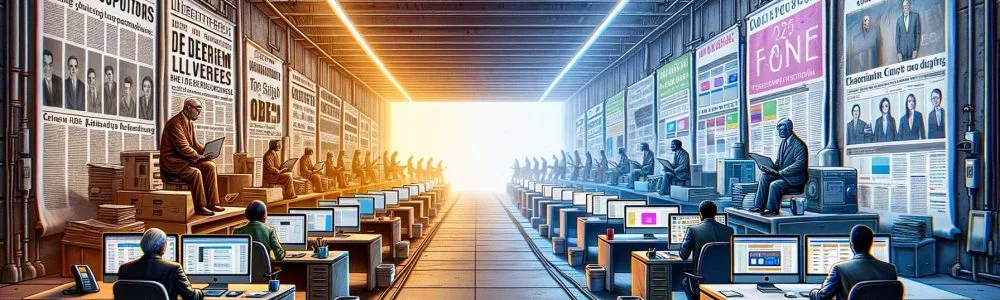
Recruitment as a process has come a long way since the days when newspaper advertisements were the primary means of communicating job opportunities. Just a few decades ago, companies relied mainly on the press as their principal tool for finding candidates.
The process was time-consuming and often inefficient, as prospective employees had to manually browse job listings and submit their applications by post. Moreover, the reach of such advertisements was limited to local communities. Even so, it was the most widespread method at the time. On one hand, it offered a way to reach potential employees; on the other, many people simply never had the chance to see a given advertisement.
Over time, however, advances in technology began to play a pivotal role in modernizing recruitment processes. Initially, computers only helped with scanning CVs and maintaining candidate databases.
Then the internet became a revolution for HR departments.
Online platforms made it faster and easier to find top talent regardless of their location. Today, employers can reach their chosen target audience with far greater precision.
The introduction of modern tools is a direct response to the need for a faster, more effective recruitment process. Job portals offer greater opportunities for personalizing listings and reaching the right candidates.
The development of such solutions has made recruitment more transparent and measurable. A recruitment process that once took weeks can now be condensed into days or even hours. Traditional recruitment has given way to integrated applicant tracking systems, enabling the efficient processing of large numbers of candidates. These systems not only improve the way applications are managed but also help in properly monitoring recruitment outcomes. This represents phenomenal progress for the entire industry.
Why Does Recruitment Need Modernization?
Recruitment, as a process critical to every company, requires a modern approach. Traditional recruitment methods, while proven, are often time-consuming and inefficient. Improving recruitment has now become an urgent matter.
Modern digitalization brings us many benefits:
It allows you to reach a larger pool of potential employees## It enables better candidate screening before an in-person meeting
It streamlines the entire process — from the job interview to the hiring decision
Automating the recruitment process is critically important today, as it saves time and resources. Modern recruitment platforms also support integration with other HR tools, improving the flow of information and enabling effective work organization.
Implementing these changes simplifies the human resources management process. As a result, companies can gain a competitive advantage by directing their efforts toward innovation and modern technologies.
Modernizing recruitment is an integral part of the development of companies like yours, enabling them to meet the demands of today's labor market. Digitalization is a key step toward more effective and transparent recruitment. Every company should strive to improve its processes — it is an investment that will certainly pay off. In the face of growing competition, a modern approach to this topic is becoming a necessity.
Digitalization as the Key to Effective Recruitment

Digitalizing recruitment is an essential step for modern companies like yours that wish to optimize their operations and gain a competitive edge.
First and foremost, digitalization helps reduce the time required to complete processes. Thanks to modern technologies such as automated applicant tracking systems, larger volumes of data can be managed in less time. Instead of manually reviewing and categorizing CVs, systems now automatically sort and filter candidates, saving time and reducing the risk of errors.
Furthermore, digitalization enables detailed analytics and measurement of recruitment processes. This makes it easier to identify which candidate sources are most effective or which stages of the process need improvement.
Modern HR platforms integrate with other systems, facilitating data management and enabling the monitoring of key performance indicators.
In addition, digitalization opens up the possibility of more easily reaching a global candidate market, increasing the chances of finding the ideal employee.
Digital technologies also contribute to improving the candidate experience. Recruitment processes are more transparent, and communication between the company and candidates is faster and more effective. As a result, candidates feel that their applications are being given proper attention, which increases their satisfaction and enhances the employer brand.
Digitalization in recruitment is not just an option but a necessity for companies that want to keep pace with a rapidly changing market. Automation, analytics, and improved candidate communication make the process more effective. Modern tools enable broad outreach to candidates around the world. A streamlined recruitment process becomes a key element in building the employer brand. Ultimately, companies investing in digitalization will be better prepared for the challenges of the future.
5 Benefits of Digitalizing Recruitment Processes
Introducing modern technological solutions to HR departments offers numerous benefits that can significantly improve the effectiveness of human resources management. On one hand, automating these processes allows for faster and more efficient application processing. On the other hand, it enables more precise matching of candidates to role requirements. Here are five key advantages that stem from digitalizing recruitment:
Reduced recruitment time – Thanks to digitalization, the entire talent search process becomes more dynamic. Automated application sorting systems eliminate the need for manual document processing, significantly reducing the time needed to make a hiring decision. A process that previously took weeks can now be completed in just a few days.
Expanded reach – Digital recruitment platforms enable access to candidates worldwide, allowing companies to attract talented employees regardless of their location. In this way, recruitment becomes more global and open to diverse talent.
Improved application quality – Algorithms and AI-powered tools make it possible to recommend applications that best match the role's profile. As a result, recruitment decisions become more accurate, increasing the likelihood of hiring the right people.
Resource savings – Implementing automated recruitment systems allows companies to reduce costs associated with running traditional processes. This decreases the need for manual resources, which can be redirected toward other strategic tasks.
Better communication with candidates – Digitalization enables more effective and timely interaction with candidates. Companies can efficiently keep candidates informed about their recruitment status, improving the candidate experience and strengthening a positive employer image.
Digitalization is becoming not just a trend but a genuine necessity. By investing in technological development, your company not only increases its efficiency but also opens itself up to new opportunities in a rapidly evolving business environment.


