
The Future of Digitalization
📋 Table of Contents

- Real-time automation through IoT
- Hyperautomation and intelligent processes
- Forecasts and upcoming technological changes
- The importance of organizational culture and digital competencies
- Conclusions and inspiration for companies still undergoing transformation
In the era of Industry 4.0, digitalization forms the foundation that is reshaping the face of modern organizations. Discover how technologies such as IoT are transforming automation in real time, and how hyperautomation enables the creation of intelligent processes. Explore forecasts about upcoming technological changes that will impact supply chains and paperless offices. Understanding how organizational culture and employees' digital competencies play a critical role in adapting to volatile times may be key for your company. All of these topics will inspire managers and entrepreneurs to rethink and apply new strategies in their digital future.
-
Real-time automation through IoT
-
Hyperautomation and intelligent processes
-
Forecasts and upcoming technological changes
-
The importance of organizational culture and digital competencies
-
Conclusions and inspiration for companies still undergoing transformation
Real-time automation through IoT
In the era of digitalization, where the future becomes the present faster than ever, technological innovations such as the Internet of Things (IoT) play an enormously important role. This rapidly evolving technology offers unprecedented opportunities in the areas of automation and operational efficiency, particularly in supply chains and production management.
By leveraging IoT, a company can achieve real-time process automation, delivering a range of operational and business benefits:
Process optimization:
– Implementing well-designed IoT solutions enables continuous data analysis and automatic parameter adjustment, increasing efficiency and reducing the risk of errors.
Enhanced responsiveness:
– IoT systems enable rapid response to changing conditions — both internal and external — which is crucial in volatile times such as these.
Reduction of operational costs:
– IoT devices identify inefficient processes and help eliminate them, reducing excessive resource consumption and lowering costs.
Improved safety:
– Real-time monitoring and automatic alerts provide protection against unexpected incidents, enhancing overall employee safety.
Better product quality:
– Through continuous control and automation, IoT ensures that high production standards are maintained.
Furthermore, the application of IoT technology contributes to the transformation of traditional factories into intelligent working environments. Unlike traditional methods, which relied primarily on manual control, IoT enables comprehensive process management without direct human intervention. As a result, operations become more predictable and can be better tailored to market needs.
In a world where industrial complexity and market demands are constantly increasing, IoT integration provides the essential tools to respond effectively to these challenges. This gives companies a competitive advantage, enabling them to grow and adapt to the needs of the modern world.
Hyperautomation and intelligent processes
In the era of rapidly advancing digitalization, hyperautomation — advanced automation combined with the use of artificial intelligence for enterprise process management — is becoming a key direction of development. This approach aims not only to streamline operations, but also to transform entire supply chains into more efficient and less error-prone systems. In the future, hyper-automation strategies will be indispensable for companies in volatile times, when rapid adaptation and process optimization become critical.
Several key aspects of hyper-automation and intelligent processes can be identified:
-
Maximizing efficiency: Deploying advanced analytical tools enables the identification and elimination of outdated procedures, increasing operational effectiveness at every stage of activity.
-
Enhanced data security: Automation systems utilize modern security technologies to protect the critical data of the company and its customers.
-
Significant error reduction: Process automation reduces the risk of errors caused by human factors, which is particularly important in industries requiring high precision.
-
Improved customer service: It enables fast and accurate responses to customer needs, which in turn translates into better service quality and greater satisfaction.
-
Ease of scaling operations: Thanks to digital tools, companies can easily adapt their operations to changing market needs without significant investment in physical resources.
Whereas in the past it may have been sufficient to introduce digital solutions in reaction to emerging challenges, today digital transformation must be a deliberate, strategic decision.
Moreover, the role of digital tools has become even more significant as companies strive to create entirely paperless, automated work environments. Ultimately, in the near future, these intelligent systems may form the foundation of new, revolutionary ways of doing business on the world stage of industry and technology.
Intelligent automation is changing the face of digitalization, enabling better decisions to be made in less time — which is invaluable in the rapidly changing realities of today's business world.
Forecasts and upcoming technological changes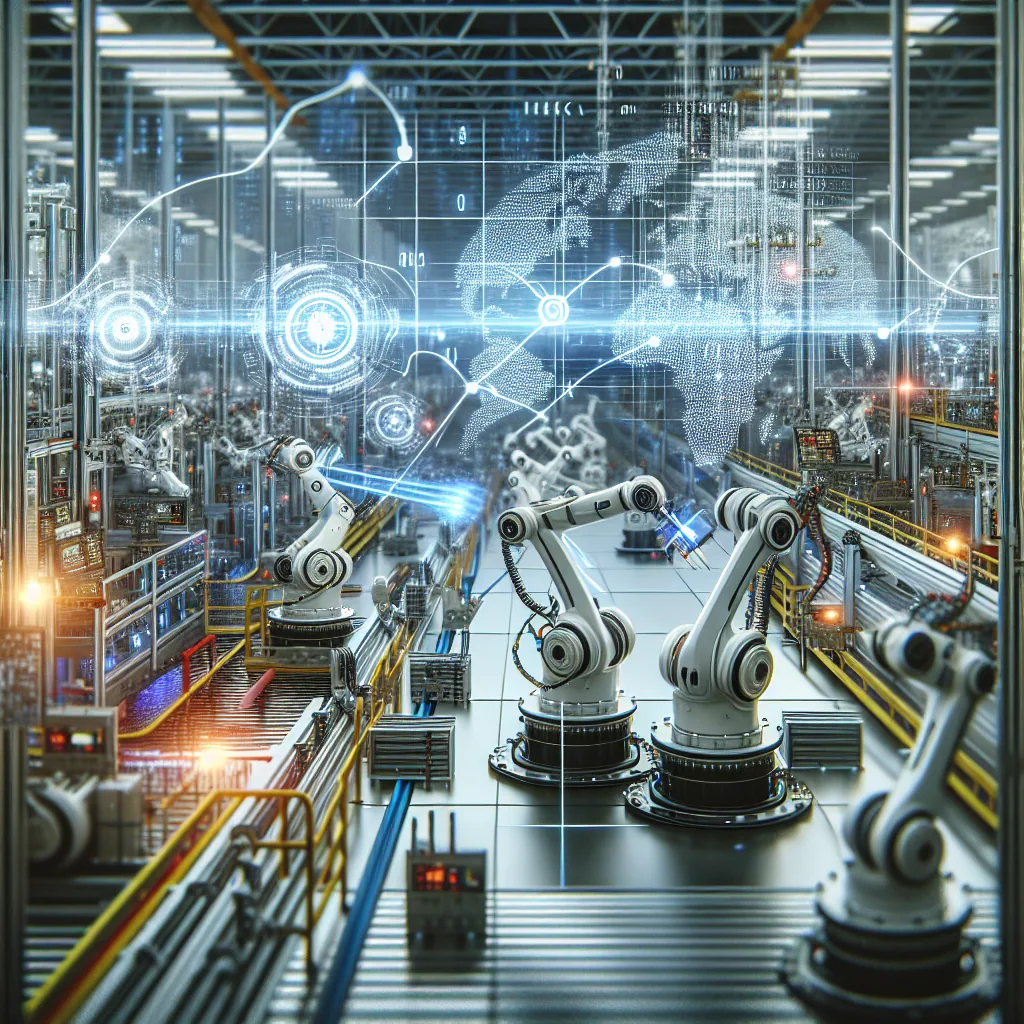
In light of rapidly advancing technologies, the future of digitalization looks promising, but also brings new challenges. Forecasts point to several key trends that will shape the IT industry and its impact on global supply chains, economics, and ways of working.
Digital transformation will increasingly encompass diverse industrial sectors. This will include not only traditional industries such as IT and telecommunications, but also, for example, the agricultural and construction sectors, making the benefits of automation and data analysis more widespread.
Paperless work environments are gaining in importance, particularly in the context of sustainable development and the need to reduce costs. The future of work in the era of digitalization is moving toward the full digitalization of documents and processes.
Cybersecurity will become an even more critical aspect as companies undergo digital transformation. Protecting data and systems from cyberattacks will be a top priority, and investment in modern security technologies will increase significantly.
AI- and machine learning-based solutions will be applied ever more widely to optimize operations, predict market trends, and personalize customer experiences. In the same way, AI will play a key role in the development of smart cities and the automation of public services.
System integration will continue to advance, facilitating the exchange of data between different platforms and tools. This in turn will contribute to greater operational efficiency and shorten response times to changing market conditions.
In contrast, there are still sectors that are not keeping pace with the rate of change. For example, there are still many volatile markets, and digital transformation within companies engaged in traditional manufacturing also requires time and significant investment. It is now clear that change is inevitable. In contrast to lagging industries, other sectors must quickly adapt their strategies to the new reality of the digital world.
The importance of organizational culture and digital competencies
In the era of digitalization, the importance of organizational culture and digital competencies is becoming extremely significant for every company. A strong organizational culture and employees' digital skills can greatly contribute to work efficiency, innovation, and market competitiveness. The key aspects that highlight the role of these elements in the context of the future of digitalization are discussed below:
Digital transformation
– Critical in times of volatile market conditions.
– Enabling faster responses to change and process optimization.
Organizational culture
– Promotes innovation through open thinking and support for creative solutions.
– Influences employees' perception of their work, increasing their engagement and satisfaction.
Employees' digital competencies– Enable the effective use of modern IT tools.
– Essential for managing modern supply chains and data protection.
In the future, the role of organizational culture and digital competencies will be even more pronounced. Companies that focus on the continuous education and adaptation of their employees to the digital future will be at the forefront of industry change. While technology is constantly evolving, it is equally important for employees to have the opportunity to develop their skills. They will then be able to operate effectively in the new, digital world.
Despite the challenges that digitalization brings, companies also have the opportunity to take advantage of the many benefits that the digital era offers. The introduction of paperless management systems, the automation of production processes, and the implementation of remote work are just some examples of how digital transformation can help streamline operations.
In summary, understanding and developing organizational culture and digital competencies is a foundation that cannot be neglected. Companies that invest in these areas now will be better prepared for a future that will undoubtedly be even more digital than the present.
Conclusions and inspiration for companies still undergoing transformationDigitalization has become an indispensable element of every modern company, but some businesses still face the challenges of digital transformation. Here are some conclusions and sources of inspiration that may prove useful for companies operating in volatile times:
Understanding and adapting to new technologies. In the era of digitalization, it is essential not only to track the latest technology trends, but also to actively implement them. Solutions such as paperless systems and cloud-based solutions can significantly increase operational efficiency.
Investing in employee training. Digital transformation is not just about new tools — it is also about new skills. Dedicating time and resources to e-learning and developing employees' digital competencies can yield long-term benefits.
Adopting flexible strategies. In contrast to rigid planning, flexible strategies enable faster adaptation to a changing environment. Digital transformation requires continuous evaluation and real-time adaptation of strategies.
Integrating digital systems with supply chains. Digitalizing supply chains can significantly improve their efficiency. Using digital tools to manage supply chains enables companies to better track and manage resources.
Securing data. When undergoing transformation, it is important to secure digital infrastructures. Investment in digital security systems is essential to protect company data from cyberattacks.
Despite the various challenges, digitalization offers companies a range of opportunities for growth and innovation. While on the one hand this process requires commitment and resources, on the other hand it opens up the possibility for companies to work more effectively and adapt better to the demands of the modern world. The future of digitalization looks bright. It is worth taking advantage of the tools and strategies currently available in order to finally gain a competitive edge in the near future.


