
Introduction to the Future of Logistics
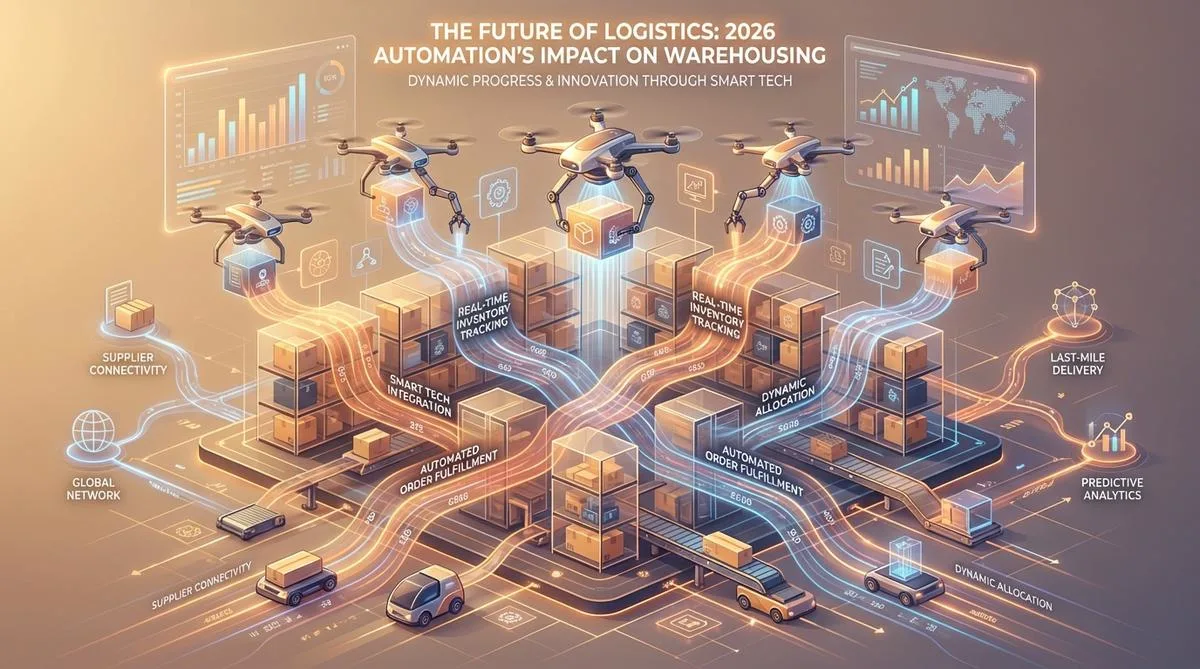
Over the past few years, the logistics industry has been undergoing dynamic change, with automation becoming a key driver of this transformation. By 2026, the warehouses of the future will no longer be mere storage facilities, but intelligent operational hubs that fully leverage modern technology. Logistics automation contributes to greater efficiency, fewer errors, and shorter order fulfillment times — all of which are critically important in the face of growing customer expectations for fast delivery.
A central aspect of this transformation is the implementation of warehouse management systems (WMS), which form the foundations of digital warehouse management and enable real-time inventory tracking, automated ordering, and space optimization. These systems give logistics directors such as Krzysztof Dąbrowski full visibility into current stock levels, enabling better planning and decision-making. The role of technology in the future of warehousing cannot be overstated; it not only supports day-to-day operations but also enables integration with suppliers, improving the efficiency of the entire supply chain.
In the years ahead, we will witness the continued development of innovative solutions such as robotics, artificial intelligence, and the Internet of Things (IoT). These technologies not only improve the speed and accuracy of warehouse operations, but also enable better data analysis — which is crucial for the long-term growth strategies of businesses. It is worth considering how these changes will affect day-to-day work in logistics and what new opportunities for development they will bring.
Automation of Warehouse Processes
In an era of digitalization and growing competition, automation of warehouse processes is becoming a key element of operational strategy in the logistics industry. Introducing robots into warehouses to handle repetitive and time-consuming tasks enables a significant increase in operational efficiency. For example, internal transport robots can rapidly move goods between different warehouse zones, minimizing the time required for order fulfillment.
Real-time inventory tracking is another area where automation delivers measurable benefits. Through the use of barcode scanning and RFID technology, warehouse staff can instantly and accurately monitor stock levels. For instance, one large electronics distribution company implemented an RFID system that reduced inventory errors by 30% and improved the accuracy of data on available products.
Automated ordering is the next step toward optimizing warehouse processes. Warehouse management systems (WMS) can continuously monitor stock levels and automatically generate purchase orders to suppliers when inventory reaches a critical threshold. This approach not only ensures that appropriate stock levels are maintained, but also eliminates the risk of stockouts — which is critically important given customers' growing expectations around delivery timeliness.
Finally, automation also supports data analysis, enabling better strategic decision-making. Integration with analytical systems allows for the generation of reports and charts that provide valuable insights into operational performance and market trends. As a result, logistics directors such as Krzysztof Dąbrowski can make more informed decisions, contributing to the long-term growth of their companies.
New Technologies in Logistics
In the age of logistics digitalization, technologies such as artificial intelligence (AI), the Internet of Things (IoT), and blockchain play a pivotal role. AI is used for data management and process optimization. For example, one logistics company introduced AI algorithms to analyze demand data, enabling it to predict customer needs and adjust stock levels in real time. As a result, the company reduced excess inventory by 25%, which had a significant impact on operational costs.
The Internet of Things is another key element reshaping the face of warehousing. By deploying IoT sensors, businesses can continuously monitor stock levels, temperature, and humidity in their warehouses. For example, at a leading electronics distributor, IoT sensors enable automatic notifications when restocking is needed, eliminating the risk of stockouts and speeding up order fulfillment times.
Blockchain is gaining traction in logistics due to its ability to track the supply chain in a transparent and immutable way. For instance, one food distribution company implemented a blockchain system to monitor product provenance. This allows customers to easily verify the origin of any given product, increasing their trust and enhancing the brand's reputation.
All of these technologies not only support process automation, but also enable better data analysis and more informed decision-making — both of which are essential in the ever-changing logistics environment.
Benefits of Warehouse Automation
Warehouse automation delivers a range of benefits that are becoming essential in the rapidly evolving world of logistics. First and foremost, increased operational efficiency is one of the most significant advantages. By using modern warehouse management systems (WMS), processes such as goods receipt, inventory management, and order picking are carried out faster and with greater precision. For example, one FMCG distribution company implemented automated order-picking systems that boosted productivity by 40% within the first six months.
Another key benefit is a significant reduction in errors and losses. Automation reduces the risk of mistakes during the order-picking process and eliminates human error. For instance, the use of barcode scanners enables accurate tracking of every product, cutting the number of incorrect shipments by 90%. Additionally, automated ordering systems help businesses avoid both excess stock and shortages, resulting in meaningful financial savings.
Furthermore, automation contributes to improved delivery service quality. Customers increasingly expect faster and more reliable deliveries, and automated warehouse processes make it possible to achieve shorter order fulfillment times. For example, one of the leading courier companies expanded its same-day delivery capacity by implementing automated solutions. This not only meets customer expectations but also strengthens the company's market position.
Finally, automation has a direct impact on total operational costs. Fewer errors, faster order fulfillment, and better inventory management all lead to lower costs associated with running warehouses. Industry examples show that companies that have implemented automation can save up to 30% of their operational costs within a year.
Challenges of Implementing Automation
Implementing automation in warehouses comes with a range of challenges that can affect the pace and effectiveness of the transformation. First, **high upfront costs** can represent a significant barrier for many companies. Investments in modern technologies such as robots, IoT sensors, and warehouse management systems (WMS) are expensive, and the return on investment may not be felt for several years. Companies must carefully plan their budgets to minimize financial risk and ensure operational liquidity.
A second major challenge is **managing organizational change**. Introducing automation requires a well-thought-out strategy that accounts not only for technology, but also for people. Employees may fear job losses or changes to their daily responsibilities. It is essential for management to involve employees in the transformation process, explaining the benefits of automation and demonstrating how new technologies can support their work.
The final — but equally important — aspect is the **need for employee training and adaptation**. The introduction of new systems and technologies requires staff to have the appropriate skills to operate them. For example, one large logistics company invested in intensive training programs to help employees adapt to the new software. Without adequate support, even the best technologies may fail to deliver the expected results. It is worth investing in long-term educational programs to ensure the continuous development of the team's skills.
Examples of Companies That Have Revolutionized Their Warehouses
Modern logistics companies that have successfully implemented automation in their warehouses serve as an inspiration for other businesses. One example is a large electronics distributor that chose to invest in automated warehouse management systems (WMS) in order to boost efficiency and reduce errors. By implementing RFID technology, the company was able to track the location of every product in real time, reducing order fulfillment times by 35%. Customers now receive more accurate information about delivery status, increasing their satisfaction.
Another compelling example is a logistics company in the transport and freight sector that introduced robots into its order-picking process. These robots are able to navigate the warehouse and collect goods according to demand, significantly increasing operational efficiency. Within a year, the company recorded a 50% increase in productivity, enabling it to handle a greater volume of orders without the need to expand its workforce.
A further example is an innovative industrial company that installed automated shelving and conveyor systems, enabling the optimization of warehouse space. This reduced the occupied floor area by 30%, with the savings reinvested in the development of new product lines. Such technologies revolutionizing warehouse space management not only improve workplace organization, but also contribute to better resource utilization and lower operational costs.
Summary and the Future of Warehouse Automation
As the logistics industry enters the digital age, automation is becoming a key component of operational strategies. In this article, we have discussed how innovative technologies — such as robotics, IoT, and warehouse management systems (WMS) — are revolutionizing the way warehouses operate. The key takeaway is that automation not only increases process efficiency, but also enables better data analysis, which translates into more informed business decisions.
Looking at the future of automation in logistics, several key trends are worth noting. First, a growing number of companies are investing in artificial intelligence and machine learning, enabling more accurate demand forecasting and process optimization. These technologies allow companies to adapt their operations in real time to changing market conditions — something that is essential in an increasingly competitive landscape.
In addition, automating warehouse processes eliminates human error, which is critical to delivering high-quality customer service. One example is the introduction of barcode scanning systems, which significantly reduce the risk of mistakes during order picking. As a result, companies report a notable drop in complaints and an increase in customer satisfaction.
However, to fully harness the potential of automation, logistics directors such as Krzysztof Dąbrowski must take concrete steps right now. A key action is **investing in employee training** to ensure the team is properly prepared to work with new technologies. It is also important to focus on **effective system integration**, which will enable a smooth flow of information between the warehouse and the back office.
In closing, the future of automation in logistics is extraordinarily promising. Companies that choose to implement it will not only be able to strengthen their competitive position, but will also be better equipped to respond to customer needs. We therefore encourage taking action today — whether that means modernizing existing processes or deploying cutting-edge technology solutions. Automation is not just a trend; it is a necessity for surviving in today's fast-changing world of logistics.


