
Introduction: The Eternal Conflict Between Sales and Production
In many medium and large manufacturing enterprises, there is a palpable daily tension between the sales department and the shop floor. Sales representatives, driven to close contracts as quickly as possible and feed the CRM sales pipeline, frequently promise customers unrealistic delivery dates. Meanwhile, production directors and shift managers find out about new, supposedly high-priority orders at the last minute. This situation completely upends carefully constructed schedules and introduces enormous anxiety into workforce planning.
This scenario is a direct path to operational chaos, in which manufacturing process optimization becomes nothing more than an empty buzzword rather than a genuine business objective. The root cause of this state of affairs is deeply entrenched information silos. When sales and production operate on isolated IT systems or rely on manually updated spreadsheets, the flow of critical data is delayed and extremely vulnerable to human error.
Consequences of the Absence of Integrated Data
System isolation leads to painful financial and reputational consequences. As a result, the OTD (On-Time Delivery) indicator drops dramatically. Customers receive their orders late, destroying brand trust and reducing the long-term profitability of negotiated contracts.
- Contractual penalties for delivery delays hit the company's budget directly.
- Rising overtime costs on the production floor consume the margin generated by the sales department.
- Overall team morale declines as staff work perpetually in "firefighting" mode.
In today's highly competitive environment, integrating sales data with operational data is an absolute priority for the years ahead. Siloed departments are a direct path to losing competitive advantage.
This is precisely why a professional ERP implementation in manufacturing has ceased to be purely a technological matter. It is a strategic foundation. Connecting these two critical areas enables automatic verification of resource availability, production capacity, and raw materials as early as the quoting stage. When a sales representative can see the real-time load on machines, they can give the customer a reliable delivery date. Production, in turn, gains the transparency and time needed to plan work appropriately.
The Anatomy of Integration: How the CRM Sales Pipeline Drives Planning
To effectively eliminate operational chaos, it is essential to understand the technical and business data flow between systems. A seamless transition from a sales opportunity in the CRM to a production order in the resource management system is the foundation of a modern enterprise. When a sales representative moves an opportunity to the next stage in the pipeline, the software should automatically generate a preliminary material requirement on the production floor.
This approach means that production directors are no longer caught off guard by sudden top-priority orders. Instead, they gain invaluable time to optimize machine and team schedules. This is precisely how the CRM sales pipeline ceases to be merely a tool for the sales department and becomes a critical radar for the entire plant.
The ATP Indicator: An End to Promises Without Substance
At the heart of this integration is the Available-to-Promise (ATP) mechanism, which operates in real time. This indicator analyzes current inventory levels, scheduled raw material deliveries, and the current load on production workstations. As a result, when creating a quotation, the sales representative receives a precise and reliable date for the possible fulfillment of an order.
Using the ATP indicator for precise quoting completely eliminates guesswork and reliance on intuition. If a large manufacturer in the metals sector is negotiating a multi-million-dollar contract, the system immediately verifies whether production capacity will allow for on-time delivery. This builds customer trust and protects the company from costly contractual penalties.
Early Material Reservations and Supply Chain Security
Another critical aspect is securing the supply chain through early material reservations at the commercial negotiation stage. When the probability of winning a contract in the CRM reaches a defined threshold, the integrated ERP system initiates a series of preventive processes:
- Automatic reservation of key components with long lead times (so-called long lead items).
- Generation of alerts for the purchasing department regarding the need to place orders with suppliers.
- Instant simulation of manufacturing costs based on the latest market prices for raw materials.
In an era of global uncertainty, such proactive action makes it possible to avoid situations in which a won contract becomes unprofitable due to sudden stock shortages. When selecting the best ERP system for manufacturing in 2026, decision-makers must rigorously verify the depth and stability of this integration.
True digital transformation occurs when data from the sales pipeline directly and automatically shapes the production schedule, minimizing risk at every stage of fulfillment.
Case Study 1: Make-to-Order (MTO) Manufacturing and Eliminating Quoting Errors
An excellent example illustrating the importance of data integration is an ERP manufacturing case study from a leading European manufacturer of specialized industrial machinery. This enterprise operates within the demanding Make-To-Order (MTO) model, producing goods to individual customer specifications. The operational context of this organization was characterized by extremely high project variability and the need to manage complex, multi-level bill of materials (BOM) structures.
The primary challenge facing management was a chronic lack of consistency between the promises made by the sales department and the actual capabilities of the shop floor. Under pressure to meet sales targets, sales representatives regularly offered customers machine configurations that were either impossible to manufacture within the required timeframe or contained mutually incompatible components. This stemmed from the fact that the quoting process relied on outdated spreadsheets and fragmented engineering knowledge.
The Consequences of Underestimated Costs and Broken Promises
The consequences of this situation were catastrophic for the profitability of individual projects. The company regularly struggled with drastically underestimated manufacturing costs. When an incorrectly configured order finally entered production, engineers had to modify plans on the fly, generating substantial delays and requiring the emergency procurement of non-standard parts.
- The sales department lost credibility with key clients due to missed delivery deadlines.
- The cost of manufacturing machinery frequently exceeded the originally budgeted amount, completely consuming the intended margin.
- Conflict between engineers and sales staff paralyzed day-to-day internal communication.
System Synergy: The CPQ Configurator as a Guardian of Profitability
The solution to these pressing problems proved to be a comprehensive ERP implementation in manufacturing, natively integrated with an advanced CPQ (Configure, Price, Quote) tool. The introduction of the quotation configurator completely transformed the sales process. Fed in real time with data from the resource management system, this tool required sales representatives to work exclusively within technologically permissible variants.
The integration of CPQ with the manufacturing engine means that the system automatically blocks the ability to sell a configuration that violates engineering rules or exceeds the plant's available production capacity at any given moment.
Thanks to this new IT ecosystem, critical human errors at the pricing stage were eliminated. The most spectacular result of this digital transformation was a 70% reduction in the time required to prepare a complex quotation. Sales representatives can now generate a technically flawless, precisely costed quote in just a few minutes, with complete confidence that production will fulfill it within the promised timeframe.
Case Study 2: The FMCG Sector and Managing Demand Peaks
The fast-moving consumer goods (FMCG) sector is unforgiving of planning errors. A prime example is a medium-sized food manufacturer specializing in dairy products with very short shelf lives. In this specific operational environment, high-volume production must be synchronized with raw material deliveries almost to the hour.
Storing large inventories was not an option due to the risk of spoilage and extremely stringent quality standards. Every ERP manufacturing case study in this sensitive sector clearly demonstrates that the absence of precise data is a direct path to waste and substantial financial losses.
The Problem: Costly Communication Delays
The primary challenge management faced was aggressive promotional campaigns run by large retail chains. The marketing and sales department successfully negotiated participation in nationwide discount campaigns, generating sudden, massive demand peaks for selected products. Unfortunately, news of these commercial successes reached the production floor and the purchasing department far too late.
This resulted in a dramatic shortage of raw materials at critical moments during contract fulfillment. The production team worked under constant stress, and the company missed opportunities to maximize profits. The enterprise was repeatedly forced to decline portions of lucrative orders or pay enormous premiums for express deliveries of semi-finished goods from emergency suppliers.
The Solution: Sales Probability as a Driver for Production
The breakthrough came with an advanced ERP implementation in manufacturing, fully integrated with the customer relationship management system. Rather than waiting for the final signing of a promotional contract, the new system began actively analyzing the CRM sales pipeline at its earlier stages.
When a specific sales opportunity reached a defined, high probability of closing (for example, 80%), the software automatically generated a preliminary material requirement and reserved the necessary machine capacity. This manufacturing process optimization completely transformed the dynamics of daily work across the entire plant.
- The purchasing department gained an invaluable time buffer for relaxed negotiations with milk and packaging suppliers, avoiding surcharges for rush orders.
- The production director could plan additional work shifts and optimal line changeover schedules well in advance.
- The quantity of expired raw materials was significantly reduced, thanks to the precise alignment of deliveries with actual demand.
Integrating data from the marketing and sales pipeline with an ERP system is not merely a convenience — above all, it is a powerful financial lever. In a sector with low margins and high volumes, technologically anticipating demand determines whether a business survives in the market.
This manufacturer's example proves that when considering the best ERP system for manufacturing in 2026, one must look far beyond the shop floor itself. Effective demand peak management requires treating sales, marketing, and logistics operations as a single, integrated ecosystem operating on the basis of shared, real-time data.
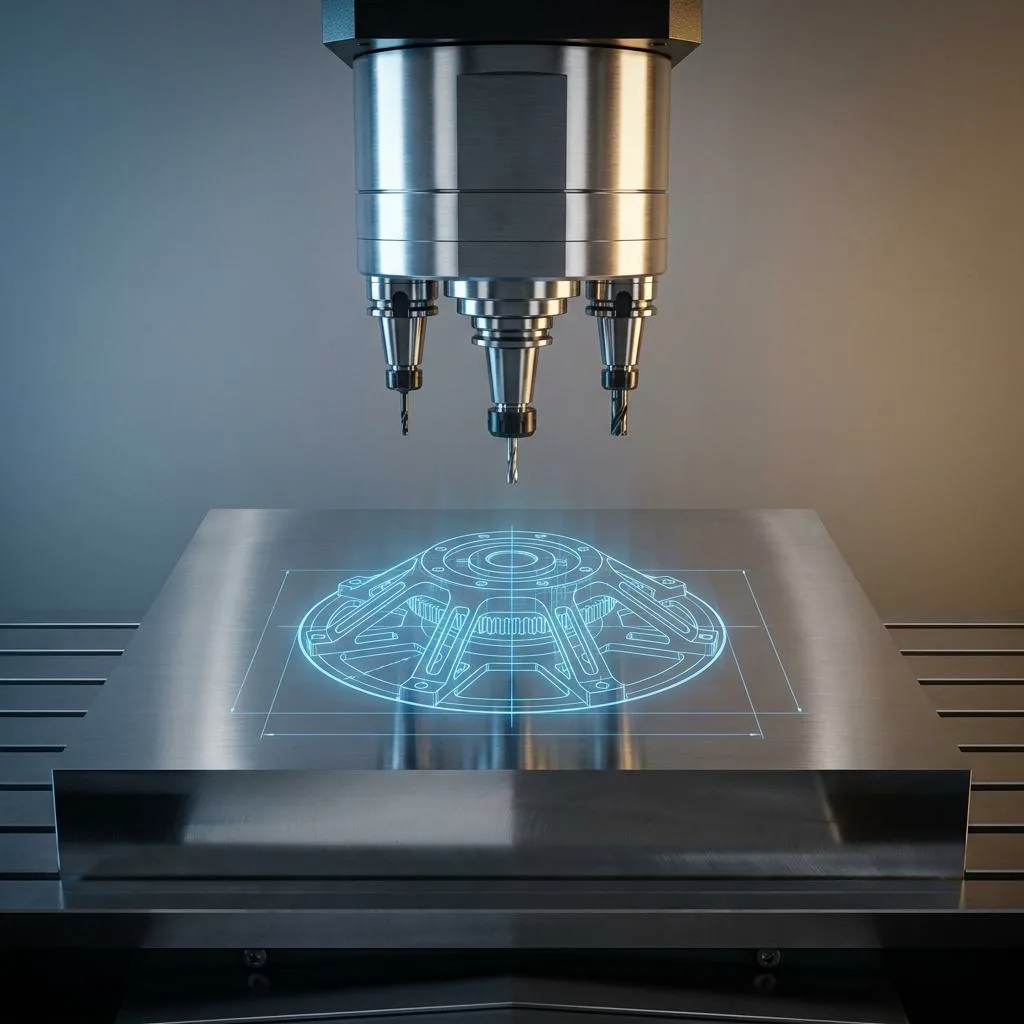
Case Study 3: Engineer-to-Order (ETO) Manufacturing and Documentation Consistency
The next ERP manufacturing case study concerns a large company producing advanced, large-scale steel structures for the energy and marine sectors. This enterprise operates within the highly demanding Engineer-To-Order (ETO) model. The operational context in this specific environment is characterized by long-term, multi-month projects in which the technical design and physical production phases continuously overlap. Before engineers have completed the full documentation for an entire structure, the first validated modules are already on the shop floor in order to meet rigorous delivery deadlines.
The key challenge facing this plant's management was a drastic lack of consistency in the flow of information about design changes. In response to shifting market conditions, clients frequently introduced modifications to technical specifications at advanced stages of contract fulfillment. The sales department skillfully negotiated and accepted these changes, but the information failed to reach engineers and CNC machine operators in time. As a result, an amendment signed within the sales system remained invisible to the production floor. This generated enormous losses — machines were cutting and welding components based on an outdated revision of the documentation, leading to waste of expensive quality steel and dramatic schedule delays.
The solution to this costly problem proved to be a comprehensive ERP implementation in manufacturing combined with rigorous integration with CRM and PLM/CAD systems. The concept of a Single Source of Truth was introduced. Within the new IT architecture, the moment a sales representative registers a contract amendment in the system, the software automatically places a hold on the associated production orders. All modifications approved by the client immediately and accurately update the routing records in the ERP system.
Thanks to this mechanism, engineers instantly receive a notification of the need to generate a new drawing revision, and CNC operators have absolute certainty that the code loaded into the machine is one hundred percent consistent with the latest agreed specifications. This deep integration is not merely a technical curiosity — above all, it represents powerful manufacturing process optimization. The phenomenon of working with outdated data has been eliminated, material defect costs have been reduced by tens of percent, and directors have gained full control over the profitability of even the most complex projects.
In the ETO model, a lack of synchronization between sales and production is a direct path to burning through budget. Building a single source of truth is the only effective way to protect margins in such a dynamic and volatile operational environment.
Change Management: How to Align the Goals of the Sales Director and the Head of Production?
From a management perspective, even the best ERP system for manufacturing in 2026 will not deliver the expected results if the organization fails to address the softer aspects of digital transformation. The most common cause of failure is not the technology itself, but the deeply entrenched conflict of interest between the sales department and the production floor.
Traditional incentive models, in which sales commissions are based solely on revenue generated, are outright destructive to the profitability of the entire plant. Sales representatives, seeking to maximize their own earnings, frequently promise customers unrealistic delivery dates or sell complex, low-margin product variants. As a result, manufacturing process optimization becomes a fiction, while engineers are overwhelmed by the chaos of sudden machine changeovers and costly overtime.
The solution to this systemic problem is a radical change in key performance indicators (KPIs) and linking them to the actual operational capabilities of the enterprise. A modern CRM sales pipeline, natively integrated with an ERP system, must incorporate shared business objectives for both of these critical departments.
The cascading of goals should be based on two fundamental metrics:
- Gross Margin per Order: A sales representative receives a bonus not merely for signing a contract, but for generating real profit. This compels them to verify actual manufacturing costs before submitting a final offer.
- On-Time Delivery (OTD): This is a shared indicator for which both production (for rigorous plan execution) and sales (for entering technologically realistic dates into the system) are jointly accountable.
The absence of shared KPIs is the most straightforward path to siloed working. An ERP system will expose these divisions if management does not intervene early enough.
Implementing such changes requires exceptionally strong leadership. The role of senior management in mediating the natural conflicts between the front office (sales) and back office (production) is absolutely critical. This is especially true in the initial phase, when an ERP implementation in manufacturing turns established habits and comfort zones completely upside down.
The CEO and COO must act as active mediators, making it clear to their teams that everyone is playing for the same side. Only when the sales director fully understands the constraints of the machine park, and the head of production gains transparent visibility into the incoming order portfolio, will the technology begin to generate genuine value. Aligning goals transforms the system from a mere digital archive into a powerful instrument for building competitive advantage.
The Best ERP System for Manufacturing in 2026: What to Demand from Vendors?
The technology landscape in the manufacturing sector is evolving at an unprecedented pace. When selecting the best ERP system for manufacturing in 2026, decision-makers must think far into the future. Software that was considered innovative just a decade ago often represents a bottleneck limiting business scalability today. Operations directors and CEOs should place emphasis on flexible architecture that adapts smoothly to dynamic market changes.
Open API and Seamless Integration with the External Environment
A modern manufacturing plant does not operate in a vacuum, and its digital core cannot resemble a closed fortress. A key requirement when evaluating modern vendors is absolute API (Application Programming Interface) openness. A professional ERP implementation in manufacturing must guarantee access to ready-made connectors enabling immediate integration with the most popular external platforms.
Of particular importance here is the seamless exchange of data with customer relationship management systems. As the earlier examples demonstrated, a CRM sales pipeline integrated with the shop floor schedule is the foundation of modern planning. Only systems capable of instantly retrieving sales opportunity data will enable the building of genuine competitive advantage in the years ahead.
Predicting Delays at the Negotiation Stage
Another absolute standard is built-in predictive analytics based on artificial intelligence algorithms. Forward-looking ERP software is capable of assessing the risk of an order delay not at the moment machines are started, but as early as the initial commercial negotiation stage. In the background, the system analyzes historical data, workstation loads, personnel availability, and lead times for components from subcontractors.
As a result, sales representatives receive real-time notifications about potential deadline risks. They can immediately modify contract terms or consult the planning department about alternative fulfillment scenarios. This deep manufacturing process optimization protects the enterprise from costly contractual penalties and the loss of trust among key clients.
Dynamic Cost Calculations in an Era of Volatility
Recent years have brutally demonstrated how unpredictable raw material and energy markets can be. For this reason, a modern ERP system must be capable of dynamic, multi-dimensional recalculation of manufacturing costs. Rigid price lists and infrequently updated standard costs are becoming completely obsolete in an era of global economic turbulence.
Management should demand from technology vendors mechanisms that automatically update the margin on individual orders based on current, variable prices for electricity, gas, and steel. Every innovative ERP manufacturing case study demonstrates that the rapid identification of unprofitable contracts directly safeguards liquidity. Algorithms must immediately alert decision-makers when a drastic rise in external costs begins to erode the projected operating profit, enabling swift renegotiation of rates with customers.
Summary: An End to Manufacturing in the Dark
Today's highly competitive manufacturing industry leaves no room for even the smallest informational errors. Maintaining an artificial divide — a wall of sorts between the sales department and the production floor — is a straight path to a drastic loss of profitability. As every ERP manufacturing case study discussed above has made abundantly clear, operating "in the dark" — relying on incomplete, delayed, or mutually contradictory data — is one of the greatest threats to the financial stability of a modern manufacturing enterprise. Every communication error, however seemingly insignificant, every overlooked contract amendment or ignored change to a technical specification, costs the company real money — often running into hundreds of thousands.
The synthesis of lessons drawn from the three Enterprise Resource Planning implementation examples presented here points unequivocally to three inseparable pillars of success: unprecedented operational flexibility, a drastic reduction in both fixed and variable costs, and the systematic generation of significantly higher margins. In the first case, we saw how automating information flow enables rapid, error-free responses to dynamic shifts in demand. In the second, how intelligent data integration eliminates chronic bottlenecks in planning and resource allocation. In the third — a complex Engineer-to-Order (ETO) model — how the concept of a single source of truth effectively shields the budget from the waste of expensive materials. These real-world examples prove beyond doubt that a professional ERP implementation in manufacturing is not merely another routine IT project. Above all, it is a fundamental, far-reaching business transformation of the entire organization.
The hidden costs of a lack of integration are, unfortunately, far too often ignored by management boards — until they grow into a reputational and financial disaster. Consider exactly how much it costs a company to maintain hermetically sealed information silos. It is not only the direct material losses resulting from producing parts to outdated drawing revisions. It also means thousands of unproductive man-hours wasted on manually re-entering data between spreadsheets, daily firefighting, frantic calls between sales staff and planners, and extremely costly emergency overtime on the shop floor. When a company's CRM sales funnel operates in its own entirely virtual world, cut off from the real, physical production capacity of the plant, the organization loses on two fronts. First, it loses through a chaotic and inefficient manufacturing process, and then through painful contractual penalties for delays and the irreversible loss of trust among key B2B partners.
To compete effectively and sustainably in a demanding global market, mid-sized and large enterprises must look far ahead. When choosing what will define the best ERP system for manufacturing in 2026, decision-makers must insist on solutions that offer native, deep integration across all key business areas. Only within such a cohesive environment is true, multidimensional manufacturing process optimization possible. An integrated information system must function with precision as the company's central nervous system — one in which every signal from the sales environment, whether a new order, a change in priority, or a volume adjustment, immediately triggers an appropriate, optimized response from the algorithms governing scheduling, raw material procurement, and the operation of the production floor itself.
A definitive and uncompromising departure from "blind" manufacturing requires courage in decision-making and thorough, expert preparation from directors and management boards. Technological half-measures and makeshift emergency interfaces connecting outdated applications are no longer acceptable. Effective management of a modern plant relies exclusively on precise, real-time data. The business leaders who first grasp this strategic dependency and eliminate the artificial barriers between sales and production will gain a powerful competitive advantage that is difficult to replicate.
Do not allow hidden operational costs, information chaos, and a lack of internal communication to continue suppressing the true potential of your enterprise. The time has come to take a decisive step toward full transparency, control, and maximum efficiency. We invite you to conduct a comprehensive process audit of your facility. Contact the experts at Firma today to schedule a professional, in-depth consultation. Our specialists will help you precisely identify critical bottlenecks, accurately estimate the financial losses caused by maintaining information silos, and plan a completely safe, cost-effective implementation strategy. Let us build together a modern operational environment in which sales and production work in perfect alignment — flawlessly achieving your business objectives and maximizing your company's profits.


