
When is it worth using SWOT analysis?
How to conduct a SWOT analysis step by step?
Examples of using SWOT analysis in small and medium-sized businesses
Does SWOT analysis have drawbacks? What are its limitations?
What is SWOT analysis and why does it matter?
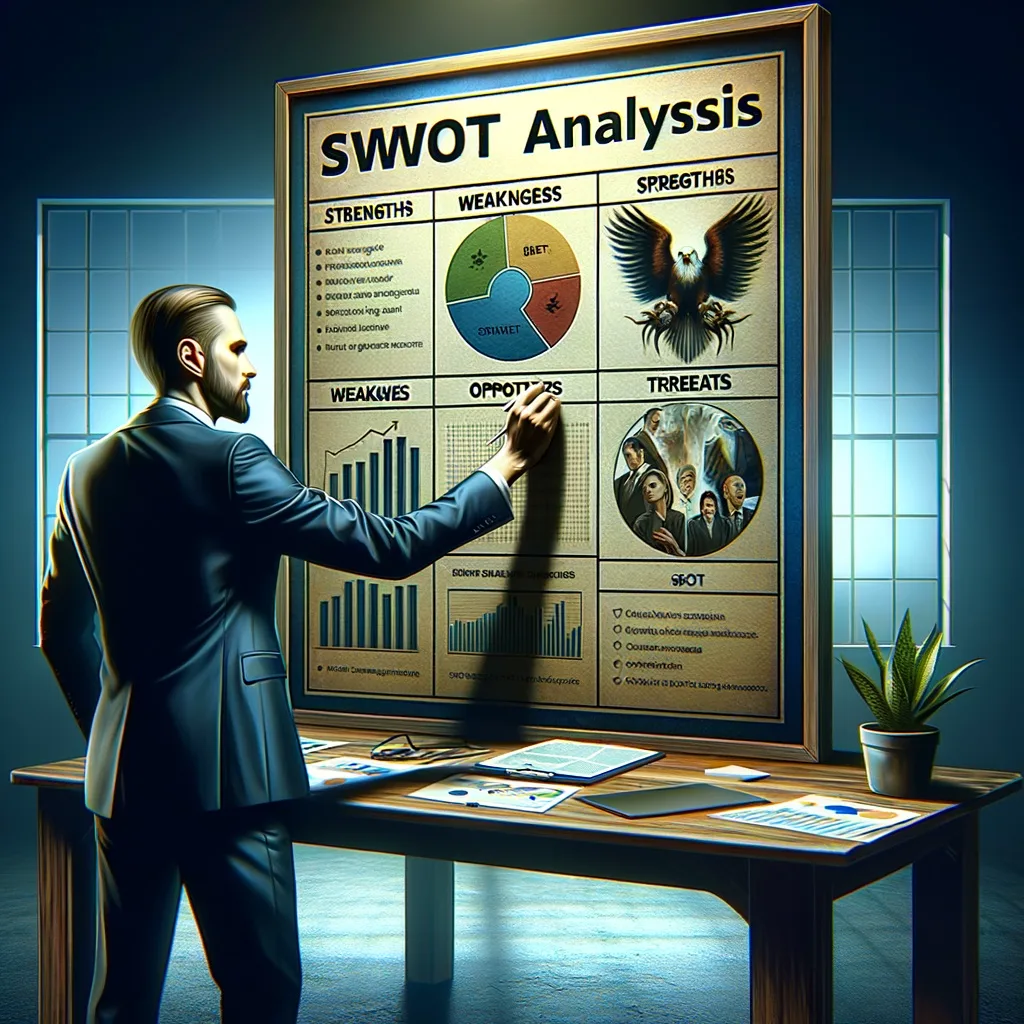
SWOT analysis is one of the most popular tools in strategic management. Its name comes from the initials of four English words:
"Strengths"
"Weaknesses"
"Opportunities"
"Threats"
This method allows businesses to thoroughly analyze the internal and external factors affecting their operations. As a result, they can make more informed decisions and pursue their goals more effectively.
The value of SWOT analysis lies in its simplicity and effectiveness. The process enables companies to identify strengths they can build on to gain a competitive edge, as well as weaknesses that need to be addressed. In addition, the analysis takes into account market opportunities worth capitalizing on and threats to prepare for. In this way, businesses can better plan their activities and proactively address problems before they become serious obstacles.
When conducting a SWOT analysis, businesses should focus on several key questions:
Identifying strengths – What does the company do well? What unique resources does it have? How does it stand out from the competition?
Identifying weaknesses – In which areas does the company need improvement? Which processes can be streamlined? What problems stand in the way of achieving its goals?
Identifying opportunities – What new possibilities exist in the market? What trends can be leveraged? What collaborations or partnerships could prove beneficial?
Identifying threats – What are the potential obstacles to success? What changes in the environment could affect the company's operations? What risks related to competition or legal regulations need to be considered?
SWOT analysis helps identify the factors that are critical to the business. Combined with other methods, such as problem analysis and active problem-solving, it is an exceptionally valuable tool.
SWOT analysis should be applied at various stages of a company's lifecycle. It is particularly useful when a business faces important decisions or is planning to introduce strategic changes.
In practice, SWOT analysis is useful in many situations:
Strategic planning – It helps define long-term goals and create an action plan that leverages strengths and opportunities while minimizing weaknesses and threats.
Launching new products or services – Conducting a SWOT analysis can help a company understand what advantages it can draw on and what challenges it must overcome for a new product to succeed.
Changes in the market environment – When new opportunities or threats emerge in the market, SWOT analysis allows a company to quickly assess and adapt to the new conditions.
Competitive assessment – SWOT analysis enables a company to understand its position relative to competitors and identify areas where it can strengthen its advantage.
Problem-solving – The technique can also be used for active problem-solving, by identifying the root causes of issues and formulating strategies to overcome them.
SWOT analysis is a key tool that helps businesses understand their internal and external conditions. The method is relatively straightforward yet highly effective, which is why it is widely used at various stages of a company's development. By applying it, organizations can plan strategic actions more effectively, launch new products, evaluate the competition, and solve problems.
SWOT analysis is a simple yet highly effective tool for evaluating business strategies. Implementing this method involves several steps, through which one can systematically approach the analysis of internal and external factors affecting the organization.
Gather the right people and data
The first step is to assemble a team with broad knowledge of the company. This may include managers, employees at various levels, and external consultants. At the same time, it is essential to gather data on the market, competitors, and internal operations.
Identify strengths
The next step is to identify the company's strengths. It is worth focusing on the resources the company possesses and the unique competencies that set it apart from the competition. These might include, for example, advanced technology, effective project management, or a loyal customer base. Specific strengths can be illustrated with examples from internal reports or case studies.
Identify weaknessesMuch like the identification of strengths, the company's weak points must also be identified. This requires an honest and objective assessment. Pay attention to areas that need improvement — for example, overly complex internal processes or a lack of effective communication. In this section, problem analysis will allow conclusions to be drawn that will serve as the foundation for implementing improvements.
Recognize opportunities and threatsBoth opportunities and threats are related to the company's external environment. Opportunities may include new markets, technological trends, or changes in legislation. Threats, on the other hand, are any changes that could negatively affect the business, such as increased competition or economic instability. Solving problems within an organization often requires taking these factors into account.
Create a SWOT matrix
Using the data collected, create a SWOT matrix. Divide it into four segments: strengths, weaknesses, opportunities, and threats. The matrix makes it easy to see how the various elements interact with one another and what strategies can be adopted. Active problem-solving begins with identifying and understanding the current situation through the use of such a matrix.
Formulate a strategy and action planFinally, based on the SWOT matrix, develop concrete strategies. The action plan should be specific, with clear goals and timelines. At this stage, a project planning application may prove useful, supporting you in monitoring progress and delivering on your objectives.
SWOT analysis is an important tool in strategic management that enables a comprehensive evaluation of a company. Conducting it can contribute to improved business performance and the achievement of long-term goals. Remember that success starts with understanding your strengths and weaknesses, and taking active steps to optimize them.
SWOT analysis is a tool that can be successfully applied to the day-to-day operations of small and medium-sized businesses. Let us now look at examples of how this method is used in small and medium-sized enterprises.
Business expansion planning – One of the most common applications of SWOT analysis is planning expansion into new markets. By conducting a SWOT analysis, a company can identify its strengths and weaknesses and recognize opportunities and threats.
Resolving internal operational problems – SWOT analysis also helps address internal problems that may affect a company's operational efficiency. For example, a business can identify issues in its production processes, weaknesses in communication or human resources, and then develop strategies for improvement. In addition, taking external opportunities and threats into account enables better adaptation to a dynamic market.
Launching new products – A company planning to introduce a new product can use SWOT analysis to understand what advantages it currently holds and what challenges it is likely to face. This enables more informed strategic planning.
Strategic changes and reorganization – Small and medium-sized businesses frequently need to adapt to changes in the business environment. SWOT analysis makes it possible to assess how such changes may affect the company and what steps should be taken to implement them effectively.
Evaluating partnerships and collaborations – Working with other companies can bring both benefits and challenges. SWOT analysis helps a business assess which relationships are worth pursuing.
SWOT analysis is a highly useful tool in strategic management that can be successfully applied in a wide variety of situations. It enables businesses to plan their activities effectively, manage projects efficiently, and proactively solve problems before larger obstacles arise.
Does SWOT analysis have drawbacks?
SWOT analysis is undoubtedly an excellent strategic tool, but like any tool, it has its limitations. Understanding these drawbacks is essential in order to fully harness the potential of SWOT analysis and avoid errors in the decision-making process.
Limitations of SWOT analysis:
Subjectivity – Results depend on the perceptions of the people conducting the analysis. Different team members may have differing views on strengths and weaknesses, which affects the consistency of the assessment.
Lack of prioritization – SWOT analysis does not always help identify which factors are most important. All elements of the analysis are treated equally, which can lead to attention being dispersed across less critical issues.
Time and resource constraints – Conducting a thorough analysis requires time and resources. In small businesses, where these resources are limited, the analysis may be incomplete.
Difficulty keeping pace with market dynamics – SWOT analysis focuses on the current state of the market, which can result in overlooking dynamic changes such as new legal regulations or sudden technological shifts.
Despite these limitations, SWOT analysis can be highly effective when used as one of several tools in the strategic planning process. Combined with other methods and tools, it can provide valuable insights and support active problem-solving.


