
RPA, AI and BPM – Modern Tools for Business Process Digitalization
📋 Table of Contents

- [The Role of Technology in Organizational Transformation2. RPA (Robotic Process Automation)– Definition and How It Works– RPA Applications in Business
- AI in Business Process Automation4. BPM (Business Process Management)– What Is BPM?– Modeling](#rola-technologii-w-transformacji-organizacji2-rpa-robotic-process-automation-definicja-i-zasada-dziaania-zastosowania-rpa-w-biznesie3-ai-w-automatyzacji-procesow-biznesowych4-bpm-business-process-management-co-to-jest-bpm-modelowanie)
In the era of digital business process transformation, leveraging the latest technologies — such as RPA (Robotic Process Automation), AI (Artificial Intelligence), and BPM (Business Process Management) — has become essential. These modern tools not only streamline existing operations but also revolutionize the way organizations function, opening new horizons for growth and innovation. From automating routine tasks to advanced data analysis and process optimization — RPA, AI, and BPM create synergistic solutions that can significantly accelerate workflows and increase their efficiency. We invite you to gain a deeper understanding of these technologies, their applications, and the benefits they can bring to your organization in the context of ongoing digitalization and growing market demands.
-
The Role of Technology in Organizational Transformation
-
RPA (Robotic Process Automation)– Definition and How It Works– RPA Applications in Business
-
AI in Business Process Automation
-
BPM (Business Process Management)– What Is BPM?– Modeling
optimization and process monitoring– BPM as the Foundation for RPA and AI Implementations5. The Synergy of RPA
AI and BPM
Modern enterprises rely on technology as the key to effective organizational transformation. Digitalization of business processes not only increases efficiency but also opens new horizons in management and customer service.
RPA (Robotic Process Automation) is a technology that enables the automation of routine tasks through "robots" — software that simulates human actions on computer interfaces. The operating principle of RPA is based on:
· Replicating user actions;
· Integrating with existing systems without the need for modification.
It is precisely these characteristics that make RPA applicable across various business sectors, from accounting to customer service. Companies use RPA for:
· Automating data entry;
· Managing compliance and reporting processes;
· Optimizing procurement processes.
Business process automation is also strongly supported by artificial intelligence (AI), which enables the analysis of large datasets and real-time decision-making. Unlike RPA, AI offers learning and adaptation capabilities, which are valuable in more complex and dynamic environments.
BPM (Business Process Management), in turn, is a management strategy that uses methods, tools, and technologies to design, analyze, execute, monitor, and optimize key processes. The core principles of BPM are:
· Improving efficiency by eliminating all waste;
· Increasing operational flexibility;
· Enhancing integration between different organizational functions.
A variety of techniques and tools are used within BPM for modeling business processes, enabling their visualization and analysis. Modeling is the first step toward understanding and improving any process, which in turn leads to better control and the ability to implement automation.
Implementing modern tools such as RPA, AI, and BPM within organizations can result in significant gains in productivity, service quality, and customer satisfaction. Today, many companies in Poland — from manufacturing to service sectors — are investing in these technologies to compete more effectively in a challenging market. Increasingly, more businesses are discovering that investing in automation and intelligent solutions translates into long-term benefits, both at the micro and macroeconomic scale.
While technologies such as RPA and AI focus on tasks and processes, BPM takes a more holistic approach, offering a strategic perspective on overall process management. The collaboration of these tools therefore yields the best results, creating a solid foundation for future initiatives in business process digitalization and automation.
Business Process Management, also known as BPM, serves as an indispensable foundation for the effective implementation of tools such as RPA (Robotic Process Automation) and AI (Artificial Intelligence). RPA delivers benefits in the form of automating repetitive tasks, while AI brings the ability to analyze and optimize those processes at a deeper, more analytical level.
BPM Principles and RPA and AI Implementations
The process of implementing RPA and AI is complex and multi-staged. Today, in the field of management science as well as in business practice, it is increasingly recognized that a well-understood and properly managed business process is a critical element of effective automation. Nevertheless, BPM — as opposed to traditional management — provides a comprehensive overview of all processes used within an organization, which is critical in the context of subsequent stages of hyperautomation.
On one hand, BPM management enables the identification of potential areas for RPA; on the other, it provides the framework necessary for AI to effectively analyze and improve subsequent processes. The following are the key steps that should be taken:
-
– Process mapping: A clear and detailed understanding of every process within the organization.
-
– Identification of tasks for automation: Selecting those processes that can be automated with the greatest benefit.
-
– Integration of RPA solutions: Deploying robots to take over routine and time-consuming tasks.
-
– Optimization and continuous improvement: Using data and AI feedback to refine processes.
The Synergy of RPA and BPM
While BPM provides the structure and foundation, RPA supplies the tools that streamline specific operations. The automation enabled by RPA can typically elevate process efficiency to a higher level. AI then enters the picture, bringing predictive and adaptive capabilities that change the way organizations make operational decisions and strategy on a broader horizon.
By implementing both BPM and RPA, organizations can expect:
– Greater precision: Reduction of operational errors.
-
– Better resource utilization: Human resources can be trained for more strategic roles.
-
– Increased efficiency: Reduction of the time required to execute processes.
In the same way, Polish organizations are increasingly applying a combination of BPM, RPA, and AI to operate faster and more effectively. The accounting sector, technology companies, and industry are discovering the benefits of this approach, leveraging modern technologies to automate and optimize their business processes.
Intelligent automation — the combination of artificial intelligence (AI) with business process management (BPM) — is significantly transforming the landscape of modern enterprises. New technologies are not only revolutionizing the way companies operate, but also offering tangible benefits that can be critical in achieving a competitive advantage.
AI and BPM Principles
As with robotic process automation (RPA), the primary goal of AI and BPM is process automation. However, AI adds an additional layer of intelligence, enabling systems to analyze and optimize work in real time. This supports decision-making and streamlines the execution of tasks where RPA might fall short.
The benefits of integrating AI with BPM include, above all:
-
1. Increased efficiency: Automation supported by AI can identify patterns and optimize processes without constant human intervention.
-
2. Scalability: AI systems can be adapted and scaled according to business needs and changing market conditions.
-
3. Better data management: Vast amounts of data can be processed and analyzed far more quickly, resulting in better business decisions.
-
4. Enhanced customer service: Intelligent chatbots and virtual assistants use AI to deliver a higher level of service.
Real-world application examples demonstrate how these technologies work together to create synergistic solutions across various sectors. For example, in the banking sector, automation through AI and BPM effectively supports lending and customer service processes, helping to accelerate data verification and credit decisions.
Challenges and limitations, however, still exist. Despite the many benefits, data integrity and security must be continuously monitored to prevent privacy breaches and other cybersecurity risks.
Trends and the Future of AI in BPM
The next step is hyperautomation. Combining AI with advanced automation tools — such as RPA and intelligent documents — opens new horizons in the automation of complex processes. Currently, many companies are exploring such possibilities, anticipating an even more automated future work environment.
Digitalization in Poland is also increasingly incorporating AI within the BPM framework, which is visible in the service and manufacturing sectors. For example, in Poznań, companies such as Suncode are implementing solutions that integrate AI to optimize accounting processes and document management.
Despite the challenges, the strategic use of AI in BPM is already delivering significant benefits for businesses in Poland and around the world. By leveraging AI, companies can not only optimize existing processes but also open themselves up to new opportunities and innovative solutions that will impact their competitiveness in the future.
Summary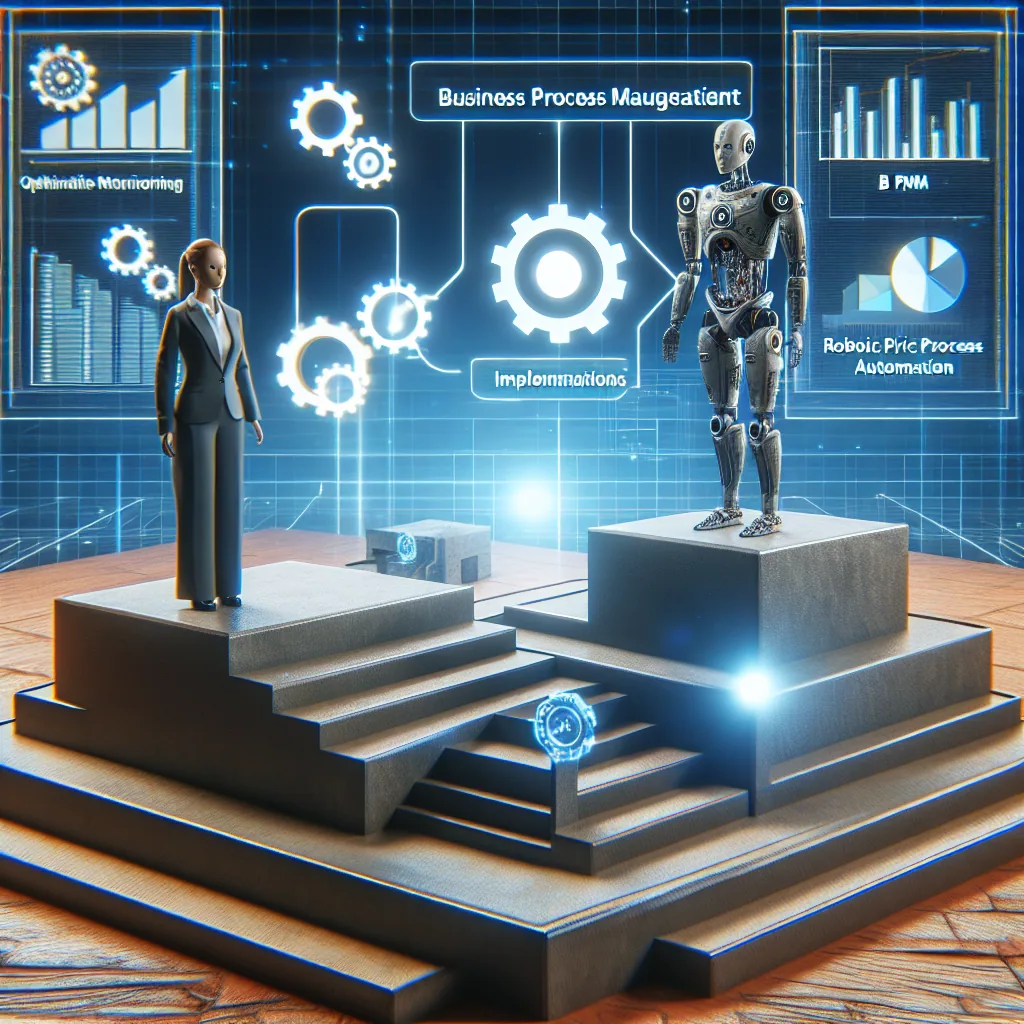
Implementing modern technologies such as RPA (Robotic Process Automation), AI (Artificial Intelligence), and BPM (Business Process Management) plays a key role in the digitalization and automation of business processes, increasing the efficiency and quality of services within enterprises. RPA facilitates the automation of routine tasks, AI brings predictive and adaptive capabilities that enable deeper analysis and process optimization, while BPM offers a strategic approach to process management, improving integration and operational flexibility. The collaboration of these tools yields significant benefits, such as increased precision, better resource utilization, and reduced time required to execute processes. In Poland, sectors such as accounting, services, and industry are increasingly leveraging these technologies to enhance their competitiveness and operational efficiency.


