
What is a sales funnel?
📋 Table of Contents

- What is a sales funnel?
- Why should you implement a sales funnel?
- Step by step: How to build an effective sales funnel?
- Pros and cons of implementing a sales funnel
- 3 benefits of a well-structured sales process
In modern marketing, an effective sales funnel is a key asset that can significantly boost a company's sales results. Do you know exactly what a sales funnel is and why it's worth implementing in your strategy? Discover simple steps for building your own high-performance mechanism that transforms interest into real transactions. Learn about the pros and cons of its implementation, and the specific benefits that a well-structured sales process brings. We invite you to explore how to create and leverage a sales funnel to maximize the effectiveness of your promotional and advertising efforts in your business.
-
What is a sales funnel?
-
Why should you implement a sales funnel?
-
Step by step: How to build an effective sales funnel?
-
Pros and cons of implementing a sales funnel
-
3 benefits of a well-structured sales process
A sales funnel is a key marketing tool that helps you understand and optimize the purchasing journey of potential customers. It is worth noting that, despite its name, it applies not only to direct sales but also to many other aspects of customer engagement and relationship building.
To begin with, it is worth outlining the stages that typically make up a sales funnel:
Awareness: The first stage, during which a potential customer learns about a product or service. At this point, methods such as SEO, social media advertising, and content marketing play a crucial role.
- Interest: The customer is already aware of the product and begins looking for additional information. Here, for example, blogs and websites become important assets.
Consideration: The customer analyzes options and compares competitor offerings. At this stage, feature comparisons, reviews, and case studies can play an essential role.
Decision: The final stage, at which the customer decides to make a purchase. Here, the use of attention-grabbing offers, discounts, or bonuses can be effective in convincing the customer to choose your offer.
A funnel can be used creatively in many ways, depending on the specifics of the market and audience. It is also important to remember that every funnel should be individually tailored to the context of a given market and consumer expectations.
In summary, the sales funnel is extremely important in marketing strategies, as it enables a systematic approach to the sales process, from the first point of contact with the customer all the way through to closing the transaction. As such, using this tool in business practice not only helps increase sales effectiveness but also builds strong, lasting relationships with customers.
Why should you implement a sales funnel?
Implementing a sales funnel can bring measurable benefits to any company operating online. It allows you not only to understand the purchasing paths that customers follow, but also to effectively increase sales. This is particularly important in the context of efficient marketing budget management and improving the effectiveness of ongoing campaigns.
Key reasons why it is worth implementing a sales funnel include:
Understanding customer behavior. The funnel helps identify at what point potential customers abandon the purchasing process and why. This allows you to introduce the necessary changes to keep them engaged for longer.
ROI optimization. Through a thorough analysis of each stage of the funnel, you can more effectively allocate your budget toward activities that actually generate revenue.
Personalization of communication. Knowing where a given person is in the sales funnel makes it possible to tailor messages and offers so that they are as relevant as possible to their needs and preferences.
While traditional advertising methods can sometimes be generic and less effective, the sales funnel allows for more precise and contextual marketing activities. This enables not only a better understanding of the market, but also more informed use of tools such as GetResponse or SEO. An example? A marketing blog can start generating more traffic when content is optimized for user search intent, which is directly linked to the awareness and interest stages of the funnel.
In this way, effective management of the sales funnel not only increases the chances of conversion, but also keeps customers engaged for longer — which is key to building lasting relationships and loyalty. Nevertheless, implementing and managing a funnel requires continuous analysis and strategy adjustment, which in practice is an investment in the company's long-term success.
Step by step: How to build an effective sales funnel?
Building an effective sales funnel requires careful planning and strategy. In this overview, we will walk you through the key stages that will allow you to build a well-functioning sales funnel using tools such as GetResponse or an SEO blog.
Step one: Define your target audience.
Thorough research is truly important in order to understand who your customers are and what their needs are. The results of this research will allow you to create contextual and highly tailored advertising messages that hit the mark.
Step two: Create compelling marketing materials.
Whether you use Instagram or run a marketing blog, your materials should be both educational and persuasive. Marketing specialists suggest using simple yet powerful slogans and visually attractive templates.
Next step: Drive traffic to your website.
The use of keywords is key here. SEO helps you gain organic traffic, which is less costly and is often more engaged with the content you publish.
Then: Convert visitors into leads.
One example might be a sign-up form that offers a free ebook in exchange for an email address. This is a simple asset that can significantly increase the number of leads.
After that: Nurture your leads.
At this point, it is worth setting up a series of emails that will inform, educate, and persuade potential customers to make a purchase. Tools such as GetResponse are very helpful here.
Finally: Monitor and optimize.
Even though the first version of the funnel is already in place, continuously tracking results and optimizing sales processes is essential to achieving ever-better outcomes.
Now that you know how to build a sales funnel, you can start implementing these steps. Remember that every industry and target audience may require individual adjustments, so it is worth testing different approaches and measuring their effectiveness.
Pros and cons of implementing a sales funnel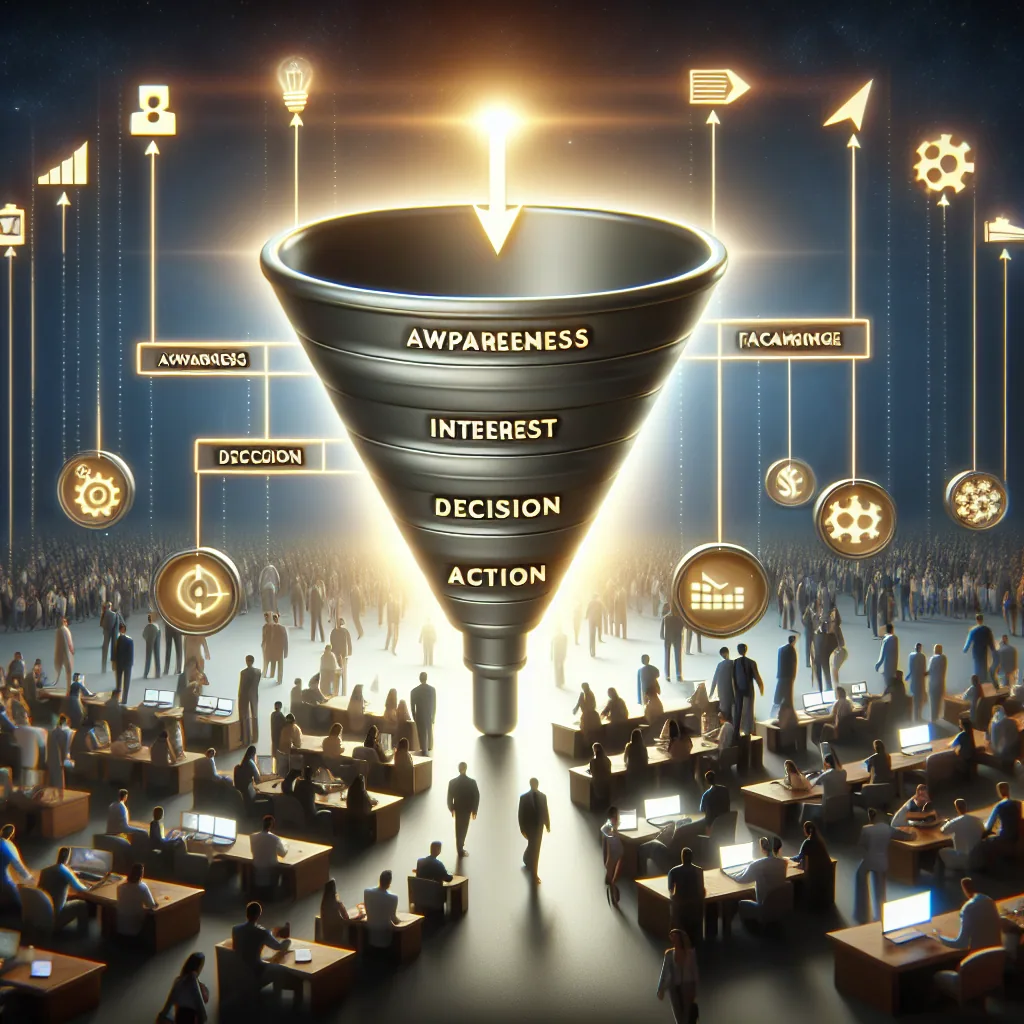
Implementing a sales funnel is an important step for any company seeking to optimize its marketing and sales processes. Below we present both the advantages and the potential drawbacks of such a solution.
Pros:
Systematized sales process – A sales funnel allows for a clear definition of the stages a customer goes through, making it easier to manage and optimize marketing activities.
Increased effectiveness of marketing activities – By segmenting customers, you can better tailor communication and product promotion.
Measurement of results – Introducing a sales funnel makes it possible to monitor key performance indicators, which is crucial for continuously improving the sales strategy.
Increased conversion – A well-thought-out sales funnel helps convert browsers into buyers through more contextual and targeted activities.
Cons:
Implementation costs – Advanced sales funnel systems may require significant upfront investment.
Time required for optimization – For the funnel to be effective, time is needed for testing and strategy adjustment.
Complexity of management – Managing a complex sales funnel may require specialized knowledge and tools, such as GetResponse.
Despite these challenges, implementing a sales funnel is well worth considering. It enables more effective management of customer interactions, which translates into higher revenue. Today, in the rapidly changing world of marketing, having a well-designed funnel is important not only for large corporations but also for smaller businesses. Both in terms of planning and execution, the sales funnel is becoming an increasingly indispensable tool in the arsenal of effective marketing strategies.
3 benefits of a well-structured sales process
A well-structured sales process in the context of a sales funnel brings a range of benefits that can significantly impact the effectiveness and results of a business. Here are three key ones:
Increased effectiveness of marketing activities: A clearly defined and well-planned sales funnel enables precise targeting of promotional efforts. In contrast to spontaneous, disorganized activities, here every step is deliberate and aimed at attracting, engaging, and persuading a potential customer to make a purchase. Introducing such a system also allows for a better understanding of which messages are most effective and at what moment, which in turn leads to a higher ROI.
Improved customer experience: Simple and transparent sales paths are a benefit not only for the business but also for the customers themselves. Thanks to a well-designed sales funnel, the customer moves through all the stages of making a purchase in an intuitive and comfortable way. The likelihood of frustration or confusion is reduced, which, in the same way, increases the chances of the customer returning and recommending the brand to others.
Better data analysis and optimization: A systematic sales process enables a detailed analysis of every step in the sales funnel. On one hand, we receive data on the effectiveness of individual activities; on the other, we can monitor customer behavior and preferences. Such information is invaluable, even though gathering it requires time and the right tools. Using this data for continuous process optimization leads to increased sales effectiveness and the ability to better tailor the offering to market needs.
In short, a well-thought-out and organized sales funnel enables not only an increased chance of sales success, but also the building of long-term customer relationships, which are the key to running an effective business. In this context, it is well worth investing the time and resources into its meticulous preparation.
Summary
A sales funnel is a key marketing tool that optimizes the purchasing process from the moment a customer learns about a product through to the decision to buy. This process consists of stages such as awareness, interest, consideration, and decision, where each step has its own unique techniques for engaging the customer, such as SEO, content marketing, or special offers. Implementing a sales funnel allows for a deeper understanding of customer behavior, optimization of return on investment, and personalization of communication, which increases the effectiveness of marketing and sales activities. Although managing a funnel requires continuous analysis and adjustment, the benefits — such as more effective marketing budget management and increased conversion — make it an important element of company strategies.


