
What is work standardization and what are its benefits?
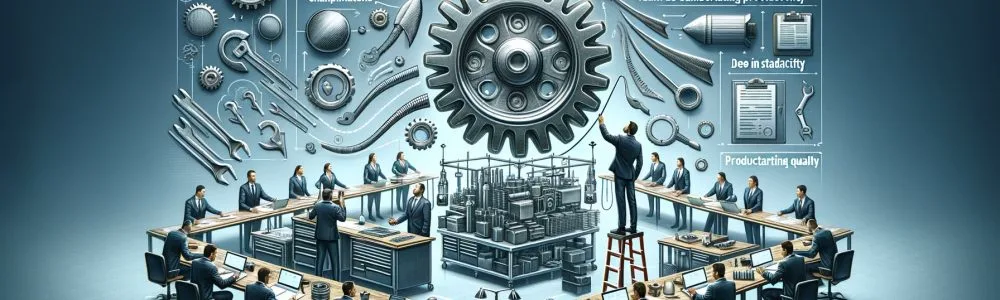
Do you feel that your company is wasting time and resources due to a lack of consistent procedures? Are you wondering how to improve productivity and quality within your team? Work standardization may be the answer to these challenges. Let's take a look at how it can benefit your company and what advantages come with implementing standard procedures.
What is work standardization?
What problems does standardization solve?
Steps to effective work standardization
Work standardization: Pros and cons
Methods and tools supporting work standardization in companies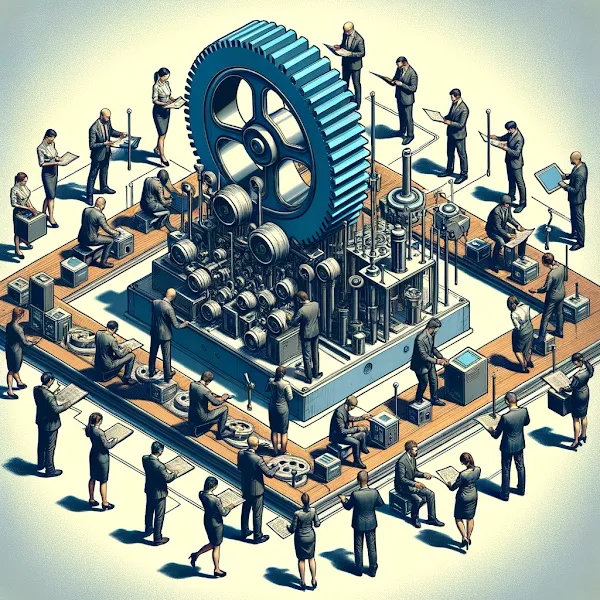
Work standardization is the process of establishing and implementing uniform methods, procedures, and tools in order to achieve defined goals and increase efficiency. It is a key element of company management, aimed at streamlining operations, eliminating waste, and optimizing performance. Work standardization is based on developing and selecting best practices that have been tested and proven to be the most effective. As a result, employees can carry out their tasks in a predictable manner, with fewer errors and within the time allocated for their completion.
The benefits of work standardization are numerous and felt at various levels of the organization. First and foremost, standardization significantly contributes to quality improvement, as it establishes uniform criteria and standards that must be met throughout the entire work process. As a result, the final product is more consistent and aligned with customer expectations.
Another benefit is increased efficiency. Unified procedures enable tasks to be completed faster and more effectively, which translates into higher productivity. Work standardization also makes it easier to onboard new employees, since consistent procedures and instructions simplify the training and adaptation process, reducing the time needed to get new team members up to speed with their responsibilities.
Work standardization also enables better process management, making it possible to detect and eliminate errors while increasing flexibility in response to changing market conditions. Moreover, it serves as a foundation for further process automation and the adoption of technologies that support company management.
Finally, it is worth noting that work standardization fosters a better workplace atmosphere. With clearly defined tasks and standards, employees feel more confident in carrying out their duties. This improves communication and teamwork, reducing misunderstandings and conflicts. Furthermore, work standardization has a positive impact on employee morale by providing a sense of stability and predictability at work.
Work standardization is the key to increasing efficiency and productivity in company management. Introducing consistent procedures can help eliminate inconsistencies that may lead to wasted time and resources. The goal of work standardization is to define optimal solutions, which translates into higher quality products and services. On one hand, this reduces the number of errors; on the other, it enables more transparent process management.
Let's now take a closer look at which specific challenges within your organization a well-implemented standardization strategy can address.
First — work standardization eliminates unnecessary variation in how the same tasks are performed by different employees. As a result, every person on the team knows exactly how to carry out a given task. This is particularly important in larger organizations, where a diversity of working methods can lead to chaos.
Second — work standardization accelerates the onboarding of new employees. With clearly defined procedures in place, new team members can more quickly understand their roles and responsibilities. This makes the onboarding process more efficient, saving both time and resources.
In addition, work standardization leads to better quality control. Implementing uniform standards allows for regular monitoring and evaluation of processes, which is critical in company management. The positive effects of standardization can be observed across many areas, including both production and customer service.
It is also worth highlighting that work standardization makes it easier to identify and eliminate waste. As a result, organizations can achieve savings by optimizing resources and processes. The outcome is more effective process management and greater team productivity.
Let's now consider together what steps need to be taken in order to effectively implement work standardization in your company.
Introducing effective work standardization in a company is a process that requires a systematic approach and commitment from the entire organization. The first step is to define the goals you want to achieve through standardization. These might include: improving product quality, increasing productivity, reducing costs, or minimizing errors. Setting clear goals is the foundation of effective standardization.
The steps toward work standardization can be divided into several key stages:
Analysis of existing processes – The first step is a thorough analysis of the current processes within the company. This involves understanding how individual tasks are currently performed and what the outcomes of that work are. It is also important to identify key problems and areas that require improvement. For example, the following questions are worth addressing: Are there any written guidelines or standards in place at a given point in the process? Are the procedures clear to all employees? Are there recurring errors at a given workstation that could be eliminated? And so on.
Process documentation – The next step is to create detailed documentation of all processes. This should include descriptions of steps, tools, and responsibilities. A very important stage is also the measurement and verification of production times. It is worth noting that not every organizational setup lends itself to time measurement, and in the case of non-uniform production, the key is a repeatable way of working rather than the time unit itself. In any case, with or without time data, such documentation becomes the foundation for work standardization. It helps employees better understand what is expected of them, and new team members adapt more quickly to company standards.
Implementation of standards – Once processes have been gathered and documented, it is time to implement the developed standards. It is important to account for differences across individual departments and to tailor the standards to the specific nature of the work performed. Implementation should be monitored on an ongoing basis and supported by regular employee training.
Employee training – Effective company management requires continuous development of employee skills. Regular training sessions help employees better understand new procedures and apply them effectively in their day-to-day work. Training should cover both the theoretical and practical aspects of standardization.
Monitoring and optimization – The final step is the ongoing monitoring of implemented standards and their continuous optimization. It is important to regularly evaluate the results of the standardization introduced and make any necessary adjustments. Process management tools can assist in collecting data and reporting results. For example, regular internal audits allow for an assessment of whether standardized procedures are actually being followed.
Effective work standardization is a key element of process management, capable of significantly improving a company's results. Process analysis, thorough documentation, proper implementation, training, and monitoring are the steps that lead to success. By following the steps described, your company will be well on its way to effective process management. Finally, remember to regularly monitor the standards you have introduced and to respond flexibly to market needs. Why? Because standardization is an ongoing process that requires not only commitment, but also adaptability.
Work standardization is a tool with many advantages, but like any strategy, it also has certain drawbacks. Let's examine both the pros and cons of introducing standardization in your company, so you can make an informed decision.
Pros of work standardization
Increased productivity and process stability – Process standardization allows for the elimination of unnecessary and repetitive activities, which in turn increases employee efficiency. With clear procedures in place, employees know exactly what steps to take, leading to faster achievement of goals.
Better quality – When all employees follow the same guidelines, the results of their work are more consistent and predictable. This leads to higher quality products and services, which in turn can improve customer satisfaction.
Easier onboarding of new employees – Work standardization simplifies the process of bringing new employees up to speed. Newcomers can quickly learn their duties by following ready-made instructions and procedures, saving time and resources.
A benchmark for measuring work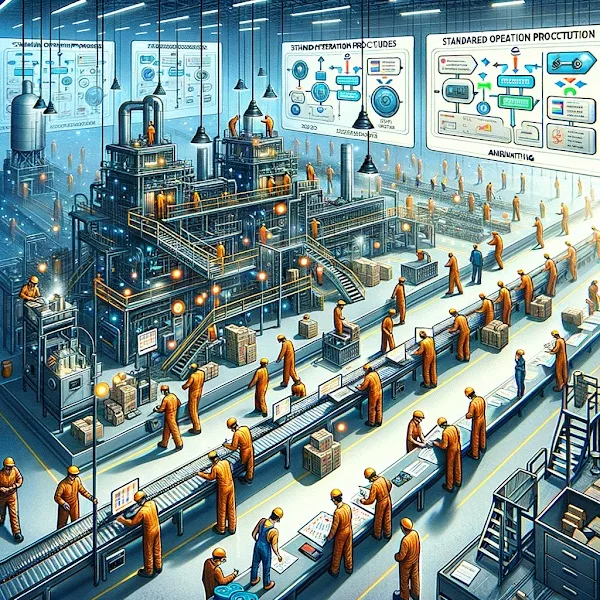
Safety – Clearly defined procedures minimize the risk of errors and accidents, which is particularly important in high-risk industries.
Monitoring and analysis – Standardization makes it easier to monitor various processes within the company. This in turn enables quick identification of areas requiring improvement and facilitates the implementation of optimizations.
Retaining knowledge within the company – By having standards in place, you increase the likelihood that knowledge about how a given task is performed will not exist solely in the mind of a single employee — so that when that person retires, the knowledge remains among the rest of the team.
Simplifying procedures and standards – Yes! This matters too. No employee wants to read through thick volumes of steps to follow — and moreover, when a problem arises, they are more likely to improvise than to leaf through pages of small print. Standardization should also result in the most accessible, readable form of documentation possible: one that conveys essential information and best practices clearly.
Now let's look at the other side of the coin.
Cons of work standardizationReduced flexibility – One of the main criticisms of standardization is its potential rigidity. Standardized processes can sometimes limit employee creativity and make it harder to adapt to sudden changes.
Initial cost and implementation time – Introducing standardization requires an investment of the team's time and effort. Costs associated with the hours spent developing procedures, conducting training, and potentially purchasing appropriate tools will inevitably arise — there is no point in hoping that a "ready-made recipe" will simply fall from the sky. This can be discouraging and may cause the individual implementation stages to become drawn out over time.
Employee resistance – Employees may have difficulty accepting new procedures, especially if they have been working in a more spontaneous manner for years. This resistance can lead to initial drops in efficiency.
Excessive bureaucracy – In some cases, standardization can lead to excessive bureaucracy. Overly detailed and restrictive guidelines may cause employees to focus more on "ticking boxes" than on actually achieving business objectives.
Difficulty in modification – Established standards can be difficult to modify, which is problematic in a rapidly changing business environment.
Work standardization has many advantages, such as increased productivity and better quality, but also certain drawbacks, such as reduced flexibility and initial costs. The key is to understand how these factors affect your company's management processes and to find the right strategies for implementing standardization in your work environment. Standardization can be a powerful tool in company management, provided we are aware of both its pros and cons.
We could approach this topic through a three-part framework.
The primary and most fundamental element is, of course, the standard itself. You will be able to read about the principles of developing standards very soon.
Next, in terms of the methodological framework aligned with the Lean Management approach, the following elements should be included on the list of complementary activities:
The 5S method – which supports workplace organization and is itself a form of standardization, though one directed at the physical workspace,
Visual management – as the name suggests, this leads through a system of unified markings, symbols, patterns, colors, and many other solutions that standardize the grouping of tools, the placement of individual parts at workstations, labeling, and even the entire layout of the production floor and other areas,
TPM – a method focused on improving the organization of processes related to facility maintenance, machinery upkeep, and production flow continuity. Among its stages, it also includes the creation of standards and instructions for equipment maintenance, housekeeping, and emergency procedures,
Process management – the very launch of process management workshops (possibly combined with process mapping) acts as a trigger for standardization.
Finally, from a more systemic perspective, the following can be listed as the broader infrastructure that can support work standardization:
Quality Management Systems – Tools of this type, such as ISO 9001, help companies standardize production processes and document management. They enable organizations to ensure consistent quality in their products and services, which translates into greater customer satisfaction. These systems also support company management by making it easier to monitor and evaluate the functioning of various processes.
Business Process Management (BPM) software – BPM tools such as Bizagi or Appian allow for the automation and optimization of business processes. They make it possible to simplify complex processes and ensure they comply with established standards. Managing processes through BPM enables faster identification and elimination of errors, which is critical for effective work standardization.
Project management platforms – Tools such as Asana, Trello, or Jira enable teams to effectively manage tasks and projects. They support work standardization by defining clear procedures and schedules. Using project management platforms helps teams maintain consistent practices and ensures that every team member is kept up to date on the progress of work.
ERP systems – ERP (Enterprise Resource Planning) tools, such as SAP or Oracle, integrate various areas of a company's operations — from finance, through human resource management, to the supply chain.
Document management tools – Systems such as SharePoint or Google Workspace support the management and standardization of internal documents. They provide employees with quick access to the latest versions of documents and procedures, minimizing the risk of errors arising from the use of outdated information. Work standardization through document management tools helps maintain compliance with industry regulations and standards.
No-code and low-code applications and AI – There are solutions that support not only document management, but also document creation — ranging from basic editing functionality to suggesting what steps a standard for a given process should include. This is not a replacement for human judgment, of course, but it is a significant support for organizing that work.
In summary, familiarizing yourself with the right tools and implementing them can significantly impact the efficiency of your company's operations.


