
Introduction: The Challenges of Traditional Lean Management
Lean Management is a management approach focused on eliminating waste, increasing efficiency, and continuously improving processes. Its primary goal is to deliver value to the customer at minimal cost. In theory, this method appears to be an ideal solution for companies striving to boost productivity. In practice, however, traditional Lean methods often encounter serious challenges, particularly in the face of growing digitalization. One of the key problems is dependence on paper-based document workflows. Many organizations still rely on spreadsheets, paper-based instructions, and emails to manage their processes. This way of working leads to chaos, a lack of standardization, and difficulty monitoring the progress of activities. In the face of dynamic market changes, traditional approaches are becoming inadequate. Companies must be able to respond quickly to changing needs, which is extremely difficult when processes are fragmented and opaque. Implementing modern digital solutions that integrate processes into a single, coherent whole is becoming essential for achieving genuine continuous improvement. Digitalization not only simplifies data management but also provides real-time access to information, which significantly impacts decision-making. As a result, organizations that want to succeed in the digital era should consider transforming their processes in order to gain a competitive advantage.
The Problem: Paper-Based Document Workflows in the Warehouse
Many representatives of the logistics industry still struggle with a serious problem — paper-based document workflows. At one logistics company that had not yet chosen to digitalize its processes, hundreds of documents were generated every day — including bills of lading, invoices, and delivery receipts. Each of these documents had to be printed, signed, and archived in physical form, leading to endless chaos.
Instead of focusing on critical tasks, employees spent long hours searching for the documents they needed. Documents were frequently lost or out of date, creating additional confusion and frustration within the team. In one particular case, for example, a lost bill of lading caused an order to be delayed by several days, resulting in customer dissatisfaction and additional costs associated with storing the goods.
Furthermore, paper-based document workflows effectively limited the ability to monitor process performance. The lack of real-time access to information prevented operations managers from identifying bottlenecks and optimizing warehouse operations. As a result, processes became increasingly inefficient, and order fulfillment times grew longer. Statistics show that companies that have not implemented digital solutions can lose as much as 30% of productivity compared to those that have invested in modern management systems.
It was not only productivity that was at risk — operational costs were also rising. The cost of printing, archiving, and physically storing documents became a significant burden on the company's budget. Additionally, during audits, locating the appropriate documents became a time-consuming and stressful process, threatening compliance with legal regulations. In the face of increasing competition and market demands, paper-based document workflows were becoming insufficient and even detrimental to the organization.
The Solution: Digitalizing Warehouse Processes
In response to the challenges posed by paper-based document workflows, one logistics company decided to digitalize its warehouse processes with the aim of increasing operational efficiency and eliminating the chaos associated with document management. A key step in this process was the implementation of an integrated warehouse management system (WMS) based on low-code technology, which allowed the system to be quickly tailored to the specific nature of the business without engaging a large IT team.
As part of the digitalization effort, the company invested in solutions that automated key processes such as receiving, storing, and dispatching goods. By using QR codes and handheld scanners, warehouse employees were able to quickly and accurately record goods receipts, eliminating errors associated with manual data entry. The system automatically updated inventory levels in real time, enabling managers to continuously monitor performance and identify bottlenecks.
Integration with existing management systems, such as ERP and CRM, allowed for a smooth flow of information between departments. As a result, inventory data was always up to date, which in turn enabled better control over orders and stock levels. Employees also gained access to digital versions of documents, which accelerated processes related to audits and documentation verification.
As a result of digitalization, the company noticed a significant improvement in operational performance. Order fulfillment time was reduced by 25%, and the number of documentation errors fell by 40%. Additionally, by eliminating paper, the company saved on printing and document storage costs — a considerable advantage in the face of growing market competition. Digitalizing warehouse processes not only increased efficiency but also enabled the company to respond more quickly to changing customer needs, which over the long term contributed to greater customer satisfaction and increased brand loyalty.
Results: A 20% Increase in Warehouse Throughput
The digitalization process at the logistics company delivered measurable results that can be quantified. Following the implementation of the new low-code-based warehouse management system (WMS), warehouse throughput increased by an impressive 20%. It is worth noting that prior to digitalization, the average order fulfillment time was 48 hours, which frequently led to delays and customer dissatisfaction. After the system was implemented, this time was reduced to just 36 hours, and the number of documentation errors dropped by 40%.
For a more detailed analysis of the results, the company focused on key performance indicators (KPIs). For example, the inventory turnover rate increased by 15%, meaning the warehouse was able to process goods receipts and dispatches more quickly. Thanks to process automation, employees gained more time for other tasks, which also contributed to greater job satisfaction and productivity.
Before digitalization, the operational costs associated with paper documentation and its archiving accounted for approximately 20% of total warehouse expenditure. After the introduction of electronic document workflows, the company saved an average of 15% on operational costs, significantly improving profitability. Additionally, thanks to improved data management and integration with ERP and CRM systems, the time required to prepare reports was reduced by 30%. Employees no longer had to spend hours manually entering data, which greatly increased their efficiency.
All of these changes contributed to better customer service. With higher operational efficiency, the company was able to respond more quickly to market needs, which in turn led to increased customer satisfaction. In the long term, the improved warehouse throughput and operational savings enabled the company to grow and gain a competitive edge in the industry.
Long-Term Benefits of Digitalization
Introducing process digitalization within an organization is a crucial step that delivers long-term benefits for both employees and the company as a whole. First and foremost, increased employee satisfaction is one of the most important outcomes of digitalization. By automating routine tasks, employees can focus on more value-added activities, leading to greater motivation and engagement. For example, at one logistics company following the implementation of a warehouse management system, employees noticed that the time spent on manual data entry was reduced by 50%. The result was higher job satisfaction and less professional burnout.
In terms of communication and coordination, digitalization enables a better flow of information between departments. Thanks to integrated systems, all employees have access to the same data in real time, which greatly facilitates collaboration. In one case, a manufacturing company found that digitalization of its processes reduced the coordination time between the sales department and the warehouse by 30%. This, in turn, translated into faster order fulfillment and a higher quality of customer service.
Another key benefit is the increased flexibility and adaptability of the organization. Digitalization allows processes to be quickly adjusted to meet changing market demands and customer expectations. Companies that have invested in digital tools are able to respond swiftly to shifts in the business environment — an invaluable capability in today's dynamic market conditions. One example is a mid-sized clothing manufacturer that, by implementing a digital production management system, was able to launch a new product line within just a few weeks in response to market trends.
In summary, digitalizing processes not only increases operational efficiency but also shapes organizational culture and enhances a company's ability to adapt to a changing environment. The long-term benefits of digitalization — such as higher employee satisfaction, improved communication, and organizational flexibility — form the foundation for the company's continued growth and success in the future.
Conclusions: Digitalization as the Key to Continuous Improvement
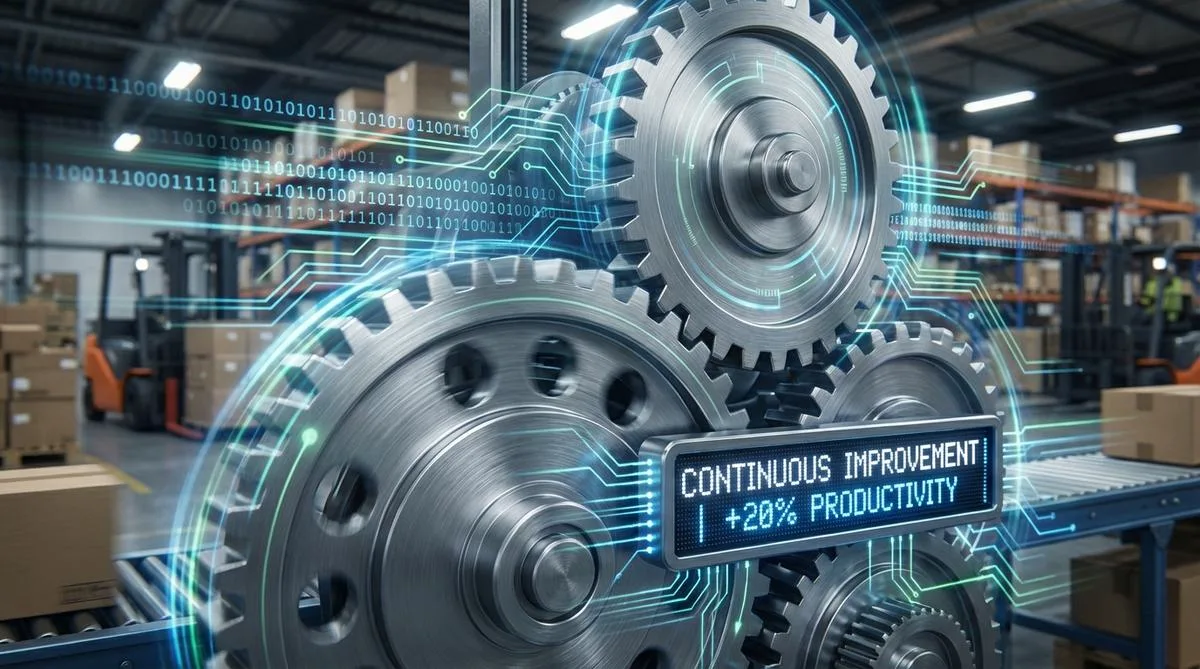
In today's rapidly changing business world, the digitalization of processes has become not just a trend but an outright necessity for organizations seeking long-term success. In the case examined, the introduction of digitalization at a logistics company — which reflects the current trends in logistics process automation — contributed to a significant increase in efficiency and an improvement in the quality of customer service. This demonstrates that digitalization is the foundation for effective continuous improvement within the Lean Management methodology.
One of the key conclusions is that process automation makes it possible to eliminate human errors, which are often the source of chaos in operations. At the company that implemented digital management, the number of errors was reduced by 40%. This enabled a shift in focus toward more strategic tasks, which in turn drives greater overall organizational efficiency. Employees who previously handled routine activities now have time for analysis and innovation, which significantly contributes to the company's development.
Another important step for companies wishing to undergo a similar transformation is investing in the right tools and technologies. Choosing low-code systems with AI capabilities allows processes to be quickly adapted to changing market needs. One example is an e-commerce company that, thanks to flexible IT solutions, was able to introduce new sales procedures in just a few days, resulting in a 25% increase in conversions within a short period of time.
Monitoring process efficiency after digitalization is equally important. Organizations that regularly analyze data and make improvements based on the information gathered are able to quickly identify bottlenecks and take appropriate action. Research shows that companies that conduct regular process audits record an average increase in operational efficiency of 15%. This approach not only facilitates continuous improvement but also helps maintain long-term competitiveness.
In summary, digitalizing processes is a key element that provides effective support for a continuous improvement strategy within an organization. Implementing the right technologies, automating routine tasks, and regularly monitoring process efficiency are steps that can deliver tangible benefits. The examples of companies that have successfully undergone this transformation prove that investing in digitalization is an investment in the future — one that enables dynamic growth and the achievement of a competitive advantage.
Conclusion: The Future of Continuous Improvement
Continuous improvement has become an integral part of the development strategy of many organizations seeking to maintain competitiveness in a rapidly changing business world. In the age of digitalization, where technology plays a pivotal role, process transformation is not merely desirable — it is essential. Companies that adopt digital management tools gain a significant advantage, and their ability to adapt to changing market conditions increases.
All of this points to the fact that the future of continuous improvement lies in the hands of technology. Companies that invest in process digitalization, automation, and data analytics will be able to identify areas for improvement more quickly and implement innovative solutions. Examples from organizations that have successfully deployed digital tools show that operational efficiency can increase by as much as 30% in a short period of time. This translates not only into financial gains but also into greater satisfaction among employees and customers alike.
It is also worth highlighting the importance of organizational culture. Supporting teams through the digital transformation process via training and open communication is essential. Employees who feel engaged and valued are more likely to share their ideas for process improvement. This model of collaboration not only fosters innovation but also builds stronger internal relationships within the company.
In the face of growing competition and rapidly changing customer needs, organizations cannot afford to stagnate. Digitalizing processes is becoming a tool that enables not only the optimization of operations but also the development of new business opportunities. Thanks to low-code systems that allow processes to be quickly tailored to local needs, companies can respond to market changes in near real time.
That is why we encourage you to take action. If your organization is facing challenges related to chaotic processes, documentation gaps, or low operational efficiency, digitalization may be the answer. Do not wait for the perfect moment — every day of delay is a missed opportunity for improvement and growth. Contact us to discuss how our solutions can support your company on its journey toward continuous improvement. The future lies in technology, and the key to success is the ability to adapt to the changes ahead.


