
How to improve communication in production?
Does your company experience misunderstandings on the production floor? Perhaps you notice that teams are not communicating effectively, leading to arguments and chaos? A lack of cohesive communication in a manufacturing facility can generate stress and make it harder to achieve business goals. Addressing this problem can bring not only greater peace of mind, but also benefits in the form of improved productivity and employee satisfaction. Let's take a look at methods that can help you organize and improve communication in your company.
Why do arguments happen in production?
Principles of communication in production## Board meetings## Advantages of regular meetings with production employees## Internal training system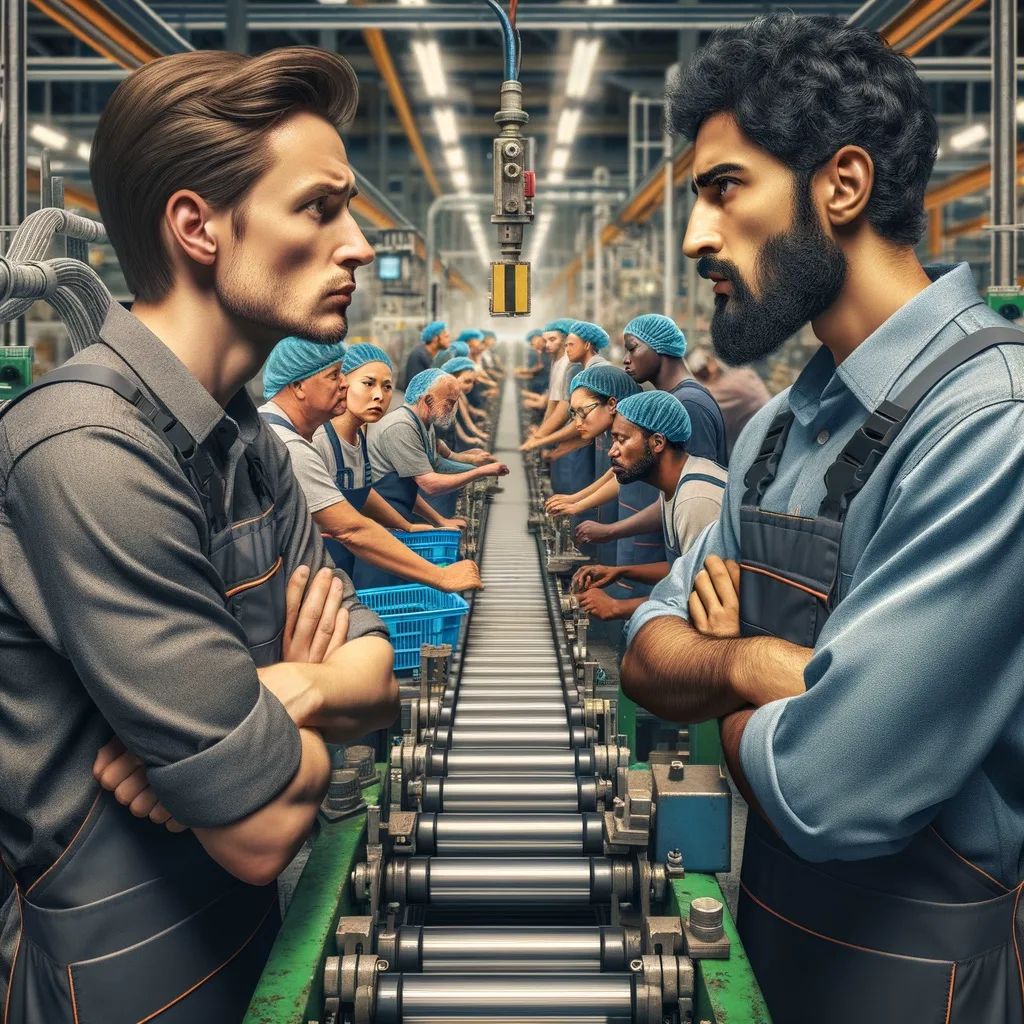
Why do arguments happen in production?
Production in any company requires excellent employee collaboration so that tasks are carried out efficiently and to the benefit of the entire team. In practice, however, this environment often becomes the scene of conflicts.
The arguments that arise in this setting can stem from several key factors:
One of them is a lack of clear communication guidelines — employees don't always know how to share or receive information. Information chaos leads to misunderstandings, which then escalate into tense situations.
Another significant cause of conflict can be an unclear division of responsibility. When roles and tasks are not precisely defined, employees begin to act on instinct, which can provoke disputes over the scope of duties.
Additionally, the absence of tools or systems for tracking work progress further compounds the confusion — especially when the results of problem analysis are subjective and based on feelings rather than facts. As a result, instead of actively solving problems, tension among team members grows, negatively affecting the entire production process.
It is also worth paying attention to differences in expectations and approaches to tasks. It often happens that some employees have more experience and their own ideas about how to carry out activities, while others strictly follow management's instructions. Differences in working styles can breed conflicts, just as a lack of shared goals or team motivation can.
A lack of appropriate methods and techniques for problem-solving, along with low awareness of the value of collaboration, further complicates the situation and leads to unnecessary disputes.
Emotional factors such as stress and fatigue also have a significant impact on the occurrence of conflicts. Time pressure, unrealistic deadlines, and an uneven workload often cause frustration that finds an outlet in clashes between employees. This is where effective production management can be key to limiting such situations.
Introducing flexible yet well-thought-out solutions benefits both employees and the company as a whole. An analysis of production problems reveals that most conflicts share a common denominator: a lack of effective communication. That is why it is worth starting changes from this fundamental aspect. Effective communication not only minimizes the number of arguments, but also supports the building of an engaged team and ensures comprehensive problem-solving.
Effective communication is the foundation of successful collaboration in production, where every decision and every action affects the final results. A lack of smooth information flow typically leads to errors, wasted time, and unnecessary tensions. To avoid such situations, it is worthwhile to introduce and consistently apply defined communication principles. In doing so, it is possible not only to prevent conflicts from arising, but also to strengthen relationships within the production team.
But what does such communication look like in practice?
The first step toward better collaboration is establishing clearly defined communication channels. Every employee must know where and how they can raise their questions or concerns. In production, short, clear, and specific messages are especially important — everyone should understand their tasks without unnecessary interpretation. Techniques for actively solving problems, which are based on rapid information sharing and immediate responses to emerging obstacles, prove particularly helpful here.
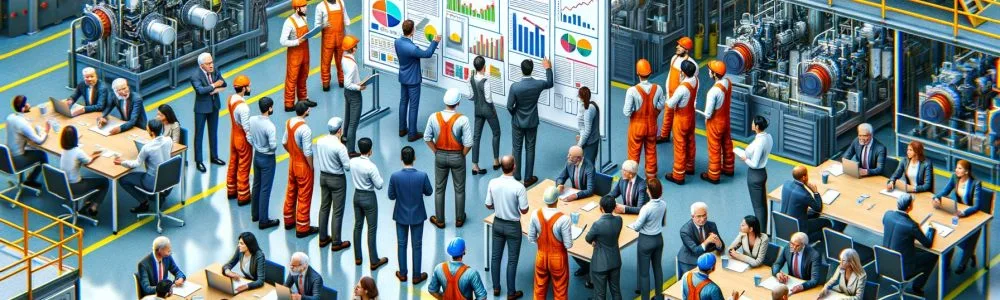
Another key element is the standardization of communication. Introducing routine meetings — for example, daily stand-ups at the board — helps with planning and analyzing issues that may arise during the day. In such situations, a key principle applies: information should always be conveyed in a constructive manner, focused on finding a solution. These meetings create a space for open dialogue and enable the practical application of creative problem-solving methods.
Relationships between team members also play an important role in building effective communication. Openness to others' opinions and mutual listening create an environment conducive to collaboration. Employees who feel heard are more engaged and more willing to participate in comprehensive problem-solving. To foster such attitudes within the team, it is worth promoting a culture of positive feedback. This way, everyone can count on support and know that their efforts are appreciated.
The importance of technology in streamlining communication must not be overlooked. Tools that support production management — such as systems dedicated to process monitoring — enable precise tracking of work progress and reduce the likelihood of misunderstandings. This gives every team member better control over the tasks being performed. However, such tools cannot replace direct conversation — they serve only as support for more complex processes.
In summary, the key to effective communication in production lies in the simplicity of the message, the regularity of interactions, and the team's openness to active participation. Standardizing activities and making use of technology further support the exchange of information. But is such an approach sufficient? How can daily meetings be used to even better support collaboration in production? We will try to find the answer to that question together in the next part of this article.
The practice of organizing board meetings is becoming increasingly popular in manufacturing environments. The reason for this is their effectiveness in improving communication, rapidly analyzing problems, and actively responding to challenges. The foundation of these meetings is a clear structure and regularity. Their purpose is not only to mobilize the team, but also to offer a space for sharing information, generating ideas, and developing solutions.
The first step toward introducing such meetings is establishing a fixed procedure. Board meetings require a transparent framework that defines their duration, the number of participants, and the most important topics. The ideal length is typically 15–30 minutes. This should be a moment of focus on specific issues: reviewing current tasks and challenges related to production management, and examining goals for the next stages of operations. This standardization helps avoid chaos and lengthy discussions that do not lead to concrete conclusions.
The adopted meeting structure should incorporate five key steps:1. Review of key production goals or indicators.
-
Discussion of the team's main work challenges and identification of priorities.
-
Introduction of creative problem-solving methods through brainstorming or analysis.
-
Summary of tasks to be completed and assignment of responsibilities.
-
A brief acknowledgment of the team's engagement.
One of the most important elements of the meeting is the visual board. It gives participants a better understanding of the issues being discussed and makes it easy to track task progress. The board can contain key data such as efficiency indicators, reported problems, team priorities, and results from previous days. This tool acts as a systematic aid in actively solving problems and facilitates their visualization.
A well-designed system is simultaneously straightforward to use and adaptable to the specific needs of the company.
What are the advantages of board meetings?
They minimize the risk of errors by ensuring that challenges are discussed on an ongoing basis. They enable faster responses to changes and difficulties, thereby supporting comprehensive problem-solving.
They build a sense of engagement among employees, as everyone has the opportunity to contribute ideas.
They foster a culture of collaboration, improving relationships among team members.
They support the production management system by optimizing day-to-day operations.
Despite the many benefits, running such meetings requires consistency. It is important that participants treat them as a tool that supports their daily work, rather than an unnecessary formality. A meeting loses its purpose if the team's active engagement is lacking or if it is based solely on reporting.
By adhering to fundamental rules and applying the right techniques, a real impact on process efficiency can be achieved. To improve the quality of such meetings, it is essential to strive for maximum transparency and a shared focus on results.
Regular meetings with production employees are one of the key tools in effective team management. They not only help build cohesion, but also support problem analysis and active problem-solving. This is an important element of any process improvement strategy, one that increases efficiency and builds a culture of collaboration.
But why is it worth doing, and what benefits can be achieved?
On one hand, regular meetings give employees a space to communicate their observations, problems, and ideas for improvements. They allow for an exchange of information that streamlines the decision-making process and enables rapid responses to difficulties. As a result, every team member feels like a valued part of the process, which has a positive effect on their engagement. These meetings also contribute to creating an environment in which constructive criticism is treated as an opportunity for growth rather than a threat.
On the other hand, these meetings are the ideal opportunity to review task progress, analyze problems, and implement changes more quickly. Clearly defined goals and indicators communicated on a regular basis increase motivation. Employees are aware of their results and understand how their actions affect the entire production process. This transparency supports comprehensive problem-solving, as it provides insight into data and facts rather than subjective assessments. In addition, meetings are an excellent moment for introducing creative problem-solving methods.
A collective discussion of difficulties makes it possible to develop innovative approaches that increase organizational flexibility. For example, brainstorming engages the entire team, and the diversity of perspectives contributes to achieving better results. The regularity of such activities also lays the groundwork for standardizing problem-solving methods and techniques, which in turn reduces the risk of repeatedly making the same mistakes.
An additional advantage of meetings is their ability to build a positive atmosphere and strengthen team spirit. When employees feel that their opinions are taken into account, trust and a sense of belonging develop. Furthermore, these types of meetings are an opportunity to recognize the team's achievements and identify areas where support is needed — which in turn helps maintain motivation and reduce employee burnout.
An internal training system is one of the more important elements supporting the functioning of production teams. Well-organized training not only builds employees' competencies, but also improves communication, reduces conflicts, and increases process efficiency.
But how do you design a system that will support both individuals and the team as a whole? On one hand, training helps with actively solving problems by developing skills in analyzing situations and finding appropriate solutions. On the other hand, it enables the implementation of innovative working methods and strengthens a culture of collaboration. Minor technical improvements — such as learning to use tools more effectively or improving the flow of information — can significantly increase the efficiency of the entire group. Moreover, training teaches creative problem-solving methods, which is particularly helpful in situations requiring immediate decisions.
Key elements of an effective internal training system include:
Regularity – A consistent training schedule ensures continuity of learning and allows knowledge to be absorbed gradually.
Tailored content – Topics should correspond to real challenges encountered in production, such as analyzing problems in processes or comprehensively solving team-related issues.
Interactivity – Practical training formats, such as workshops or simulations, allow knowledge to be absorbed more quickly than theoretical lectures.
Leadership involvement – Those managing processes should actively participate in training sessions in order to demonstrate their value and reinforce a culture of collaboration.
Monitoring outcomes – Assessing employees' progress after training identifies which areas require further support.
Regular training improves skills while also strengthening the production management system. This makes it possible to better respond to rapidly changing working conditions. What's more, a well-designed training system reduces the risk of errors arising from a lack of knowledge or misunderstandings among employees. For example, introducing communication courses can significantly reduce the number of conflicts within a team.
The benefits of a properly formalized training system also include:
Increased productivity – Employees trained in new tools or techniques work more efficiently.
Building motivation – Investing in team development underscores the role of each employee in achieving shared goals.
Reduced turnover – Employees whose training needs are met are more likely to stay with the company longer.
Improved quality – Training supports the implementation of norms and standards, which translates into better work outcomes.
Development of analytical skills – Regular training in problem analysis minimizes the risk of recurring errors.
Of course, organizing training is only the beginning. It is also necessary to maintain their quality and to incorporate technologies that support their delivery. Today, digital platforms can serve as an excellent tool for automated progress monitoring or for delivering personalized content. By moving certain aspects of education to the online sphere, a company can not only save employees' time, but also tailor training programs to individual needs.


