
Introduction: The End of the Clicking Era – The Invisible ERP Is Coming
IT Directors (CIOs) and digital transformation leaders have spent years striving to implement systems that consolidate all data in one place. Historically, this meant building powerful platforms with hundreds of tabs, forms, and complex screens. Today, however, expectations around software have changed dramatically. Instead of tools that require constant data entry, organizations are seeking autonomous solutions. This evolution is bringing us to a moment where software begins to operate discreetly in the background.
Today's executive teams face an unprecedented level of information overload. The phenomenon known as dashboard fatigue – exhaustion from an endless stream of dashboards and notifications – is becoming a serious problem in enterprises. Rather than facilitating decisions, an excess of charts paralyzes action. For this reason, the best ERP system of 2026 will not be a platform employees need to log into. It will become an intelligent assistant that initiates processes on its own.
We are entering an era in which the boundary between the physical and digital worlds is dissolving. The future of ERP systems is an environment that is nearly invisible to the user. Management systems will cease to be digital archives, becoming instead active participants in processes operating in real time, directly on assembly lines and in logistics centers.
To understand where the market is heading, we need to examine three key technological pillars. Among the most important trends set to dominate the development of management systems, the following stand out:
- Zero-UI in ERP: AI- and automation-driven interfaces that completely eliminate the need for operators to enter data manually.
- Edge Computing in manufacturing: processing information at the network edge, guaranteeing near-instantaneous machine responses without cloud-related latency.
- Composable ERP: a modular architecture that enables rapid adaptation of the system to dynamic market conditions.
For boards of directors and Chief Operating Officers (COOs), this means one thing: the organizations that abandon traditional thinking about software first will gain the competitive edge. We invite you to explore the ERP trends that will shape the business architecture of tomorrow.
What Is Zero-UI in ERP and Why Will It Revolutionize Work?
The concept of Zero-UI in ERP (Zero User Interface) is one of the most fascinating directions in the evolution of enterprise-class software. Despite what a literal translation might suggest, it does not mean the complete absence of an interface, but rather a radical departure from traditional graphical user interfaces (GUIs). Instead of forcing employees to navigate through complex menus and manually complete multi-page forms, systems become nearly invisible. The best ERP system of 2026 will be built on advanced natural language processing (NLP) and deep background automation, enabling seamless information exchange between humans and machines.
The primary goal of implementing a Zero-UI architecture is a dramatic reduction in what is known as operational friction. In the classic work model, a user must interrupt a physical task to log into the system and report progress. This causes delays, contributes to human error, and reduces overall productivity. In an environment without traditional screens, there is a fundamental shift from reactive clicking to proactive notifications and voice commands. The software itself analyzes the situational context, anticipates the operator's intent, and automatically executes the required database operations.
From the warehouse floor to the system – without a single click
To fully appreciate the potential of this technology, it is worth examining a concrete example from the logistics industry. Imagine a distribution center operated by a leading logistics provider, where a new shipment is being received. In the traditional model, a worker would have to physically scan each pallet using a handheld terminal and then confirm the operation on a touchscreen. This is a time-consuming process that, across thousands of daily operations, generates enormous costs.
In the Zero-UI ERP model, this process unfolds in an entirely different way. As a forklift passes through the warehouse gate, integrated IoT sensors, AI-powered vision systems, and RFID tags automatically identify the load. The ERP system verifies the delivery against the purchase order in the background and independently posts the goods receipt. The worker receives only a brief voice prompt through an earpiece or a discreet notification on a smartwatch, confirming the operation was successful and indicating the optimal storage location for the pallet.
The future of management systems is an environment in which software adapts to the natural rhythm of human work – not the other way around. Eliminating screens is the first step toward full operational autonomy.
For Chief Operating Officers (COOs) and digital transformation managers, this paradigm shift represents a tremendous leap in efficiency. Eliminating manual data entry not only accelerates processes but also drastically lowers the onboarding threshold for new employees. As a result, ERP trends are moving toward the creation of intelligent work environments where technology becomes a transparent, supportive backdrop for key business processes – rather than a barrier requiring constant attention.
Edge Computing in Manufacturing: The Milliseconds That Save Supply Chains
Although cloud computing has revolutionized the way corporate data is managed, its centralized nature is becoming a bottleneck in modern manufacturing facilities. For COOs and CIOs, it is clear that in industrial environments where fractions of a second matter, the traditional model of transmitting data to distant servers is simply inadequate. Transmission latency and network bandwidth limitations can lead to catastrophic downtime. This is precisely why the best ERP system of 2026 must natively integrate with edge computing architecture.
Edge computing involves analyzing massive volumes of data from industrial IoT sensors directly on the production floor, right next to the machines that generate it. Instead of sending terabytes of raw data to a central cloud for decision-making, artificial intelligence algorithms operate locally. This radically shortens the system's response time from several seconds to just a few milliseconds. In critical situations – such as a sudden spike in vibration on a CNC machine spindle – that millisecond difference determines whether the process is safely halted or a costly equipment failure occurs, disrupting the entire supply chain.
Local analytics as a shield for business continuity
The powerful potential of this technology is well illustrated by the case of a leading automotive manufacturer that integrated edge analytics with its core management software. Before the implementation, temperature and pressure data from hundreds of welding robots was sent to the cloud, which – under heavy network load – frequently caused delays that made precise real-time responses impossible. Moving computational power to the network edge enabled immediate, autonomous correction of machine operating parameters on the fly, entirely without the involvement of a central server.
As a result, the manufacturer reduced unplanned assembly line downtime by more than thirty percent over the course of a year, securing on-time deliveries. The future of ERP systems is moving toward a hybrid model, where the central cloud handles long-term strategic analytics while edge nodes take over critical operations requiring split-second decision-making. For digital transformation managers, this means choosing platforms capable of seamlessly orchestrating distributed infrastructure. The architecture of tomorrow is an ecosystem in which intelligence resides exactly where the physical problem originates.
Technology Synergy: When Edge Computing Meets Zero-UI
The true revolution in business software architecture lies not in deploying individual innovations, but in combining them skillfully. When Edge Computing in manufacturing meets the concept of Zero-UI in ERP, an ecosystem of unprecedented efficiency emerges. Processing data at the network edge provides the digital foundation that directly powers invisible interfaces. Instead of transmitting terabytes of raw sensor data to a distant cloud, local servers and microcontrollers analyze information streams in real time. Only processed, high-value insights are sent to the central system, where they are proactively communicated to management via voice or haptic interfaces.
Local computing power is absolutely critical for the immediate responsiveness of screen-free systems. Imagine a production floor worker issuing a voice command or receiving a haptic warning signal on a smart wristband. In such scenarios, a delay of several hundred milliseconds caused by transmitting data to a remote cloud is completely unacceptable. The best ERP system of 2026 leverages edge architecture to guarantee zero latency. It is precisely this local analytics capability that enables the near-instant interpretation of user intent and immediate feedback – a prerequisite in a dynamic industrial environment.
For COOs, this synergy represents a complete paradigm shift in crisis management. The historical development of management systems assumed that managers needed to continuously monitor dozens of KPIs on a computer screen. Today, the delay between anomaly detection and decision-maker notification is being eliminated entirely. If a sensor on a machine detects dangerous vibrations, the edge system immediately halts the line, and the Zero-UI module discreetly informs the COO – for example, via a concise message in an earpiece – along with a ready-made recommended action. Managers receive only the information that absolutely requires their authorization, definitively eliminating dashboard fatigue.
Autonomous decision loops in the intelligent warehouse
Modern logistics management is a prime example of this technological symbiosis. In a large-scale distribution center operated by a leading logistics provider, the future of ERP systems materializes through the creation of autonomous decision loops. When the vision system on an autonomous forklift identifies a damaged pallet, it does not wait for an operator to log into a terminal. The fault analysis takes place locally within a fraction of a second.
The system autonomously reroutes the forklift, isolates the damaged goods, and updates inventory records in the background. The worker in the picking zone receives only a brief vibration on a smartwatch and a quiet voice instruction indicating a change in loading priorities. This architecture defines the most important ERP trends of the coming years. It relieves the company's global network, radically enhances data security, and enables the construction of highly responsive environments that align perfectly with the flexible concept of Composable ERP.
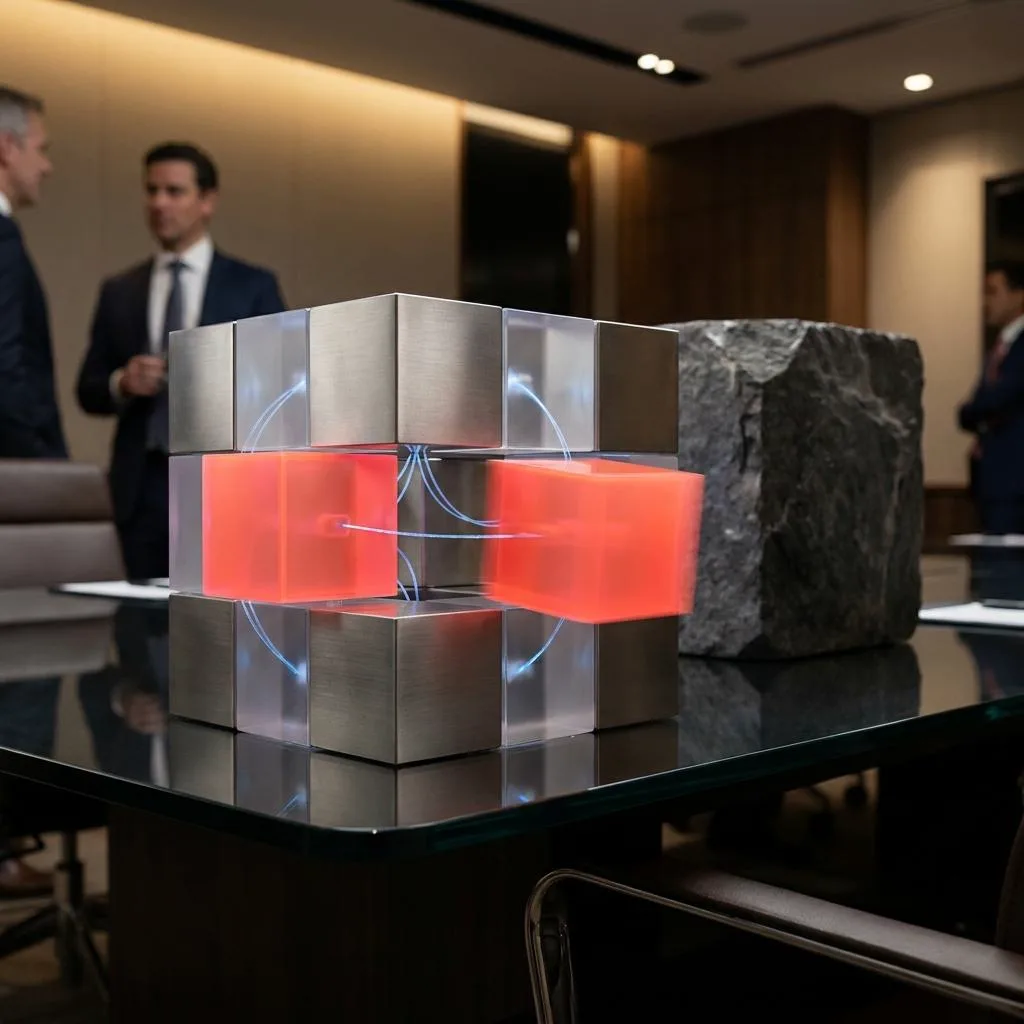
Composable ERP: The Architectural Foundation for Innovation in 2026
Deploying advanced technologies such as edge computing and screen-free interfaces requires a fundamental change in how business software is built. The best ERP system of 2026 will certainly not be the closed, heavyweight monolith that IT directors have grown accustomed to over the past decades. The future belongs to the concept of Composable ERP, built on an API-First architecture that acts as a flexible backbone for the modern enterprise. Instead of a single, monolithic codebase, organizations receive an ecosystem of independent, interchangeable modules and microservices that communicate with one another in real time.
Why are traditional, monolithic management systems becoming the biggest barrier to growth today? First and foremost, because they effectively block hardware and interface innovation. Consider the challenge of integrating an outdated, rigid system with modern solutions such as Edge Computing in manufacturing or advanced artificial intelligence algorithms. In a monolithic architecture, every such change requires deep intervention in the core code, generating enormous costs, the risk of errors, and months-long disruptions. The monolith simply cannot keep pace with the speed of modern digital transformation and becomes a form of technological debt.
Business agility as the top transformation priority
For COOs and digital transformation managers, business agility has become the overriding goal today. Composable architecture responds perfectly to this need, enabling companies to adapt rapidly to changing market conditions. Thanks to the modular approach, an organization can freely add innovative Zero-UI in ERP interfaces for the logistics department without disrupting the operation of critical financial or HR modules. It is precisely this granularity and component independence that defines the future of ERP systems.
In a world of lightning-fast technological change, enterprise-class software cannot be a concrete foundation that cannot be rebuilt. It must be a set of agile tools from which you can assemble exactly the structure the market demands – at any moment.
A prime example of this approach is a scenario in which a leading automotive manufacturer decides to replace its production planning engine. In the Composable model, the company simply disconnects the old module and, via open application programming interfaces (APIs), connects a new, cloud-based solution from a specialized vendor. This approach to management system development drastically shortens innovation deployment times from years to just weeks. This is precisely why flexibility and openness to seamless integration are the most important ERP trends that will define market leaders in the years ahead.
Challenges for CIOs: Security and Distributed Infrastructure
Digital transformation and the evolution toward distributed computing environments bring not only operational benefits, but also unprecedented technological challenges. For CIOs, implementing the innovations that will define the best ERP system of 2026 means completely redefining existing infrastructure management strategies. Architectures based on Edge Computing and interconnected systems irreversibly blur the traditional boundaries of the corporate network.
Every sensor as a potential attack vector
The most pressing concern for today's technology leaders is the radical expansion of the attack surface. In an integrated production environment where thousands of edge devices communicate in real time, every smart sensor, PLC controller, or RFID reader becomes a potential entry point for cybercriminals. The case of a global semiconductor manufacturer whose production network was compromised through a vulnerability in the firmware of an unsecured temperature sensor illustrates the scale of this threat perfectly.
This is why a Zero Trust architecture must serve as the foundation of management system development. It requires network microsegmentation and rigorous, continuous authentication of every node, regardless of its physical location on the production floor. Managing security in a model where edge devices possess their own computing power demands the deployment of automated, AI-driven anomaly detection systems.
Real-time data synchronization
Another significant implementation barrier is maintaining absolute information consistency across a distributed environment. Synchronizing data between hundreds of local edge nodes and the central ERP cloud requires highly optimized communication protocols. CIOs must design systems capable of intelligently determining which data packets require immediate replication to the master record and which can remain solely at the local level.
Errors or delays in this area lead to the emergence of so-called information dead zones. Inadequate real-time synchronization disrupts global reporting, distorts the picture of inventory levels, and dramatically reduces the effectiveness of enterprise-wide resource planning.
Strategies for minimizing technical debt
Transitioning to such an advanced, distributed architecture carries a significant risk of accumulating technical debt. Integrating modern edge solutions with existing legacy systems often results in the creation of complex, difficult-to-maintain digital overlays. Over time, such makeshift infrastructure becomes a bottleneck that blocks further development and business scaling.
To avoid this, digital transformation managers must embrace the Composable ERP paradigm. Building an ecosystem based on independent, interchangeable microservices and open APIs enables the seamless modernization of individual components without the need to rebuild the entire core. As a result, the infrastructure remains flexible, secure, and fully prepared for the technological challenges that lie ahead.
Measurable Return on Investment (ROI) in the Architecture of Tomorrow
For CEOs and COOs, fascination with new technologies always comes back to one place: the spreadsheet showing return on investment. The best ERP system of 2026 is not merely a collection of advanced modules – it is, above all, a powerful driver of operational cost reduction. Translating architectural innovations into concrete financial benefits is essential for justifying digital transformation. Today's organizations no longer invest in software simply to possess modern tools; they invest for measurable, quantifiable gains and improved margins.
Consider the time savings that can be quantified from implementing the Zero-UI in ERP concept. Traditional data entry, fault reporting, and order status updates consume thousands of man-hours per year. Replacing physical interfaces with automated data collection and voice commands dramatically reduces this unproductive time.
In a large automotive manufacturing plant, switching to screen-free system interaction can save up to 40 minutes per shift for each individual worker.
Across an entire factory employing hundreds of people, this translates to millions in annual savings. At the same time, it frees up human potential for tasks that generate significantly greater added value, directly boosting overall workforce productivity.
Prediction that protects budgets and raises OEE
Equally impressive ROI figures are generated by Edge Computing in manufacturing, particularly in the context of predictive maintenance. The direct impact of this technology on the OEE (Overall Equipment Effectiveness) indicator is undeniable and forms the foundation for building operational competitive advantage. Analyzing vibration, temperature, and energy consumption at the network edge makes it possible to identify an impending failure well before it physically occurs.
Instead of costly, unplanned downtime across an entire production line, the technical team carries out a precise intervention during a scheduled maintenance window. Leading heavy machinery manufacturers using this distributed architecture report OEE improvements of as much as 12 to 15 percentage points. This translates directly into maximized utilization of expensive equipment and a dramatic reduction in emergency repair costs and capital tied up in spare parts inventory.
Agility as the currency of the future
The ultimate argument for executive boards is the strategic competitive advantage that comes from rapid adaptation to market changes. An architecture based on Composable ERP delivers the flexibility that traditional, heavyweight monoliths simply cannot offer. When global supply chains suffer a sudden disruption, a modern, modular system allows new, alternative sources of supply to be integrated within just a few days.
Such unprecedented operational agility is not merely about avoiding losses caused by supply disruptions — it is about actively capturing market share from slower-reacting competitors. Investment in tomorrow's architecture therefore pays off doubly: through radical optimization of internal processes and through the ability to immediately monetize external business opportunities.
Conclusion: How to Prepare Your Organization for the Best ERP System of 2026?
The technological revolution rapidly approaching leaves no room for illusions. The best ERP system of 2026 will no longer be a passive repository of financial or inventory data, but an intelligent, proactive ecosystem driving the agility of the entire enterprise. As we have demonstrated in previous sections, the future of ERP systems is built on modular architecture, which is relentlessly displacing outdated, monolithic solutions from the market landscape.
Implementing innovations such as Edge Computing in manufacturing and screenless voice and biometric interfaces — known in the industry as Zero-UI in ERP — requires a solid yet highly flexible foundation. It is precisely the concept of Composable ERP that becomes the gateway to a world in which technology keeps pace with rapidly evolving business models. However, to fully leverage these emerging ERP trends, decision-makers must begin acting today, without waiting for market standards to fully crystallize.
Three Key Steps to Avoid Technological Obsolescence
Chief Information Officers (CIOs) and Chief Operating Officers (COOs) currently face an enormous challenge. Inaction in the face of accelerating digital transformation is a direct path to losing competitive advantage. To optimally prepare your company for the upcoming evolution of management systems, three strategic structural actions must be taken without delay.
- Step 1: Monolith decomposition and integration architecture audit. Before an organization deploys modern microservices, it must thoroughly map its existing technical debt. Leading logistics distributors are already breaking their large, closed systems into smaller, independent business domains. Transitioning to an API-First architecture model is an absolute priority. Identify the areas of the business that require the greatest flexibility, and begin the evolution toward a flexible Composable environment from there.
- Step 2: Modernization of infrastructure and edge security. Deploying advanced analytics directly on factory floors requires the appropriate underlying infrastructure. Moving computing power closer to data sources demands a complete shift in the approach to cybersecurity. IT leaders must implement a Zero Trust architecture, rigorously protecting every distributed sensor and industrial controller. Without a secure, high-performance, and fast edge network, even the most sophisticated Enterprise-class software will be unable to operate without failure.
- Step 3: Redefining user experience (UX) and managing change. Preparing for new interfaces is not merely a technological matter — it is, above all, a question of a new organizational culture. Employees must be prepared for a future in which the system no longer requires tedious manual keyboard data entry. A major food industry manufacturer currently piloting voice commands on forklifts demonstrates that early staff training is the key to success. Ensuring the team understands that artificial intelligence is a powerful enabler guarantees the smooth adoption of new solutions.
Implementing next-generation software is not a purely IT project — it is a fundamental business transformation. Leaders who begin building agile foundations today will be setting the terms in the market by 2026, while their competitors are still struggling with the limitations of outdated systems.
Take the First Step: A Digital Readiness Audit
The transition from rigid software to an intelligent services ecosystem requires a precise plan. Every organization has its own unique profile, its own processes, and a distinct structure of technical debt. There is therefore no single, universal migration path. It requires a highly individualized approach, in-depth analysis of business processes, and detailed mapping of the integration potential of the existing server and cloud infrastructure.
Do not allow your organization to fall behind market leaders. Building an environment in which the best ERP system of 2026 operates effectively is a process that must begin with an honest assessment of the current state of affairs. We invite you to schedule a free expert consultation and a comprehensive digital readiness audit for your company. Our Enterprise solutions architects will help you evaluate your current infrastructure, identify costly bottlenecks, and develop a secure, cost-effective transformation roadmap. Contact us today and let us design tomorrow's architecture for your business together.


