
Introduction: The Busy CEO Paradox – Why Hard Work Doesn't Translate Into Profit
Many owners of manufacturing SMEs fall into a trap that industry insiders call the busy leader paradox. The scenario is almost always the same: the order book is bursting at the seams, the production floor is running at full capacity, and you, as CEO, spend 12 hours a day at the company personally overseeing every detail. In theory, the business is thriving. Yet when you sit down to analyze the financial results, you find that revenue growth is not translating proportionally into profit growth. Where did the margin go?
The problem is not a lack of commitment – it is the phenomenon of apparent productivity. In an environment devoid of digital standards, most of the energy of management and operational staff is consumed by "firefighting" – clarifying misunderstandings, tracking down missing documentation, and correcting errors that stem from verbal agreements. This is a classic example of being stuck working in the business instead of working on the business. Rather than planning expansion into foreign markets or optimizing costs, you waste time micro-managing a chaos that grows along with the number of orders.
Quality management experts define this phenomenon as the "Hidden Factory." It is the part of your plant that never appears in official reports, yet consumes resources – people, machines, materials, and time – solely to fix what was not done right the first time. In companies that rely on manual control and paper-based document flow, the Hidden Factory can absorb anywhere from 20% to 40% of total production capacity.
If your goal is to scale production and successfully enter markets such as Germany or France, you need to understand that operational chaos is not merely an organizational inconvenience. It is a real, quantifiable cost that quietly drains your company's capital and blocks investment opportunities. In the rest of this article, we will examine precisely which processes are most commonly responsible for money leaking out of your business.
The Anatomy of Chaos: What Does a Lack of Processes Actually Look Like in Numbers?
For many manufacturing CEOs, the word "chaos" is associated primarily with stress, after-hours phone calls, and firefighting on the shop floor. In business terms, however, chaos is not merely managerial discomfort – it is a concrete line item on the profit and loss statement, which experts refer to as the Cost of Poor Quality (COPQ). It is estimated that in organizations lacking digital standards, these costs can consume anywhere from 15% to 25% of total revenue.
The core financial problem is a lack of repeatability. When procedures exist only in employees' heads or in outdated binders, every order fulfillment becomes a unique project rather than a standardized process. This makes it impossible to scale the business. If you dream of expanding into markets such as Germany or France, you should know that partners in those markets expect a level of predictability that manual control simply cannot guarantee.
Where exactly is the money escaping? Here are the key areas:
Cost of human errors and rework: Without clear instructions (e.g., delivered through a Process App-type application), employees make interpretive mistakes. Every production reject represents not only wasted material, but above all lost machine time and labor hours that can never be recovered.
Time spent searching for information: Statistics show that operational employees can lose up to 20% of their working time searching for the right documentation, instructions, or trying to establish "who is responsible for this." It is as though you are paying for one day per week during which no one actually works – they simply search for the tools they need to work.
Extended lead time: The absence of automated workflows and escalation paths causes decision-making bottlenecks. A 24-hour delay in approving a raw material order can result in the finished product delivery being pushed back by a week, exposing the company to contractual penalties and a loss of trust.
A lack of processes is therefore not merely organizational disorder. It is a hidden tax that your company pays on every order, voluntarily surrendering a portion of the margin that could otherwise be directed toward investment and growth.
Cost #1: The Rework Loop and Material Waste
In manufacturing, the most expensive element is rarely the raw material itself – far costlier is the time you must spend correcting errors (something that production process automation is highly effective at preventing). The phenomenon of rework is a silent margin killer in SME companies. When an employee has to correct a defective component or produce it from scratch, the company pays twice: once for the original, wasted effort, and a second time for the time spent on the correction.
Yet this is only the tip of the iceberg. Every hour spent "firefighting" and correcting parts is an hour during which your machines and people could be fulfilling new, profitable orders for foreign markets. Instead of generating revenue, you are generating a loss by tying up resources in fixing something that should have been done correctly the first time. Across the course of a year, in a company employing dozens of people, these costs can amount to hundreds of thousands of zlotys silently leaking from the budget.
Why Do Errors Keep Recurring?
The primary cause of rework is usually not a lack of employee skill, but rather a lack of up-to-date, accessible instructions. In many plants, process knowledge is passed on verbally ("that's how we've always done it") or relies on outdated paper route cards. A minor change in a customer's specification that fails to reach the machine operator in time is enough to render an entire production batch worthless.
Without digitally embedding processes in applications accessible to line workers, you are exposed to:
The broken telephone effect: information about project changes arrives late or in a distorted form.
Material losses: the absence of enforced quality checks at early stages (e.g., after the first machining cell) allows a defective semi-finished part to pass through the entire process, wasting raw material and energy at every subsequent station.
No digital trail: when an error occurs, it is difficult to identify its root cause and implement corrective actions, which leads to the same mistakes being repeated in the future.
For a CEO, this means that the actual cost of goods manufactured (COGS) is significantly higher than what was assumed in pricing calculations. Every container of scrap and every overtime hour spent on rework represents capital that could have funded your expansion – but instead it covers the cost of operational chaos.
Cost #2: Time Lost to Communication and Information Searching
While material losses are visible to the naked eye in the scrap bins, time losses caused by poor information flow are a silent killer of efficiency. Many manufacturing SMEs operate under the belief that constant email exchanges and phone calls are evidence of a dynamic, high-performing team. In reality, they are a symptom of a serious process dysfunction that directly erodes your margin.
The root problem is information silos. Sales, production, and the warehouse often function as separate organisms, speaking different "languages" and using different tools – from handwritten notes, to local Excel files, to employees' own memories. The absence of a single, unified system means that order status information does not flow automatically; it must be "manually" extracted.
The Organizational Broken Telephone Effect
How much time do your key employees spend establishing facts rather than executing tasks? A typical scenario in a company without digital processes looks like this:
A salesperson calls the production manager to confirm a delivery date for a customer.
The production manager stops work to find a paper work order or to ask the machine operator.
The warehouse worker halts picking to clarify by email whether a missing component has already been reordered.
This operational "ping-pong" generates enormous hidden costs. Every minute spent searching for technical documentation, the current revision of a drawing, or a delivery confirmation is time you are paying for that generates zero added value for the end product.
The Absence of a Single Source of Truth and Its Impact on Decision Quality
The greatest threat arising from communication chaos is the lack of a Single Source of Truth. When information is scattered, management decisions are made on the basis of guesswork or outdated data. Should you accept an urgent order if you have no certainty about the real-time utilization of your production cells? Without a standardized process and access to reliable data, every such decision is a gamble that can result in delays and contractual penalties.
Remember: time spent "managing chaos" and resolving misunderstandings is a resource you will never get back. In a modern factory, information should stay ahead of the product – not chase after it.
Cost #3: Employee Turnover and Tribal Knowledge
Many manufacturing SMEs operate around the myth of the "irreplaceable employee" – a shift foreman who can set up a machine "by ear," or a process engineer who is the only person who knows the specifications for unusual orders placed by a key customer. In operational management, this phenomenon is known as tribal knowledge. While it may feel reassuring on a day-to-day basis, it is in reality one of the most dangerous hidden costs of a lack of formalized processes.
When knowledge of how the company operates resides exclusively in employees' heads rather than in a digital system or standardized standard operating procedures (SOPs), the organization becomes a hostage to its own staff. The departure of a key specialist then means far more than simply needing to recruit a replacement. It represents a genuine loss of company know-how that may take months to reconstruct. The moment an experienced employee hands in their notice, your company loses not only a pair of hands but also a portion of its operational intelligence.
Lengthy and Costly Onboarding in a Chaotic Environment
The absence of documented processes dramatically extends the time it takes to bring new employees up to speed (Time-to-Competence). In an environment without digital standards, learning takes place through "tribal" methods – a new employee learns by observing a more senior colleague. This model generates a series of costly problems:
Replication of errors: The new employee picks up not only knowledge but also the bad habits of their mentor, which lowers production quality.
Lack of scalability: It is impossible to rapidly increase headcount in response to a large contract, because the bottleneck is the trainers themselves, who must step away from their own work.
Low initial efficiency: Instead of using an application that guides them step by step through the process, the new employee wastes time asking questions and guessing, which increases the risk of mistakes.
For a CEO planning international expansion, building a business on tribal knowledge is an insurmountable barrier. Without transferring knowledge from employees' heads into a standardized system, every staff turnover event will disrupt operational continuity, and opening a new branch or production line will become a logistical nightmare rather than the next step in the company's growth.
Cost #4: Lost Sales Opportunities and International Expansion
For many manufacturing CEOs, expanding into Western markets such as Germany or France is a natural direction for growth. Yet it is precisely when confronting the requirements of foreign partners that operational chaos becomes the most costly barrier. A lack of standardized processes is not merely an internal organizational problem – it is a signal to a potential business partner that working with your company carries too high a risk.
The primary issue is an inability to meet rigorous audit requirements. Large corporations and foreign partners, before signing a contract, often verify not only the quality of the final product but also the way it is manufactured. They expect full traceability, access to change histories, and proof that the process is repeatable rather than dependent on whether a given production shift is "having a good day." If your procedures exist only in employees' heads or in outdated binders, you are shutting yourself out of the most lucrative contracts before you even sit down to negotiate.
Another hidden cost is delays in the quoting process. In a dynamic business environment, the winner is whoever can quickly deliver a precise quote and a realistic delivery date. Without digital visibility into real-time machine utilization and resource availability, salespeople are working in the dark. They must manually verify production capacity, which extends response times by critical days. The result:
You submit a quote too late, while the competition has already closed the contract.
You commit to a delivery date "by gut feeling" that you are unable to meet, leading to contractual penalties.
You add a large contingency buffer to your pricing "just in case," making your offer uncompetitive.
Ultimately, a lack of processes leads to a loss of reputation and customers. Even if you succeed in winning a foreign order, late deliveries caused by internal disorder will quickly put the relationship to the test. In mature markets where on-time delivery is sacrosanct, "firefighting" is not an acceptable explanation. Losing credibility with a key customer is a cost that cannot easily be recovered through marketing – it is a real margin loss and a closed door to further expansion.
Why Excel and Paper Work Orders Are No Longer Enough
For many manufacturing companies, spreadsheets and paper-based document flows were the foundation of early growth. They are inexpensive, readily available, and anyone can use them. However, the moment your goal becomes scaling the business and expanding into markets such as Germany or France, these traditional tools transform from helpful aids into barriers to growth.
The core problem with Excel is its susceptibility to human error and its lack of data validation. A spreadsheet will "accept anything" – a mistyped date, a typo in a product code, or a misplaced decimal point in a material price. Over the course of a year, these small mistakes accumulate into significant sums, and a corrupted formula in a single file can distort company-wide reporting, leading to flawed management decisions.
An even greater challenge is the lack of real-time process visibility. A paper work order circulating around the production floor is invisible to you until it physically lands on a desk in the office. This means:
You have no idea what stage a critical order is at until someone physically goes to check.
You cannot react immediately to a machine breakdown or material shortage, because the information arrives with a delay.
Production planning is based on historical data (often several days old) rather than the current actual state of affairs.
Finally, traditional methods make effective historical analysis and reporting impossible. To draw conclusions from paper documents, someone must manually re-enter the data into a computer. This is a Sisyphean task that not only generates administrative costs but, more importantly, prevents the rapid detection of trends and bottlenecks. In modern manufacturing, data must work in your favor automatically – not remain a prisoner of ring binders.
The Digital Process Twin: How Low-Code Technology and AI Are Changing the Rules of the Game
For many managers in the manufacturing industry, implementing a new IT system conjures images of months-long paralysis, enormous budgets, and the need to hire an army of developers. This is an outdated picture that frequently holds SMEs back from digitalization. Modern technology, built on a Low-Code approach and supported by Artificial Intelligence (AI), completely changes these rules, democratizing access to advanced optimization tools.
The solution gaining traction among companies seeking rapid scalability is the Process App. Unlike rigid ERP systems, process applications allow procedures to be embedded directly in the tools your people work with every day. This means a process is no longer a dead entry in a binder or a PDF file, but a living mechanism that guides employees step by step through each stage of order fulfillment. In doing so, you create a digital twin of your operations – a virtual reflection of what is happening on the production floor, available in real time.
The key advantage of this approach is independence from the IT department. Thanks to Low-Code technology, building and modifying processes works on a visual drag-and-drop basis. As a business decision-maker or operations manager, you can independently adjust workflows to fit the requirements of a new order – without waiting in a queue for developers. This is the flexibility that is indispensable when expanding into foreign markets, where partner requirements can change dynamically.
Where does Artificial Intelligence fit into all of this? AI is no longer just a buzzword – it is your process analyst. Modern Process App platforms leverage algorithms for:
Automatic process generation: The system can suggest an optimal workflow based on historical data or industry standards, reducing implementation time from months to days.
Bottleneck detection: AI analyzes performance in real time, identifying the points where you are losing time and money before they become a serious problem.
Continuous optimization: Instead of a system that is deployed once and gradually becomes outdated, you get a mechanism that learns from mistakes and suggests improvements.
Implementing a Process App is not merely a change of software – it is the transformation of chaotic operations into a standardized, scalable system. This is precisely the step that enables manufacturing companies to move from "firefighting" to strategic expansion planning, with the confidence that the technology will keep pace with management's ambitions.
From Chaos to Standardization: The Benefits of Implementing a Process App
Implementing a Process App-class solution is a turning point at which you stop managing firefighting and start managing a scalable business. For a manufacturing CEO, this means transitioning from reactive, intuition-driven action to proactive, data-driven control. This is not merely a matter of convenience – it is a fundamental shift that directly translates into margin protection and the capacity for expansion.
The core value a Process App delivers is full visibility and real-time control over performance. Instead of waiting until the end of the month for Excel reports that often contain stale data, you gain immediate insight into the exact stage of every order. The system instantly identifies bottlenecks – whether in the procurement department or on the production line – enabling intervention before a delay generates real financial losses.
Digital transformation through a Process App delivers measurable benefits in three critical areas:
Automation and elimination of human error – Routine tasks such as assigning work orders and sending status notifications happen automatically. As a result, employees focus on value-generating activities, and the risk of a mistake (such as skipping a quality control step) drops to zero. Standardized processes guarantee repeatability, which is essential when building relationships with demanding international partners.
Data security and auditability – In the context of working with large corporations, transparency is a currency. A Process App creates a digital trail of every action taken. Change histories, procedure versioning, and secured access to documentation mean that passing a customer audit or certification audit becomes a formality rather than a stressful challenge.
Speed of adaptation through Low-Code and AI – The market never stands still. Thanks to Low-Code technology, you can modify processes without engaging expensive development teams. AI supports you in this by suggesting optimizations based on collected data, giving you the competitive edge and flexibility that companies locked into rigid ERP systems lack.
Organizing your operations within a Process App is the foundation on which you can safely build company growth, with the confidence that an increase in orders will not lead to organizational paralysis.
Case Study: Savings Simulation for a Mid-Sized Manufacturing Company
To understand how the lack of standardized processes drains a budget, let's analyze a hypothetical scenario involving a mid-sized manufacturing company — let's call it "ProMet." The company employs 50 operational staff and struggles with typical problems: paper-based document workflows and manual data entry into spreadsheets.
The "Before" State: The Cost of Operational Chaos
At ProMet, the absence of a digital process twin generated a range of hidden costs that, at first glance, appeared to be an unavoidable part of doing business:
Management time lost: Production managers spent an average of 15 hours per week manually verifying reports and resolving discrepancies between actual conditions and Excel data.
Human error and waste: Due to a lack of access to up-to-date instructions on the shop floor, 3% of produced batches required rework or disposal.
Invoicing delays: The manual circulation of work order cards delayed invoice issuance by an average of 5 business days, negatively impacting cash flow.
The "After" State: Implementing Process App and Standardization
After implementing Process App, the company migrated its operations to an AI-supported low-code environment. Processes were standardized, and data began flowing automatically in real time. How did this translate into hard financial figures after the first year?
720 management hours recovered per year: Automated reporting and digital task approvals allowed management to focus on optimization rather than administration. Based on an average managerial hourly rate, this represents savings of tens of thousands that were previously being "burned" on bureaucracy.
12% reduction in material costs: Because employees always worked from current, digital procedures embedded in the application, the number of production errors dropped dramatically.
Improved operating margin: Eliminating the constant need for rework and firefighting made it possible to take on additional orders without increasing headcount.
The conclusion is clear: The investment in process digitalization paid for itself in less than 6 months. For a CEO of a company like ProMet, implementing Process App was not merely a technology expense, but a strategic decision that plugged margin leaks and freed up the capital needed for a planned international expansion.
Mental Barriers: Why CEOs Fear Digitalization — and How to Overcome Them
Many SME business owners, when faced with the prospect of digital transformation, experience decision paralysis. This is entirely understandable — for years, you have built your position based on intuition and trusted employees. Introducing technology is often associated with the risk of disrupting that order. In reality, however, the greatest barrier is not technology itself, but beliefs that are no longer relevant.
The Myth of Expensive, Multi-Year Implementations
The first and most common concern is the belief that digitalization requires budgets running into hundreds of thousands and an army of developers who will paralyze the factory's operations for a year. That is the picture of IT systems from a decade ago. Today, thanks to Low-Code platforms and the support of artificial intelligence, implementing processes is a matter of weeks, not years. Modern tools allow processes to be modeled using drag-and-drop, meaning you don't need your own IT department to get started.
Employee Resistance: How to Turn Opponents into Allies
The second obstacle is fear of the team's reaction. Will production workers be able to handle the new system? Will they see it as an attempt to surveil them? The key to success is involving them in the process of building change. Rather than imposing ready-made solutions from above, it is worth showing them that digitalization takes the most tedious, repetitive tasks off their shoulders:
It eliminates the need to manually fill out paper work order cards.
It clearly defines accountability, putting an end to a culture of "blame-finding."
It gives them confidence that they are following the current procedure.
When employees see that the system is not there to replace them, but to make their work easier, natural resistance turns into engagement.
Evolution Instead of Revolution
You don't need to digitalize the entire factory at once. The most effective strategy is the small steps method. Start with one critical process — for example, handling complaints or managing raw material orders. Success in one area builds trust in the technology and provides hard data on return on investment (ROI). This evolutionary approach is financially and operationally safe, while simultaneously preparing the company for the scaling required when expanding into markets such as Germany or France.
The First Step Toward Recovering Your Margin: A Process Audit
Many managers fall into the trap of thinking that digitalization begins with purchasing an expensive IT system. This is a mistake that often ends in a wasted budget. True transformation and margin protection begin with a reliable diagnosis — specifically, mapping processes in the "as-is" model (current state). Before you start automating, you need to fully understand how your company actually operates, not how you think it operates.
The key goal of this stage is a brutally honest identification of bottlenecks — the critical points where the flow of value to the customer comes to a halt. In manufacturing companies, these most often hide at the interfaces between departments:
Order handoffs: Does a sales rep send an email to production, and does the shift supervisor manually re-enter the data into Excel? This is where specification errors originate.
Cost approvals: How long does an invoice wait for a decision-maker's signature, holding up raw material deliveries?
Breakdown reporting: Does information about a machine stoppage reach maintenance immediately, or only after a paper form has been filled out?
Each such bottleneck represents a specific sum of money escaping from your margin through wasted time and materials. Bringing order to this chaos doesn't require hiring external auditors from the outset. All it takes is a critical look at your own operations.
Diagnose Your Company on Your Own
To make this first and most important step easier for you, we have prepared a tool that will allow you to view your organization through the eyes of a process auditor. You don't have to guess where you're losing money — check it point by point.
Download the free checklist: "10 Signs Your Company Needs a Process Management System" and find out which areas of your operations require immediate attention in order to lay the groundwork for an effective Process App implementation and a safe international expansion.
Summary: The Choice Is Yours
Operational chaos, human error, and constant firefighting are not unavoidable costs of doing business. They are silent killers of your margin — ones you are consenting to, consciously or not, by postponing the decision to bring your processes under control.
Scalable production and successful expansion into foreign markets require solid foundations, not manual steering. Only standardized, digital workflows guarantee that a growing number of orders will translate into real profit — not an avalanche of costly complaints and delays.
Don't let hidden costs and inefficiency continue to hold back your company's growth. Take the first step toward regaining full control of your business. Download the free checklist: "10 Signs Your Company Needs a Process Management System" and diagnose exactly where your money is going.
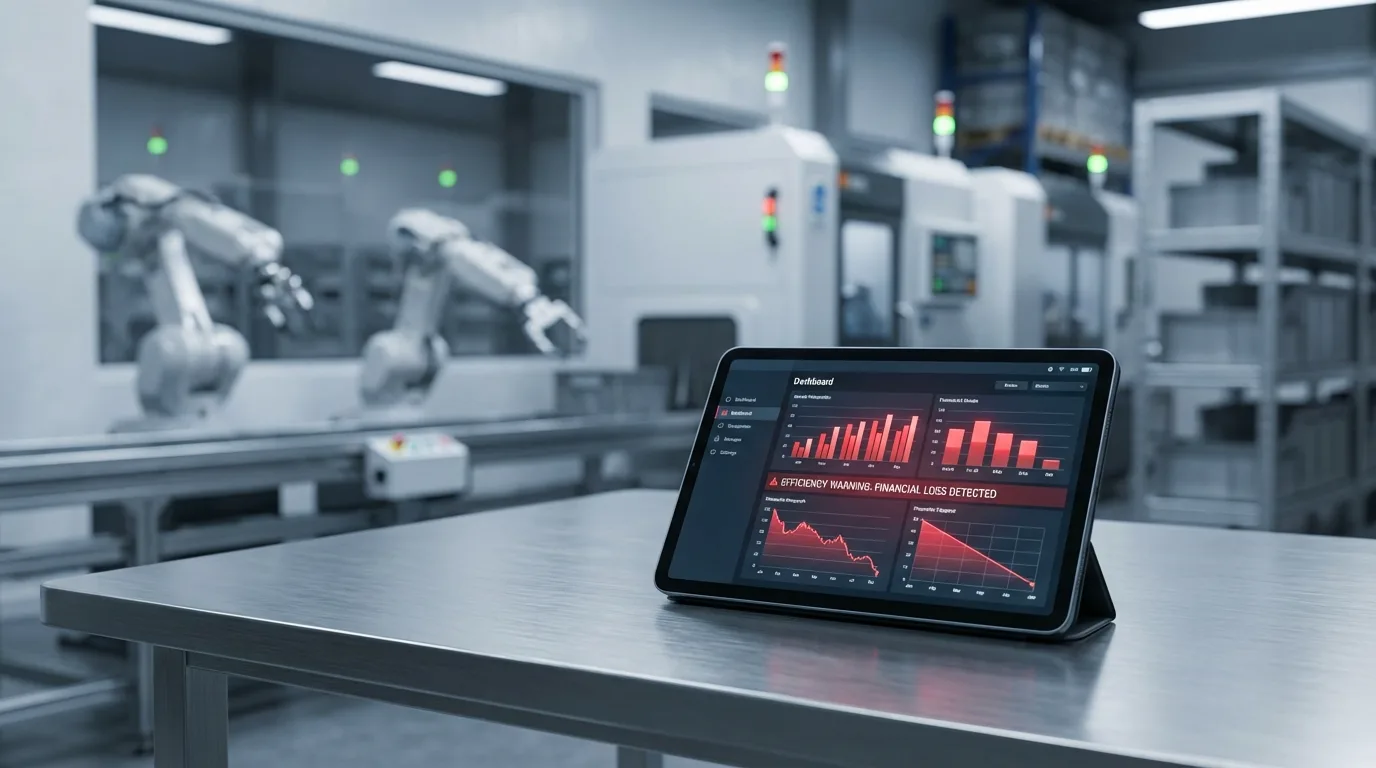
A tablet on a desk in a production hall displaying charts showing declining efficiency and operational costs.
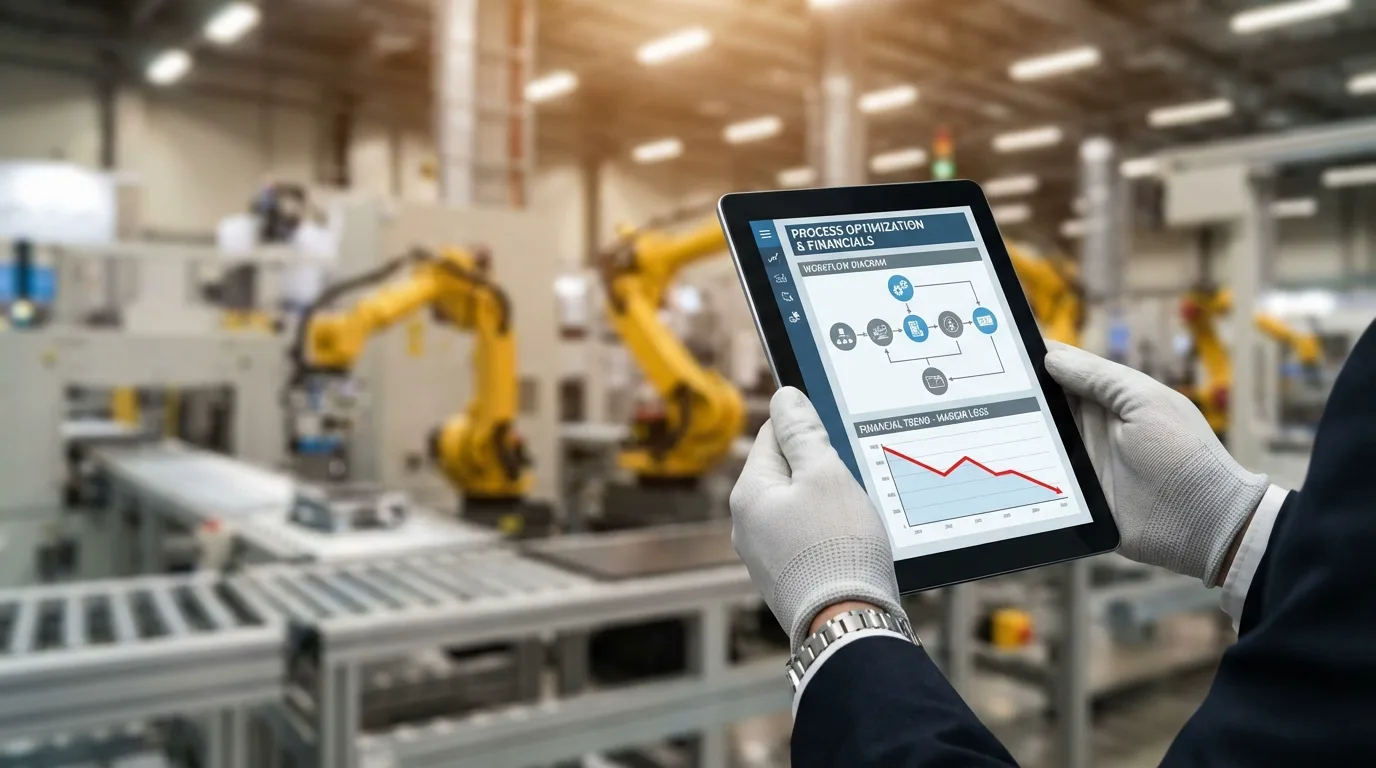
Close-up of a tablet displaying a margin decline chart against the blurred backdrop of a production hall, symbolizing operational cost analysis.


