
Manufacturing Processes in the Digital Era – How Industry 4.0 Is Transforming Companies?
📋 Table of Contents
- Old vs. New: Where Does Time and Money Get Lost in Manufacturing?
- 5 Reasons to Digitize Now: OEE, Costs, Quality, On-Time Delivery, Safety
- 7 Steps to Industry 4.0: From Audit to Scaling
- Technologies in Practice: MES, IoT, AI, APS – What to Choose?
- Action Balance: Benefits, Risks, and the Real ROI of Transformation
In the digital era, the manufacturing industry is undergoing a fundamental transformation shaped by the Industry 4.0 revolution. More and more companies are discovering that traditional methods can contribute to inefficient use of time and financial resources. Publications addressing the impact of modern technologies such as MES, IoT, AI, and APS are essential for understanding how digitalization can boost OEE, reduce costs, improve quality, on-time delivery, and safety. Learn what benefits and risks to expect when taking steps toward a digital future in manufacturing, and how a real ROI can shape your company's future in the context of Industry 4.0.
-
Old vs. New: Where Does Time and Money Get Lost in Manufacturing?
-
5 Reasons to Digitize Now: OEE, Costs, Quality, On-Time Delivery, Safety
-
7 Steps to Industry 4.0: From Audit to Scaling
-
Technologies in Practice: MES, IoT, AI, APS – What to Choose?
- 5. Action Balance: Benefits, Risks, and the Real ROI of Transformation
In traditional manufacturing, there are many areas where valuable time and money are wasted. The Industry 4.0 revolution, however, offers answers to many of these challenges, providing solutions that companies around the world are already implementing. Here are the key differences between old and new manufacturing methods:
Outdated manufacturing processes:
-
Management based on incomplete or outdated data: Traditional factories often rely on manual data collection, which is time-consuming and prone to errors.
-
Underutilization of resources: Machines are frequently used inefficiently, leading to downtime and suboptimal energy consumption.
-
Limited analysis and planning capabilities: Targeting efficiency without in-depth workflow analysis and adaptation to changing conditions is difficult.
Modern solutions in the digital era:
-
Digital integration: Systems such as Smart Factories use data centers to collect and analyze information in real time, which in turn increases operational efficiency and reduces waste.
-
Automation and robotization: Machines and robots, controlled by advanced software, can work faster and more precisely than human teams — and without downtime.
-
Predictive maintenance: Advanced algorithms forecast when machines will need servicing, minimizing unplanned downtime.
These manufacturing transformations not only affect productivity but also open up new opportunities for developing employee competencies. As a result, companies that adopt these technologies outpace the competition and increase their market value.
Nevertheless, the transition is not without its challenges. Investment in new technologies and the restructuring of existing production lines are required. Ultimately, however, the benefits of modernized manufacturing can far outweigh the initial costs, shaping the future of industry. The implementation of information and robotic systems is the key to an efficient future for every influential enterprise in the manufacturing sector.
Companies across various industrial sectors are already seeing undeniable benefits from the digital transformation of their manufacturing processes. Here are the key reasons to invest in digitalization now:
Overall Equipment Effectiveness (OEE): Digital solutions enable comprehensive monitoring and optimization of machine performance. Companies using systems such as factory software can precisely analyze factors like availability, performance, and quality to extract maximum capability from every piece of equipment.
Cost reduction: Automation and process optimization deliver significant savings. Industry 4.0, with its advanced information and communication technologies, effectively minimizes costs associated with time-consuming, manual service tasks. Unlike traditional methods, digital systems reduce waste and decrease the need for machine downtime.
- Quality improvement: Quality control delivered through digital solutions is far more precise than manual inspections. These systems provide continuous monitoring and reporting, helping to identify the root cause of any nonconformities and eliminate them quickly.
Greater on-time delivery: Integrated digital systems enable better planning and supply chain management, translating into improved delivery punctuality. Despite the diverse challenges of the market, digital factory solutions help maintain smooth production and delivery flows, even in the most dynamic environments.
Enhanced safety: Industry 4.0 systems offer advanced security protocols designed to protect against all forms of threats, from cyberattacks to hardware failures. These solutions not only safeguard valuable data but also ensure employee safety during their day-to-day tasks.
In summary, investing in the digitalization of manufacturing processes is not only a step toward greater efficiency but also a method for significantly reducing costs and increasing market competitiveness. Meanwhile, companies that leverage these modern technologies are already reaping measurable benefits that are shaping the future of the entire industry.
When embarking on the transformation of your company in line with Industry 4.0 principles, it is worth taking several key steps that will enable the effective implementation of new technologies. This process affects various aspects of a company's operations and therefore requires meticulous planning and execution.
- Step one: The process begins with a preliminary audit. During this phase, we analyze current manufacturing processes, assess their efficiency, and identify potential areas for automation. This is the foundation upon which all subsequent actions will be built.
Step two: A detailed transformation plan must be drawn up. It should include specific objectives while presenting the technologies to be implemented. It is important to also incorporate an estimated timeline and expected benefits.
Step three involves selecting vendors and technologies. Here, it will be crucial to pay attention to the competencies and experience of potential technology partners — such as Siemens or AccEvo — who can provide support at the highest level.
- Step four: We proceed with the implementation of the chosen solutions. This is the stage at which detailed planning begins to translate into concrete actions. It is important that this phase takes place under constant supervision to ensure high quality and effective deployment.
Step five: Testing the new systems cannot be overlooked. Overseeing the correct functioning of the implemented solutions is the guarantee that they will deliver the expected results.
- Step six: Following successful testing, a period of optimization begins. Real-world, data-driven operation enables the fine-tuning of details, which is critical for long-term performance.
The seventh and final step concerns scaling the new solutions to other departments or even locations within the organization. This is the stage at which Industry 4.0 begins to shape the entire enterprise, bringing changes across many areas.
Applying these steps, despite any potential challenges, leads to smarter, more integrated, and more efficient manufacturing. Every industrial enterprise that commits to this transformation faces an opportunity not only to improve efficiency but also to build a solid competitive advantage in the market.
In the era of Industry 4.0, companies face the task of choosing the technologies that best shape their manufacturing and service operations. Here is an overview of four key systems supporting digital transformation:
-
MES (Manufacturing Execution Systems) – These production execution management systems are indispensable for real-time monitoring and control of manufacturing processes. They enable rapid access to production data, helping to optimize performance.
-
IoT (Internet of Things) – This technology connects industrial devices into a single intelligent network that can continuously transmit data on the status of machines and processes. It is essential for predictive maintenance and continuous process improvement.
-
AI (Artificial Intelligence) – Artificial intelligence in industry can predict market trends, optimize processes, and automate decisions, significantly contributing to increased efficiency.
-
APS (Advanced Planning and Scheduling systems) – These systems support advanced production planning and scheduling. They enable resource optimization and shorten order lead times, which is critical in rapidly changing market conditions.
Each of these technologies has its specific applications and benefits, so the choice of the right tool depends on the specific characteristics of the enterprise and the sector in which it operates. While MES is invaluable for production monitoring and control, IoT finds application in automation and remote device management. AI, meanwhile, delivers benefits through its ability to predict and optimize, while APS facilitates the management of complex manufacturing operations.
When selecting specific solutions, it is worth drawing on expert support and carefully analyzing the potential impact on the company's operations. Nevertheless, digital transformation is no longer the future — it has already become the present reality in industry, which is why technology decisions must be made quickly and deliberately to avoid falling behind the competition.
Industry 4.0 is revolutionizing the way companies approach manufacturing, servicing, and competency management. Below we present a balance of benefits, risks, and the real return on investment (ROI) associated with digital transformation.
Benefits:
-
Increased efficiency: Automation and digital technologies enable faster and more precise manufacturing processes.
-
Cost reduction: Lower material consumption and optimized operations contribute to significant savings.
-
Better decision support: Information and analytics systems deliver real-time data, enabling more informed and precise decisions.
-
Greater flexibility: Digital industry is more agile in responding to changing market demands and customer preferences. Risks:
-
High implementation costs: The initial investment in modern technologies can be substantial.
-
Need for new competencies: Employees must acquire new skills, which often requires time and additional investment in training.
-
Data security concerns: Increased digitalization also means a greater risk of cyberattacks. Real ROI:
The actual return on investment depends on many factors, including the scale of the enterprise, the specifics of the industry, and the type of solutions applied. Numerous publications and studies confirm that, despite initial challenges, digital transformation delivers:
- Increased productivity: This is especially significant for large enterprises with intensive production operations.
- Quality improvement: The precision of digital technologies minimizes defects and improves overall product quality.
- Reduced downtime: Process automation minimizes the risk of human error and machine failures, translating into production continuity. While the benefits of transformation are significant, it is equally important to account for the risks and required investments in the context of each company's individual circumstances. What is critical is adequate preparation and support at every stage of the transformation.
Summary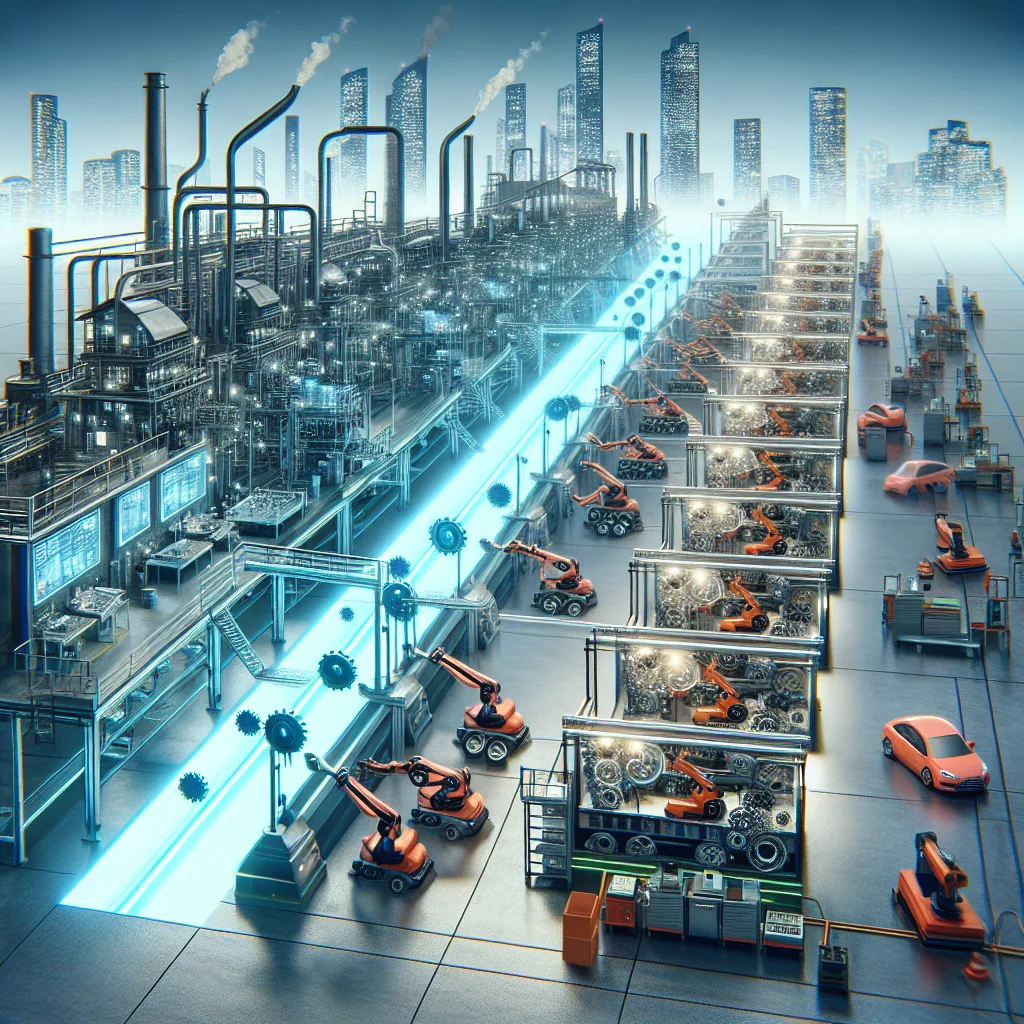
In the era of Industry 4.0, the digitalization of manufacturing processes is key to increasing efficiency, reducing costs, and improving production quality. Modern solutions such as Smart Factories, automation, robotization, and predictive maintenance make it possible to achieve significant savings in both time and resources. The implementation of systems such as MES, IoT, AI, and APS enables waste reduction, operations optimization, and improved delivery punctuality, all of which significantly impact companies' competitiveness in the market. This is especially important in the context of continually adapting to changing market conditions and the growing demand for information and technology support. However, digital transformation requires careful planning, investment in new technologies, and adherence to implementation stages in order to effectively shape the future of manufacturing and service in industry.


