
Introduction to Sustainability in the Digital Age
Sustainability is a strategy that seeks balance between economic and social needs and environmental protection. It is defined as development that meets the needs of present generations without compromising the ability of future generations to meet their own needs. In the context of digitalization, sustainability takes on a new dimension, in which modern technologies become not only a tool but also a key factor influencing pro-environmental initiatives.
Digitalization brings a range of benefits that can support sustainable development. For example, intelligent energy management systems enable the optimization of energy consumption in buildings and manufacturing facilities, leading to significant savings and reductions in CO2 emissions. At the same time, the development of blockchain technology enables transparency in the supply chain, which is crucial for companies striving toward ethical business practices.
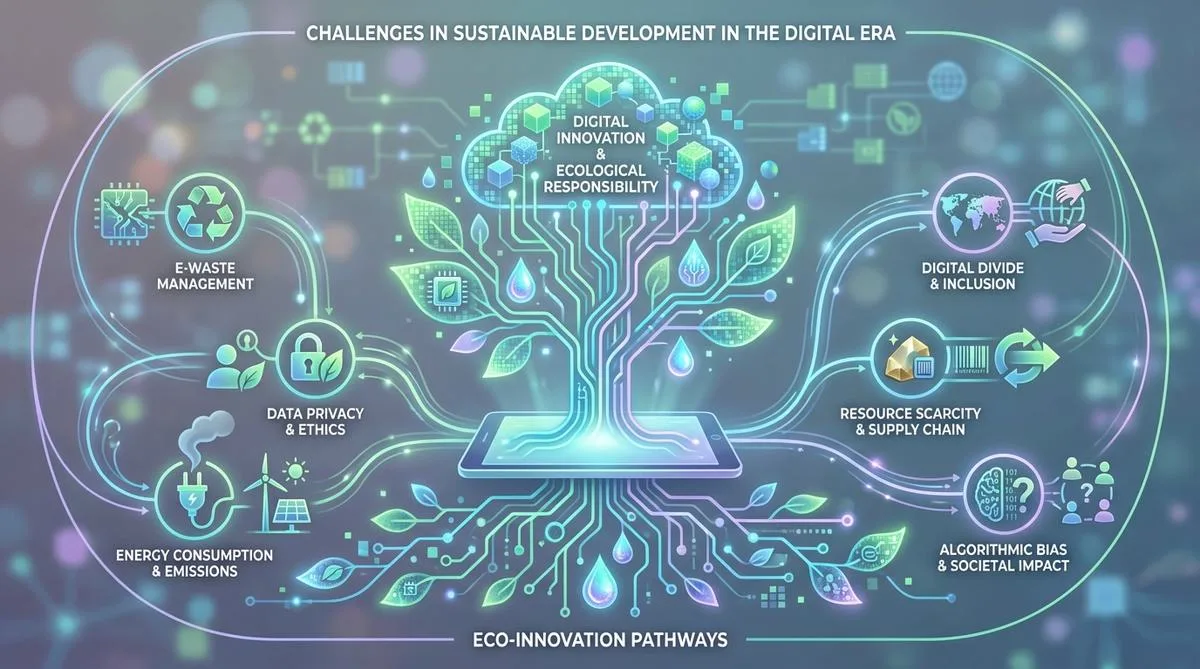
However, as technologies evolve, new challenges also emerge. The growing energy consumption of data centers and issues related to e-waste are among the significant concerns that must be addressed in the context of sustainability. It is therefore essential that managers and entrepreneurs make informed decisions that not only promote innovation but also account for its environmental impact.
Shifts in Business Models and Sustainability
In the age of digitalization, traditional business models are evolving, and this has a significant impact on sustainable development. Many companies, recognizing the growing importance of ecological initiatives, are transforming their approaches to fully leverage the opportunities that technology offers. One example is the fashion industry, where certain brands have begun implementing circular economy principles. By using online platforms that enable the sale of second-hand clothing, they have reduced waste and are promoting sustainable practices.
New business models such as subscriptions and rentals also contribute to lower resource consumption. For instance, a company that rents electronic equipment rather than selling it is better positioned to manage the product lifecycle, resulting in longer product usability and less waste. However, implementing these solutions carries risks, such as the need to invest in new technologies and educate customers about sustainable approaches.
The benefits of digitalization are significant. For example, companies using data analytics can optimize production processes, leading to reduced energy and raw material consumption. At the same time, companies must be aware of risks such as increased emissions associated with the expansion of IT infrastructure. Sustainability in the digital age requires flexibility and a willingness to adapt to changing market conditions.
The Role of Eco-Innovation in Digital Transformation
Eco-innovations are innovative solutions that contribute to sustainable development by combining technology with environmental protection needs. In the age of digitalization, eco-innovations are becoming a key element of the strategy of enterprises seeking to implement sustainable practices. Examples of such innovations include waste management technologies that enable the efficient recycling of materials and reduce negative environmental impact. Greenhouse gas emission monitoring systems, based on data analysis, also help companies optimize production processes and reduce their carbon footprint.
One successful example of eco-innovation is the application of artificial intelligence in energy management. For instance, smart energy grids that analyze energy consumption in real time enable more efficient resource management and reduced energy losses. Another important aspect is the development of products that are more environmentally friendly across their lifecycle, such as biodegradable packaging used by many companies in the food industry.
Nevertheless, implementing eco-innovations comes with certain challenges. Companies frequently encounter difficulties related to high upfront costs and the need to train personnel. Furthermore, insufficient knowledge of digital capabilities and a lack of support from authorities can hinder the development of eco-innovations. It is therefore crucial for entrepreneurs to invest in education and collaborate with other stakeholders to develop innovative solutions that drive pro-environmental change within their organizations.
Data Management and Its Impact on Sustainability
Data management plays a key role in achieving sustainability goals, enabling organizations to make informed environmental decisions. With modern analytical technologies, enterprises can collect, process, and analyze vast amounts of data, allowing them to effectively monitor their environmental impact. For example, a large food industry manufacturer uses data on water and energy consumption in its production processes to identify areas requiring improvement and implement efficiency savings.
In practice, data analysis can lead to the introduction of innovative solutions, such as the optimization of delivery routes in logistics. This approach not only reduces operational costs but also cuts exhaust emissions, aligning with sustainability objectives. Companies in the energy sector, meanwhile, can use data to forecast energy consumption, enabling better resource management and reduced losses.
However, data management also involves ethical challenges. Enterprises should ensure transparency in the collection and use of data, as well as comply with privacy protection principles. In practice, this means that organizations must be accountable for the way they manage data — not only to generate profit, but also to contribute to environmental protection. One example is a technology company that introduces personal data management policies, thereby building trust among customers and business partners.
In the context of sustainability, data management should be an integral part of a company's strategy, enabling effective decision-making and the achievement of environmental goals.
Challenges of Digitalization in the Context of Sustainability
Although digitalization brings many benefits, it also presents enterprises with a number of challenges in the context of sustainable development. One of the most serious issues is the energy consumption of modern technologies. Data centers, for example, which are essential for storing and processing information, consume enormous amounts of energy. Research indicates that by 2025 their energy consumption may increase by 20%, raising the question of what energy sources are used in this process. Companies must therefore invest in energy efficiency and renewable energy sources to reduce their carbon footprint.
Another challenge is electronic waste. As technology advances, the number of outdated devices continues to grow. According to a UN report, 53.6 million metric tons of electronic waste were generated worldwide in 2019. Companies must introduce recycling policies and responsible electronics management practices to limit the negative impact on the environment.
The final, but no less significant, challenge involves regulatory challenges and compliance. As new technologies emerge, legislation often struggles to keep pace with their development. Companies must stay up to date with environmental regulations and strive to comply with them. Neglecting these issues can lead to serious consequences, including financial penalties and reputational damage.
The Future of Sustainability in the Digital Age
As digitalization becomes an integral part of our business operations, the future of sustainability is being shaped by emerging technologies and innovations. In the coming years, we can expect eco-innovation to grow in importance, combining sustainability with cutting-edge technological solutions. One example is sustainable building materials produced using digital processes that minimize waste and energy consumption.
A key trend will be the use of data analytics to more accurately monitor the environmental impact of business activities. Companies that invest in such technologies will be able to identify areas requiring improvement and introduce innovative solutions that reduce their carbon footprint. For example, transport companies can use algorithms to optimize delivery routes, reducing fuel consumption and transit times.
Furthermore, the role of companies in shaping the future of sustainability will continue to grow. Cross-sector collaboration and public-private partnerships will become crucial in the pursuit of shared goals. Examples include projects in which technology companies work alongside environmental organizations to develop innovative renewable energy solutions.
It is also worth noting that shifting consumer expectations will compel enterprises to demonstrate greater transparency and accountability in their sustainability efforts. Companies that rise to these challenges will not only be able to strengthen their competitiveness but also contribute to building a better future for the planet.
Summary and Conclusions
In the face of new challenges related to sustainability in the digital age, enterprises must adapt their strategies and approaches to effectively respond to growing environmental and regulatory demands. The issues examined — including the rising energy consumption of digital technologies, electronic waste, and regulatory challenges — demonstrate that transitioning to more sustainable practices is not merely an option, but a necessity.
First and foremost, the key takeaway is the need to invest in energy efficiency. Companies that fail to invest in renewable energy sources and energy-saving technologies may encounter significant difficulties. Statistics indicate that enterprises that effectively manage their energy consumption can reduce operational costs by 20–30%, delivering measurable financial benefits over the long term. We recommend that managers consider implementing energy consumption monitoring systems, enabling them to continuously identify areas requiring improvement.
The second key point concerns the management of electronic waste. Given the growing number of devices that become obsolete, companies should introduce recycling policies and responsible electronics management practices. Examples include device take-back programs introduced by major technology brands. Such initiatives not only reduce negative environmental impact but can also build a positive company image among consumers who are increasingly attentive to ecological issues.
It is also essential not to overlook the need to adapt to changing regulations. Shifts in environmental legislation can be rapid and complex, which is why enterprises must stay current with legal requirements. It is worth considering collaboration with compliance experts to minimize the risk of regulatory violations, which can lead to substantial financial penalties and reputational damage.
Finally, a crucial conclusion is the need to adopt a holistic approach to sustainability. Companies should integrate sustainable practices into every aspect of their operations — from the supply chain and production through to marketing. Collaboration with environmental organizations and innovative start-ups can generate new ideas and solutions that support sustainable development. We encourage managers and entrepreneurs to take actions that will not only benefit their companies but also contribute to building a better future for our planet.


