
Introduction to Kaizen 2.0
Kaizen, which in Japanese means "continuous improvement," is a process management philosophy that has gained worldwide popularity, particularly in the context of Lean Management. This strategy is grounded in the belief that every person in an organization has the potential to introduce small but meaningful changes that can lead to improvements in efficiency and quality. A key element of Kaizen is the engagement of employees at all levels, which fosters the creation of a culture that is open to innovation and improvement.
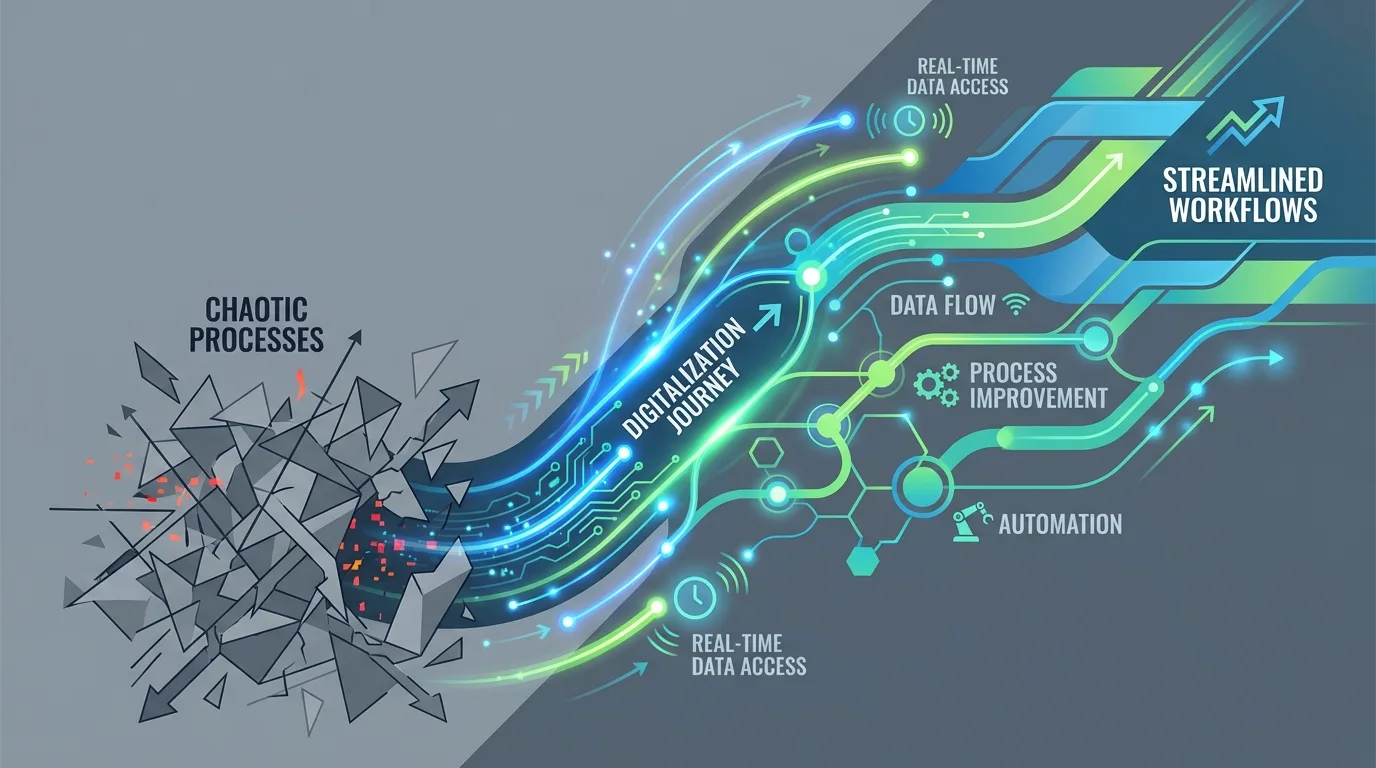
However, as technology evolves, traditional Lean Management methods may prove insufficient in the face of dynamic market changes. This is precisely where Kaizen 2.0 comes into play, combining the principles of continuous improvement with digital transformation. Modern tools such as real-time data analysis, automation, and artificial intelligence enable organizations not only to identify areas for improvement, but also to implement solutions faster and more effectively than ever before.
In the digital age, the challenge is not only a lack of efficiency, but also difficulties in monitoring and analyzing processes. Traditional methods such as spreadsheets and paper-based documentation are unable to meet the demands of modern organizations that require flexible and integrated systems. This is why Kaizen 2.0 is becoming an essential tool for companies that wish not only to remain competitive, but also to gain a competitive advantage through an innovative approach to process management.
Traditional Lean Management Methods – Their Limitations
Traditional Lean Management methods, despite their effectiveness in reducing waste and optimizing processes, face significant limitations in the context of a rapidly changing business environment. Above all, a lack of flexibility in adapting to new conditions is becoming increasingly apparent. Modern organizations that must respond to evolving customer needs cannot afford the rigid structures that characterize traditional Lean approaches.
Communication problems and paper-based documentation present another significant challenge. Many companies still rely on paper forms and spreadsheets, which creates confusion and hinders access to critical information. The example of one manufacturing company illustrates how the lack of centralized documentation caused employees to spend hours searching for current procedures, significantly reducing their work efficiency.
Low efficiency in data collection for analysis is yet another problem that limits the ability to make data-driven decisions. Traditional methods often do not enable the rapid gathering and real-time analysis of information, making it impossible to identify bottlenecks and take corrective action. As a result, organizations may fail to notice key areas requiring improvement, which in the long run leads to stagnation and a loss of competitiveness.
In the era of digitalization, traditional Lean Management methods not only fail to keep pace with market demands, but can also be a source of frustration among employees who feel constrained by inefficient processes. This is why transitioning to a modern approach such as Kaizen 2.0 is becoming essential for organizations that wish not merely to survive, but to thrive in the face of today's market challenges.
Process Digitalization – New Opportunities
The digitalization of processes in manufacturing and logistics opens the door to previously unseen opportunities that can significantly impact an organization's operational efficiency. First and foremost, the elimination of paperwork through the implementation of digital tools ensures that documents are always up to date and accessible in real time. In practice, this means that employees can focus on core tasks rather than spending time searching for information in physical archives. One electronics distribution company reduced the time needed to process orders by 30% after implementing a document management system, significantly accelerating order fulfillment.
Second, digitalization enables real-time data collection, which in turn allows for analysis and decision-making based on concrete facts. This enables managers to quickly identify bottlenecks in production processes and implement the necessary changes, resulting in increased efficiency across the entire organization. For example, one manufacturing company's use of data analytics helped reduce raw material waste by 25%, directly impacting profitability.
Finally, digital tools improve communication between teams and departments, facilitating better coordination of activities. In organizations where teams are closely integrated, such as in certain logistics companies, collaboration becomes more fluid, leading to faster and more effective problem resolution. After introducing digital collaboration platforms, one transportation company recorded a 40% increase in customer satisfaction — a testament to how crucial effective communication is in achieving business goals.
Implementing Digital Tools in Practice
Deploying digital tools within an organization is a critical step toward effective process management and the implementation of the Kaizen 2.0 concept. The selection of appropriate solutions should be based on the company's specific needs and operational objectives.
A wide range of platforms and tools are available on the market to support this transition. Examples include business process management (BPM) systems such as Bizagi and Appian, which allow for the modeling, automation, and real-time optimization of processes. These tools offer features such as process visualization and analytics, enabling managers to continuously monitor operational performance.
When selecting digital solutions, it is worth being guided by several criteria. First, the ease of integrating the chosen system with existing applications and IT infrastructure should be assessed. Second, aspects related to usability and technical support are equally important, particularly for companies that do not have a dedicated IT department. The flexibility of solutions — allowing them to be adapted to changing needs — is also of key importance.
It is also worth examining examples of companies that have successfully implemented digitalization. One furniture manufacturer integrated its order management system with an analytics platform, reducing order fulfillment times by 40%. Meanwhile, a well-known logistics service provider invested in a warehouse management tool, increasing operational efficiency by 30% and significantly improving inventory control.
Data Analysis and Decision-Making
In the age of digitalization, data analysis has become a key element of operational strategies across many industries. Modern digital tools enable the collection and interpretation of data in real time, opening the door to more informed decision-making. Through analytics, managers can identify areas requiring improvement and optimize existing processes.
For example, one apparel manufacturer used analytics to monitor production line performance. By analyzing data on downtime and employee productivity, managers identified bottlenecks, enabling them to introduce improvements and increase efficiency by 20% in just three months.
Furthermore, using data to drive operational decisions allows for faster responses to changing market conditions. In e-commerce, real-time analysis of sales data makes it possible to align product offerings with current trends, resulting in increased sales. For instance, a well-known retailer used customer preference data to personalize offers, which led to a 15% increase in conversion rates.
It is also worth noting that the application of data analysis improves communication between teams. Through shared, easily understood reports, all employees can work together on process optimization, leading to greater consistency of action. Examples of such practices can be found in logistics companies, where collaboration and information sharing between transportation and warehousing departments are critical to operational efficiency. The implementation of analytical systems brought them a 30% increase in productivity and a significant improvement in customer service.
The Future of Kaizen in the Digital Era
In the face of extremely dynamic technological change, the Kaizen approach — focused on continuous improvement — is gaining new avenues for development. The digitalization of processes enables the introduction of innovative tools such as artificial intelligence (AI) and automation, which can significantly increase operational efficiency. Thanks to AI, companies can analyze vast amounts of data in real time, allowing for faster identification of bottlenecks and decision-making based on facts rather than intuition.
The automation of routine tasks, such as data entry and performance monitoring, reduces the risk of human error and allows employees to focus on more strategic activities. For example, a logistics company that implemented automation systems observed a 30% increase in operational efficiency, which directly contributed to improved customer service.
However, the future of Kaizen is not without its challenges. As organizations become increasingly complex, difficulties may arise in integrating new technologies with existing systems. Companies must also confront issues related to data security and the need to ensure compliance with legal regulations.
In the context of Kaizen, the key will therefore be to combine traditional methods with modern technologies in order to create a balanced management model that not only increases efficiency, but also enhances employee and customer satisfaction. In the years ahead, organizations that successfully integrate these elements will gain a competitive advantage in the market.
Summary and Call to Action
In the face of growing competition and dynamic market changes, process digitalization is becoming a key element of any organization's development strategy. As the examples discussed in this article demonstrate, the implementation of digital tools enables significant operational improvements, including increased efficiency, reduced errors, and enhanced customer service quality. Through digitalization, companies can gain not only time, but also a competitive advantage that is invaluable in today's world. Moreover, process digitalization contributes to building a coherent data ecosystem, enabling better decision-making based on reliable information.
Examples of digital tool applications show that organizations that have invested in new technologies have observed significantly greater process efficiency. For instance, one logistics company that implemented a real-time data management system noted a 35% increase in operational efficiency, which directly translated into improved customer service quality. It is also worth emphasizing that digitalization enables continuous improvement, as organizations can continuously analyze data and adapt their processes to evolving market needs.
However, in order to fully benefit from digitalization, concrete action must be taken. The first step should be an analysis of the organization's current processes and the identification of areas requiring improvement. The next step is to invest in the right tools to enable the automation and optimization of those processes. For many companies, a good starting point may be the adoption of low-code solutions, which require no advanced IT expertise while allowing for the rapid implementation of changes.
It is also worth investing in employee training. Understanding and being able to use new technologies are critical to the success of digitalization. Employees who feel competent in using digital tools are more likely to actively participate in the processes of change and innovation within the company. Furthermore, involving the team in digitalization processes contributes to building a culture of continuous improvement.
In summary, process digitalization is not merely a trend, but a necessity that can deliver tangible benefits in the form of increased efficiency, improved customer service, and competitive advantage. We encourage you to take action today! Identify areas for improvement, introduce the right tools, and engage your team in the process of change. The future of your organization depends on how quickly and effectively you adopt new technologies. Don't wait for change — be the one who drives it!


