
Introduction: The Future of Warehouse Logistics
In the face of a rapidly changing market, automation is becoming a key element of warehouse management strategies. In 2026, warehouse logistics will undergo a revolution that will inspire companies to transform their operations into more efficient and flexible ones. Modern warehouses face many challenges, such as high employee turnover, delays in information flow, and growing customer expectations regarding delivery times.
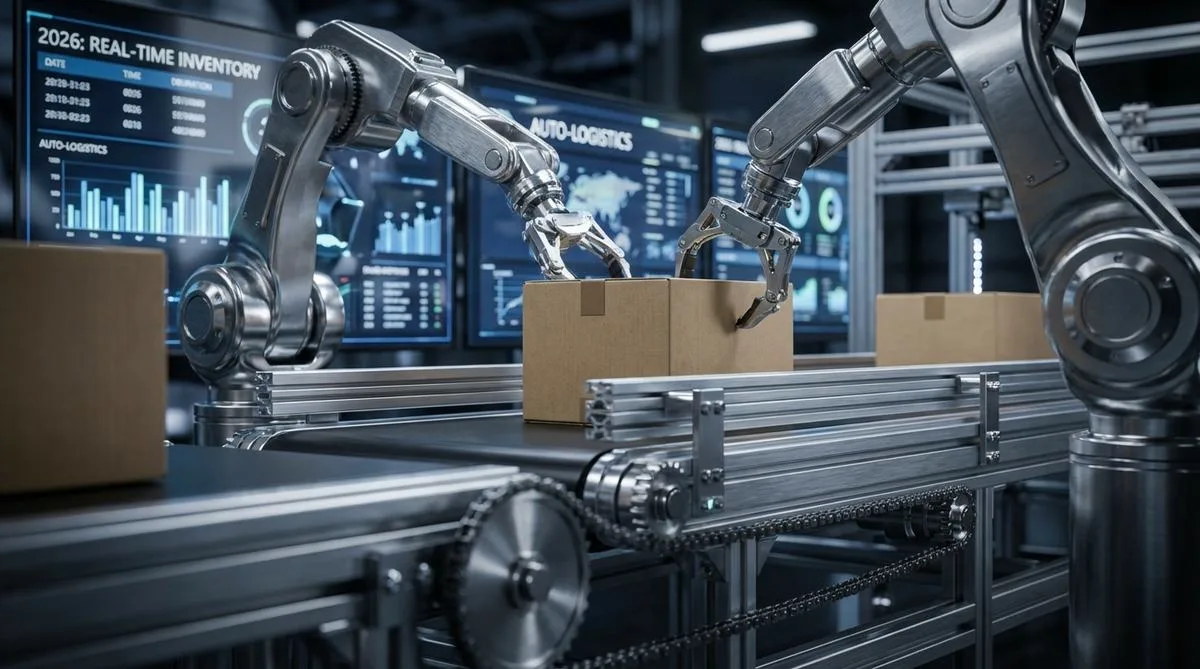
As customers demand faster and more precise services, automation is gaining in importance. Thanks to integrated management systems, real-time inventory tracking and automated ordering are becoming the norm. One example is the use of robots in the packing process, which significantly reduces order fulfillment times and minimizes errors. Automation not only improves operational efficiency but also enables better use of warehouse space, which is critical in the face of rising rental costs.
In the context of technological development, 2026 is shaping up to be a turning point for the logistics industry. Companies must adapt to changing market needs by implementing innovative solutions that address the challenges of supplier integration and data analysis. Automation, as an element of digital transformation, will certainly shape the future of warehouse logistics, transforming it into a more organized and automated sphere of business.
The Application of Technology in Warehouse Automation
In the digital age, warehouse automation is becoming a key element of the operational strategies of logistics companies. One of the most important aspects of this transformation is the use of robotic technology. Robots, such as autonomous guided vehicles (AGVs) and pick-and-place robots, play a significant role in increasing operational efficiency. For example, in large distribution centers, robots can work 24 hours a day, eliminating the need for employees to perform simple tasks, which allows staff to focus on more complex operations.
Supporting automation processes, warehouse management systems (WMS) are becoming an indispensable tool. With advanced features such as real-time goods location tracking, WMS enables the optimization of picking routes and effective inventory management. In 2026, companies that invest in such systems will be able to significantly reduce shipping errors and order fulfillment times, directly impacting customer satisfaction.
Another key aspect is artificial intelligence (AI). AI supports the analysis of warehouse data, identifying patterns and predicting demand for goods. Through integration with other systems, AI can also automate decision-making processes, which in turn accelerates purchasing processes and increases goods traceability. Companies that implement these technologies will gain a competitive advantage in the market, and their operations will be more flexible and better adapted to changing conditions.
The Benefits of Warehouse Automation
Warehouse automation brings a range of benefits that are crucial to the operational efficiency of logistics companies. First and foremost, it increases operational productivity, which is essential in the face of growing customer demands for delivery speed. Through the use of robots and warehouse management systems (WMS), processes such as order picking and packing become significantly faster. For example, one logistics company that implemented robots for order picking managed to reduce order fulfillment times by 40% compared to traditional methods.
Another significant benefit is the reduction of errors in the ordering and shipping process. Introducing automation minimizes the risk of mistakes, which translates into lower financial losses and higher customer satisfaction. In fact, organizations that have invested in automation technologies report a drop in shipping errors of over 90% compared to previous years. This significantly impacts customer loyalty and the company's market reputation.
It is also worth highlighting that automation enables better use of warehouse space. Thanks to intelligent space-mapping systems, warehouses can be optimized for goods storage, leading to savings on space rental costs. As a result, companies can reinvest the saved funds in further technological development and innovation. A prime example is a leading electronics distributor that, through automation, increased its operational efficiency by 30% and reduced warehouse costs by 20% within a year.
Challenges Associated with Warehouse Automation
Implementing automation in warehouses, despite its numerous benefits, involves a range of challenges that must be carefully considered. First and foremost, the high upfront costs of investing in automation technologies can place a significant burden on a company's budget. Purchasing robots, warehouse management systems (WMS), and IT infrastructure requires substantial financial outlay. One example is a distribution company that invested a significant portion of its budget in automation, which initially affected its cash flow.
The second key challenge is the need to train employees. As new technologies are introduced, staff must be properly prepared to operate automated systems. Many companies struggle with resistance from employees who fear losing their jobs or are reluctant to learn new skills. It is therefore important to invest in training programs that help employees feel more confident in the new work environment.
One must also not overlook change management. Introducing automation requires changes in work organization and company culture. Companies must effectively communicate the benefits of implementations in order to minimize resistance to new technologies. Poor management of this process can lead to a drop in team morale and reduced operational performance. It is therefore essential that leaders of automation projects are prepared for these challenges and are able to effectively manage the transformation process.
The Future of Automation in Warehouse Logistics
The future of automation in warehouse logistics appears to be extremely promising, with numerous innovations that have the potential to revolutionize the way warehouses operate. In particular, the Internet of Things (IoT) plays a key role in monitoring warehouse processes. Through the use of smart sensors, companies can track inventory status in real time, enabling more effective supply chain management. One example is a logistics company that implemented IoT systems and increased its operational efficiency by 25% thanks to better forecasting of warehouse needs.
Another significant trend is the growth of robotics. Autonomous robots capable of performing tasks such as order picking and internal transport are becoming increasingly common. By 2026, it is predicted that more than 50% of warehouse operations will be automated, contributing to a significant reduction in operating costs and an increase in order fulfillment speed. A leading electronics distributor that invested in goods transport robots managed to reduce order fulfillment times by 40% compared to traditional methods.
The last, but by no means least important trend, is the development of artificial intelligence (AI) technology in warehouse data analysis. AI enables advanced demand forecasting and process optimization, which translates into faster decision-making and better inventory planning. Through the integration of AI with WMS systems, companies can reduce order errors, improving customer satisfaction and fostering greater loyalty. In the future, we can expect even more advanced solutions that will make warehouse logistics more flexible and resilient to market changes.
Automation in Practice: Case Studies
In recent years, many companies in the logistics industry have chosen to implement automation, reaping significant benefits as a result. One example is an international logistics company that invested in warehouse management systems (WMS) and robotics for internal transport. Thanks to these solutions, order fulfillment times were reduced by 35%, and errors in product picking were cut by 90%. These systems also enabled better integration with suppliers, contributing to a significant increase in operational efficiency.
Another interesting case is a large food industry manufacturer that implemented IoT technology to monitor inventory levels. Thanks to smart sensors, the company was able to automatically place orders for raw materials as soon as stocks reached a critical level. This not only minimized the risk of production downtime but also resulted in significant cost savings associated with excess storage.
It is also worth mentioning a leading electronics distributor that chose to robotize its order picking processes. The implementation of autonomous robots contributed to a 50% increase in customer service speed, which significantly improved end-customer satisfaction. Analyzing these cases, it is clear that the key to success lies not only in the technology itself but also in proper management and employee training, which ensures a smooth introduction of innovations.
Conclusion: Key Takeaways and Recommendations
In summary, warehouse automation in 2026 is becoming not merely an option, but an outright necessity for companies wishing to remain competitive in the market. Many organizations that have already implemented these innovative solutions are reporting significant benefits, such as increased efficiency, reduced errors, and improved customer service quality. Examples of companies that have embraced automation show that it is an investment that pays for itself quickly.
One of the key takeaways from the trend analysis is that real-time inventory tracking allows for continuous monitoring of warehouse stock levels. This enables logistics directors, such as Krzysztof Dąbrowski, to make informed ordering decisions, eliminating the risk of downtime caused by stock shortages. Automation systems also generate reports that facilitate demand analysis and forecasting, which translates into better inventory management and cost optimization.
Attention should also be drawn to automated ordering, which is a key element in eliminating issues related to critical inventory levels. Through integration with suppliers, the ordering process becomes smooth and seamless, which in practice means the company is able to maintain continuity of production and deliveries. The growing demands of customers regarding delivery times present logistics directors with an additional challenge that automation can effectively address.
We recommend that companies that have not yet opted for automation invest in technologies that can bring them tangible benefits. The critical first step is to begin with an analysis of the organization's own needs and identify areas that can be automated. It is also worth considering collaboration with technology providers who offer solutions tailored to the specific requirements of the TSL industry.
As a next step, when implementing automation, we must not neglect employee education and training. Without the right knowledge and skills, even the most advanced systems may fail to deliver the expected results. Training should cover both technical information and the practical aspects of working with new tools and systems.
Finally, it is worth emphasizing the need for ongoing analysis of the effectiveness of implemented solutions. Monitoring results after automation will allow for continuous process adjustment and the introduction of any necessary improvements. In the long term, investments in automation will not only contribute to increased operational efficiency but also to building a competitive advantage — which is essential in the rapidly changing logistics market.


