
Technical Debt – What Is It and Why Does It Pose a Threat to Businesses?
📋 Table of Contents
- Definition of technical debt and its causes
- How does technical debt affect business growth and scalability?
- Examples of companies that suffered due to technological backlogs
- Symptoms of technical debt – how to recognize that your company has a problem?
- Slow system performance and rising infrastructure maintenance costs.
Technical debt is a term that may seem abstract, but its consequences for the functioning of modern organizations are very real and can be devastating. This article will explain what this type of backlog is, what causes it, and why you should regularly monitor and modernize your IT systems. When preparing a development plan for your company, you cannot ignore the risks that arise from technological neglect, which can limit the scalability and stability of your business. We will also look at real-world examples of organizations that paid the price for making changes too late. We will discuss what symptoms should concern you so that you can counteract growing technical debt in time.
-
Definition of technical debt and its causes
-
How does technical debt affect business growth and scalability?
-
Examples of companies that suffered due to technological backlogs
-
Symptoms of technical debt – how to recognize that your company has a problem?
-
Slow system performance and rising infrastructure maintenance costs.
Definition of technical debt and its causes
Technical debt essentially refers to missing improvements in an organization's IT infrastructure and internal systems. This concept illustrates the technical and operational backlogs that accumulate as companies postpone necessary updates and modernizations. This neglect can lead to serious problems, such as increased costs of maintaining legacy systems, reduced flexibility, and security risks.
The causes of technical debt encompass various aspects, including:
– Budget cuts – often resulting from a focus on achieving quick financial gains at the expense of strategic planning and sustainability. Although short-term savings may seem advantageous, they can ultimately lead to higher expenditures.
– The rapid pace of technological change – technology evolves at an express pace, which means systems can become outdated even before they are fully implemented. Organizations sometimes struggle to keep up with this pace, resulting in technological backlogs.
– Lack of specialized expertise – frequent changes in IT teams or underfunding of technical departments, leading to a shortage of the skills required to maintain and modernize systems.
– Decision-making without full analysis of consequences – both the purchase and implementation of technology without a thorough assessment of potential consequences draw organizations into spirals of unplanned obligations and complications.
One must also not forget the role of legacy systems, which are still widely used despite no longer meeting current standards for functionality or security. Organizations often maintain these systems because they fear the high costs and complex process of transitioning to newer solutions. As they rely on temporary fixes, technical debt grows, which can later affect the stability and flexibility of business operations.
Continuous monitoring and evaluation of IT strategy is important and can help prevent the accumulation of technical debt. Organizations should have an annual remediation business plan in place that must include a technology component, particularly in the context of evaluating legacy systems and planning their updates.
How does technical debt affect business growth and scalability?
Technical debt has a direct impact on the growth and scalability of any business. When struggling with outdated systems or inefficient processes, organizations may encounter numerous obstacles. Here are the key ways in which technical debt can hinder a company's growth and expansion:
-
Increased maintenance costs: Outdated solutions often require more time and resources for upkeep and servicing. Unlike modern technologies, legacy systems can generate higher operational costs.
-
Reduced flexibility: Scaling operations is essential for growth. Unfortunately, systems burdened with technical debt typically offer less flexibility. Nevertheless, companies need to respond quickly to market changes, something that older technologies frequently make impossible.
-
Barrier to innovation: Legacy platforms not only limit the introduction of new features but can also stifle innovation. Newer technologies, as the European Commission emphasizes, foster the creation of added value and the development of competitiveness.
-
Security risks: Modern cybersecurity is a critical aspect of every company's operations. Unfortunately, older systems are often less resilient against contemporary threats, which can lead to serious security breaches.
-
Integration challenges: Integrating new solutions with existing, outdated systems can be problematic. This becomes especially apparent when interoperability with modern applications and services is required. In this way, technical debt limits the possibilities for developing new functionality.
While companies strive for faster growth and greater scalability, they cannot afford to overlook the impact of technical debt. For this reason, it is worth modernizing legacy systems to ensure the opportunity to fully leverage technological potential. Investing in technology now can yield significant benefits in the future, as demonstrated by the "2022 – Business Situation Review" report. It is therefore worth remembering that maintaining a modern IT infrastructure is just as important as investing in all other aspects of a company's operations.
Examples of companies that suffered due to technological backlogs
Clearly, neglecting to update technology can have serious consequences for any company. Here are some examples of organizations that suffered due to technological backlogs:
Blockbuster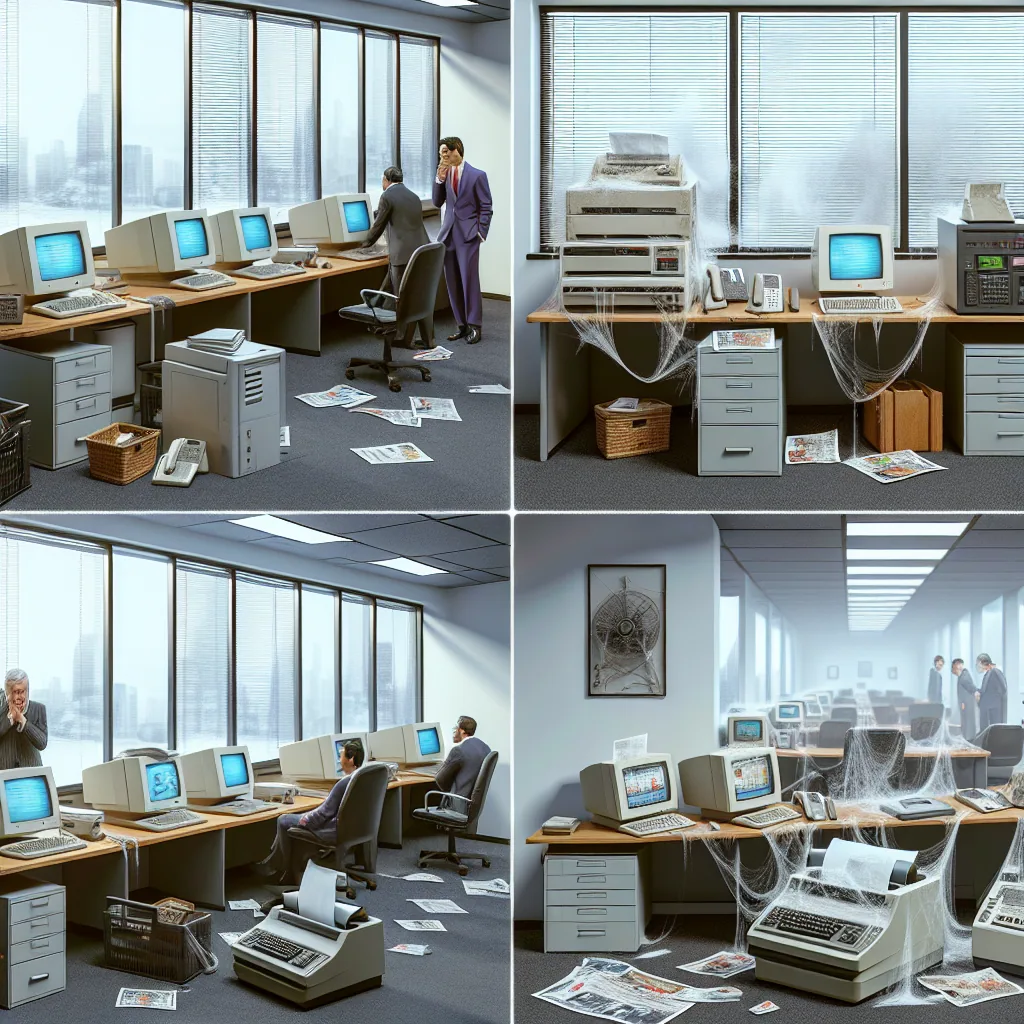
Blockbuster, once a giant in the video rental industry, failed to adapt to the digital revolution. Unlike its competitors, who quickly moved their services online, Blockbuster chose to stick with its brick-and-mortar locations. This negligence contributed to its downfall, as the company was unable to compete with streaming services such as Netflix.
Nokia
Nokia, despite being a market leader in mobile phones, failed to modernize its software in time and ultimately lost the competition to rival operating systems such as Android and iOS. This demonstrates how important flexibility and proper responsiveness to technological change are for maintaining a company's stability and continued operation.
Sears
The traditional retail chain Sears also found itself in a difficult position after ignoring the importance of e-commerce. While other companies were investing in online retail, Sears continued to focus on in-store sales. As a result, the company has struggled to regain its market position in the face of the dominance of players such as Amazon.
These examples clearly show that regardless of the industry in which we operate, continuous investment in technology is essential. Not only does this protect against a loss of competitiveness, but it also improves aspects related to control, security, and operational efficiency. For both large corporations and small businesses alike, such neglect can have a negative impact on the health of the organization._multipletext
Symptoms of technical debt – how to recognize that your company has a problem?
Recognizing the symptoms of technical debt is crucial not only for maintaining a company's operational stability, but also for ensuring competitiveness in the market. Here are several key indicators that may suggest your organization is suffering from this problem:
- Frequent system failures:
Technical debt often manifests as instability in IT systems. If you notice that your systems frequently crash or require restarting, this may be a sign that legacy solutions are no longer keeping up with the current demands of applications or data volumes.
- Rising maintenance and service costs:
Older systems require more time and resources to maintain. Increasing costs may be a signal that outdated technology is consuming a larger portion of the budget that could be more effectively spent on newer solutions.
- Difficulty implementing changes:
Unlike modern systems, legacy technology often makes every change time-consuming and costly. If you notice that simple tasks are growing into multi-stage projects, it is worth considering modernizing your systems.
- Lack of integration with new applications:
If your current systems do not integrate smoothly with new tools or applications available on the market, this may be limiting your operational efficiency and ability to scale.
- User complaints:
Listening to feedback from system users can provide invaluable information. Complaints about slow performance, errors, or difficulty navigating may indicate that the time has come for a technological upgrade.
- Data security issues:
Older IT systems are often less resilient against modern cyberthreats, which can expose your company to the risk of data loss or hacking attacks.
- Lack of vendor support:
If the software you are using is no longer supported by its vendors, this is a strong signal that the technology is no longer suited to current market requirements.
Recognizing these signals at an early stage will allow you to prepare a strategy that minimizes the negative effects of technical debt, while simultaneously improving the efficiency and flexibility of your company.
Slow system performance and rising infrastructure maintenance costs.
IT systems become less efficient with age, and their maintenance grows increasingly costly. Here are the key causes and effects that contribute to slowing system performance and rising infrastructure costs:
Growing inefficiency:
· While newer software is regularly updated, legacy systems remain unchanged. In the same way, companies today face the challenge of maintaining older technologies that are not adapted to modern needs.
Rising maintenance costs:
· Maintaining outdated systems is costly both in financial terms and in terms of the time demands placed on IT teams.
· Heavy expenditure on servicing and the need to hire specialists in legacy technologies, who often command higher salaries due to their unique skill sets.
Reduced operational flexibility:
· Outdated systems are typically less modular and more difficult to adapt to a changing business environment, which can limit opportunities for scaling and introducing innovations.
Susceptibility to errors and failures:
· The older the infrastructure, the greater the risk of failure, which can lead to disruptions in organizational operations. Furthermore, these issues can jeopardize data security.
Challenges in risk prevention:
· Securing older systems against new threats is both difficult and costly, and often requires non-standard solutions.
Increased operational costs:
· Keeping legacy systems running requires ongoing investment in servicing, spare parts, and specialized expertise.
As biznes.gov.pl indicates, outdated systems can not only incur rising costs, but also restrict a company's growth in a rapidly evolving digital economy. For this reason, it is worth modernizing IT infrastructure in order to improve its performance and reduce ongoing operational costs. In the meantime, despite the significant challenges involved, modernization can be a key element in maintaining the competitiveness and operational stability of any contemporary organization.


