
Introduction: The Anatomy of Delays and Chaos in Non-Scalable B2B Sales
Introduction: The Anatomy of Delays and Chaos in Non-Scalable B2B Sales
Today's market is unforgiving of delays, and the line between retail and business customer service standards blurs a little more each year. We are witnessing a phenomenon known as the Amazon B2B effect – buyers now expect instant quotes, flawless fulfillment, and immediate delivery, in exactly the same way they shop in their personal lives. For many mid-sized trading and distribution companies, meeting these demands has become an enormous technological and operational challenge.
The root cause of this situation lies in deeply entrenched information silos. In the traditional model, the sales department operates in its own environment – often relying on spreadsheets or a basic system – while the warehouse and finance teams work from an entirely different database. The absence of a smooth flow of information between sales and the warehouse is a recipe for delays. A sales rep promises a customer a delivery date based on outdated stock levels, while operations only learns about the order hours later.
Data silos not only lengthen order fulfillment times – more importantly, they drastically undermine a company's credibility in the eyes of its key business partners.
To fully grasp the scale of the problem, the sales process must be viewed holistically, through the lens of the Quote-to-Cash (Q2C) concept. This is a critical operational process covering the entire journey: from preparing the first quote, through negotiations and order acceptance, to warehouse fulfillment, invoicing, and payment posting. When the Q2C process is fragmented and requires manually re-entering data between systems, powerful bottlenecks emerge. Every such delay generates unnecessary operational costs and growing frustration on the buyer's side.
That is precisely why CRM and ERP integration is becoming a market requirement rather than a mere technological curiosity. Only a coherent environment in which a CRM for B2B sales communicates seamlessly with a modern cloud ERP system unlocks the full potential of B2B automation. In the sections that follow, we will analyze an ERP case study of a leading electronics distributor that, by eliminating silos, dramatically shortened its service cycle and revolutionized its operational processes.
The Operational Challenge: A Dead End in Cross-Departmental Information Flow
The Operational Challenge: A Dead End in Cross-Departmental Information Flow
To fully appreciate the gravity of the problem, let us examine the starting point of a leading industrial components distributor. Despite impressive revenue growth and an expanding B2B client portfolio, this company had hit an invisible operational ceiling. From the perspective of the Chief Operating Officer (COO) and the Chief Sales Officer (CSO), the company's day-to-day functioning resembled a constant battle of firefighting rather than the strategic management of business processes.
The primary culprit turned out to be a complete lack of technological synergy. The sales department was successfully using a CRM for B2B sales to manage relationships, but this system was entirely cut off from the operational back-end. Sales reps negotiating multi-million contracts suffered from a fundamental inability to access up-to-date stock levels and dynamically changing wholesale price lists.
In practice, this meant that salespeople frequently based their quotes on outdated files or, worse still, on their own intuition. The consequences were numerous pricing errors and promises made to clients that simply could not be kept. When a sales rep confirmed the availability of a scarce component, that batch might already have been reserved by another branch, leading to delays that were deeply damaging to the company's reputation.
Manual Processing and Growing Error Risk
Another critical stage at which the process lost momentum was the moment of finalizing a transaction. Accepting a quote in the sales system triggered no automated logistics processes whatsoever. Instead, orders had to be manually re-entered from the modern environment into an outdated ERP system that belonged to a previous decade.
- Decision-making bottlenecks: Every non-standard order required multiple email consultations between sales and the warehouse, drastically extending response times.
- The human error effect: Manually entering hundreds of product lines per day inevitably produced mistakes in product codes, variants, and quantities.
- Picking errors: Warehouse staff, working from incorrectly entered data, dispatched wrong components to customers, dramatically increasing reverse logistics costs.
The information dead end meant that instead of scaling the business, management was spending valuable hours resolving problems caused by poor communication between systems.
Month after month, the picking error rate climbed and total order fulfillment times stretched to unacceptable levels. From the perspective of B2B customers who demanded absolute predictability, the distributor was becoming a high-risk partner. It was becoming clear that without eliminating the silos and deeply integrating both environments, further growth would simply be impossible.
Solution Architecture: The Synergy of CRM and a Cloud ERP System
Replacing outdated, isolated tools with a modern ecosystem required a radical shift in the approach to IT infrastructure. In the company in question, the turning point was a full CRM and ERP integration that eliminated the existing bottlenecks. The decision to implement an advanced CRM for B2B sales and connect it to a modern operational back-end opened the door to unprecedented process optimization.
A key element of the new architecture was the strategic choice of an environment built entirely on cloud computing technology. The deployed cloud ERP system guaranteed not only the highest level of data security, but above all the flexibility and scalability that had been so sorely lacking in older on-premise solutions. The cloud architecture gave the company the ability to dynamically scale resources during peak sales periods, without incurring costly investments in physical servers. This innovative approach made the ERP case study a model example of digital transformation for other distributors in the market.
The technological foundation underpinning the smooth flow of information was a set of modern application programming interfaces (APIs). It was these high-performance, bidirectional APIs that served as the solid virtual bridge connecting front-office operations with back-office processes. In this way, B2B automation reached an entirely new operational level. The API-based architecture made it possible to automate three critical areas:
- Order management: flawless and instantaneous transfer of data from accepted quotes directly into warehouse orders.
- Price list updates: automatic refreshing of complex discount matrices based on current logistics costs.
- Credit control: immediate blocking of a sales rep's ability to place an order in their panel whenever the financial system detects overdue payments.
The implementation of the Single Source of Truth (SSOT) principle means that customer records, individual wholesale price lists, purchasing limits, and stock levels are fully centralized and synchronized in real time.
Applying the concept of a single source of truth proved to be an absolute business breakthrough. In practice, it means that a sales rep in the middle of a tough negotiation sees exactly the same component availability information in their system that the warehouse manager is working with at that very second. This consistent architecture completely eliminates the risk of making promises that cannot be kept, and provides a solid foundation for building lasting, transparent relationships with key business partners.
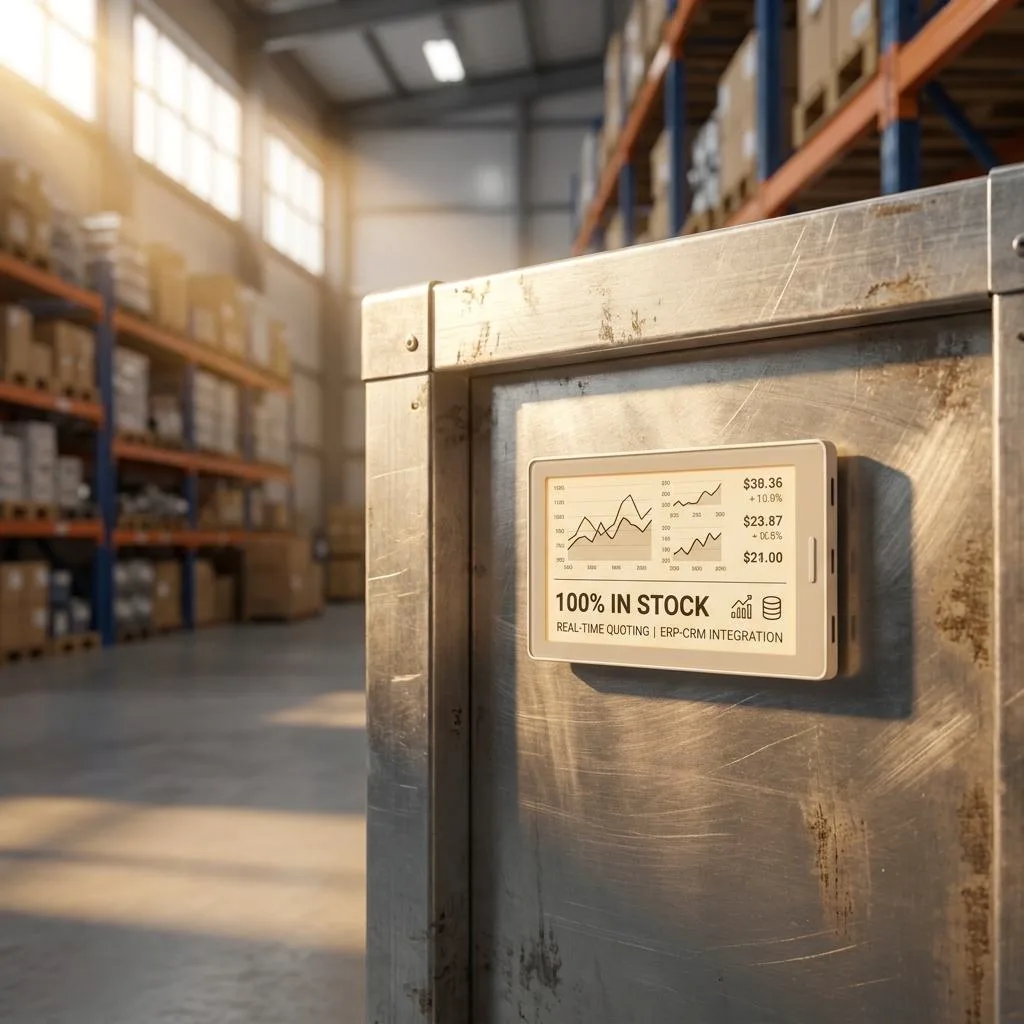
A Revolution in Quoting: Lightning-Fast Pricing Powered by Real-Time Data
The first and absolutely critical stage of the Quote-to-Cash cycle is preparing a commercial quote. In modern B2B trade, the speed of response to a request for quotation often determines whether a contract is won or lost. Before the leading electronics distributor mentioned earlier committed to its technology transformation, this process felt like navigating through fog. Sales reps were losing valuable hours verifying product availability and manually recalculating margins. The situation changed dramatically once a full CRM and ERP integration was implemented.
With the systems connected, sales reps gained direct access to advanced pricing algorithms and discount policies right within their CRM for B2B sales interface. They no longer need to log into separate financial applications or exchange dozens of emails with the controlling department. The modern cloud ERP system sends each customer's individual commercial terms to the CRM in real time – including assigned wholesale price lists, purchasing limits, and historical transaction data. This enables instant and, crucially, error-free generation of a price proposal.
Another breakthrough was the complete elimination of the "selling empty shelves" phenomenon. Previously, the absence of up-to-date stock data led to situations where sales reps promised customers goods that were no longer physically in stock. Now, thanks to live stock level visibility, every item added to a quote is instantly verified for availability. The sales rep can see not only the current stock on hand, but also goods in transit and batches reserved by other departments.
Real-time data integration is not just a convenience – above all, it is a powerful competitive advantage. The customer receives a binding, precise quote in minutes, not days.
How did these changes translate into hard figures? Post-implementation analysis showed that B2B automation in the quoting area delivered spectacular results. The time required to prepare a complex, multi-line quote – often covering dozens of unique material numbers – was reduced by an unprecedented 60%. Instead of tediously copying data, the system automatically pulls in all technical parameters, prices, and lead times, generating a polished, professional PDF document. For sales and operations directors, this means a radical increase in the throughput of the sales department without any need to expand headcount.
Eliminating the Bottleneck: Automatic B2B Order Conversion
In any fast-growing distribution business, the transition from commercial negotiations to the physical fulfillment of a delivery represents a critical point in the supply chain. In the traditional model, this is precisely where the biggest bottleneck formed, paralyzing the smooth handling of customers. Thanks to full CRM and ERP integration, this pivotal stage has been completely redesigned. True B2B automation reveals its potential in the fraction of a second when a sales rep – or the customer themselves – accepts the final terms of the deal.
The key mechanism driving this transformation is touchless conversion of a won sales opportunity. When a transaction's status changes to "Closed Won" in the CRM, an advanced data flow based on APIs is triggered. The modern cloud ERP system receives this signal instantly, with no human intervention whatsoever. This completely eliminates the need for the back-office sales support team to tediously re-enter order data by hand – a task that previously consumed valuable working hours.
Three Pillars of Touchless Fulfillment
Removing the human factor from the information transfer stage delivered measurable operational benefits that immediately showed up in performance metrics. The systems communicate with each other in real time, guaranteeing full operational consistency. The most significant aspects of this automation include:
- Instant stock reservation: A fraction of a second after a quote is accepted in the CRM, the ERP system makes a hard reservation of the goods, preventing them from being double-sold by other sales reps.
- Protection against errors: The automatic transfer eliminates the risk of mistakes in complex product codes, product variants, and delivery addresses – details that were frequently corrupted during manual re-entry.
- Touchless document generation: The operational system independently creates a goods issue note and compiles instructions for the logistics department.
With an architecture designed this way, warehouse staff receive accurate, error-free picking instructions the moment a sales rep virtually closes the deal with a customer. There is no longer any room for typos in serial numbers or pallets shipped to the wrong branch address.
From an operations director's perspective, automatic order conversion is not just a time-saver – above all, it is a drastic reduction in the costs associated with reverse logistics and claims arising from human error.
Implementing this solution transformed the CRM for B2B sales from a mere digital notebook into a fully-fledged command center for logistics processes. A won sales opportunity silently initiates the physical movement of goods, allowing the company to scale its order volume without a proportional increase in administrative headcount.
Operational Transparency: Order Fulfillment Tracking for Sales Reps
Operational Transparency: Order Fulfillment Tracking for Sales Reps
Many managers mistakenly assume that digital transformation ends the moment a fulfilled order moves from the sales environment to the operations department. In reality, full CRM and ERP integration is a strictly bidirectional process. The ERP case study of the leading electronics distributor discussed here clearly demonstrates that true business value only emerges when data from the warehouse and accounting begins flowing back to the sales team.
A key achievement of the implementation was the bidirectional synchronization of operational data. As a result, all status updates from warehouse management systems (WMS) and financial systems are immediately visible within the interface provided by a modern CRM for B2B sales. Sales reps no longer need to call the shift manager or send dozens of emails asking about the status of a pick. They can see in real time whether a pallet is being packed or is already waiting at the loading dock.
Full visibility of the logistics process within the CRM fundamentally shifts the customer service model from reactive to fully proactive.
This level of transparency enables an unprecedented improvement in service quality. The integrated cloud ERP system instantly reports any anomalies. If a shortage of a component causes a delay on the picking line, the account manager is the first to know. They can notify the customer of the schedule change before the customer even thinks to ask about the delivery status – which builds enormous trust in business relationships.
Advanced B2B automation also covers the final stages of the order lifecycle. The moment an invoice is generated in the accounting module or a courier scans a waybill, the systems automatically exchange information. The CRM independently sends a notification to the customer, attaching the sales documents and a shipment tracking link.
For operations directors (COO) and sales chiefs (CSO), this architecture means a radical reduction in costs. Customer service and logistics departments have been completely relieved of routine internal inquiries. Eliminating this communication noise was one of the main factors that enabled total order fulfillment time to be cut by an impressive 40 percent. As a result, the company gained not only speed but also greater scalability of its operations during peak demand periods.
Measurable Business Results: Breaking Down the 40% Time Saving
When technology connects seamlessly with operational processes, the results speak for themselves. The ERP case study of the leading electronics distributor perfectly illustrates how a strategic approach to IT architecture can transform an entire business. An impressive 40% reduction in the Order-to-Delivery cycle time was achieved. To fully understand this phenomenon, we need to break that result down into its component parts.
The Anatomy of the Time Saved
Where exactly did this acceleration come from? First and foremost, full CRM and ERP integration eliminated so-called "dead hours." Previously, orders would wait to be manually booked by the back-office sales support team, delaying the start of picking by up to a full day. Today, B2B automation ensures that an order reaches warehouse terminals in a fraction of a second after customer acceptance. The credit verification process was also optimized – the system handles it in the background, without the involvement of financial analysts.
A 40% reduction in the Order-to-Delivery cycle is not just a faster parcel reaching the customer. It means optimized working capital, faster invoicing, and a dramatic drop in the storage costs of fast-moving stock.
A 95% Reduction in Errors as the Foundation of Profitability
Speed would be meaningless without accuracy. Before the implementation, incorrect data flows between departments resulted in picking errors. It was not uncommon for a customer to receive the wrong product model or an incorrect quantity. The modern cloud ERP system connected to the CRM for B2B sales reduced the number of picking errors by a remarkable 95%. Every material number, order note, and packaging specification now flows without distortion directly into the warehouse management system (WMS).
The impact of this on the company's financial metrics is enormous. The costs of reverse logistics, repackaging, and claims handling have been eliminated. Employees who previously spent their time firefighting and correcting invoices have been reassigned to tasks that generate real added value for the company.
Growth in Customer Satisfaction (CSAT) and Loyalty
The ultimate and most important beneficiary of this digital revolution is the end customer. The reliability and predictability of deliveries translated directly into business relationships. Post-implementation measurements showed a significant jump in the Customer Satisfaction (CSAT) score. B2B clients valued the fact that the distributor had become a partner they could rely on even in the most critical market situations.
This newly built loyalty quickly made itself felt in the distributor's sales results. With an absolute guarantee of on-time, error-free delivery, business partners began placing ever-larger purchasing budgets with the company. This proved beyond doubt that a flawless and efficient back-office is the most powerful tool for supporting and driving modern sales.
Conclusion: An Integrated IT Ecosystem as the Foundation for Business Scaling
Today's market realities leave management teams with no illusions. True B2B automation has stopped being viewed solely as an optional competitive advantage and has become an absolute prerequisite for survival in a rapidly changing macroeconomic environment. The ERP and CRM case study presented here proves that scaling a business does not mean linearly increasing headcount in proportion to a growing order volume. The key to sustainable growth is building a coherent IT environment that handles increased throughput seamlessly, without generating additional operational costs.
From a management perspective, technology must be treated as a tool that is strictly subservient to business objectives. Its primary role is the uncompromising elimination of all operational friction at the intersection of different departments. When a CRM for B2B sales and a warehouse-accounting system operate in silos, the organization suffers from a flow paralysis. An integrated IT ecosystem functions like a well-functioning circulatory system within the enterprise, where information about transactions, inventory levels, and payments circulates in real time, making the company resilient to human error and delays.
Where to begin? Strategic mapping of the Quote-to-Cash process
The most common mistake made by Chief Operating Officers (COOs) and Chief Executive Officers (CEOs) is attempting to implement technology before fully understanding their own processes. For this reason, the fundamental recommendation for every business leader is to begin the transformation with a thorough mapping of the Quote-to-Cash process — from quotation to payment. This is precisely the path along which the most margin and valuable time is lost. Understanding how information travels from the initial request for quotation, through negotiation and approval, all the way to warehouse fulfillment and the final posting of payment, is absolutely critical.
A Quote-to-Cash path audit makes it possible to identify hidden bottlenecks that routinely escape management's attention. It often turns out that seemingly trivial activities — such as manually re-entering product codes or verifying credit limits — consume dozens of hours each month. A properly designed CRM and ERP integration automates these steps, unlocking employees' potential. Instead of handling administrative tasks, they can focus on building relationships with key clients and engaging in proactive sales.
Rapid return on investment through cloud architecture
For Chief Financial Officers and CEOs, the key argument in any discussion about digital transformation is always the return on investment (ROI) timeline. Traditional, heavyweight on-premise system deployments often dragged on for years, frustrating organizations and tying up capital. Today, a modern cloud ERP system combined with a cloud-based sales environment completely changes this dynamic. The use of ready-made connectors and APIs enables different environments to be linked together rapidly, drastically reducing Time-to-Value.
The 40% reduction in B2B order fulfillment time described in this article is not merely an operational metric — it is hard cash. Faster fulfillment means faster invoicing, which directly improves the company's cash flow. Furthermore, cloud architecture provides cost flexibility and ensures that the system will scale alongside the business, without the need for costly server infrastructure upgrades in the future.
The decision to integrate key IT systems is today the most important strategic decision a business can make. Leaders who ignore the need for real-time data flow will quickly lose market share to more agile, automated competitors.
Take the first step: an audit of your IT ecosystem
If your sales team still needs to call the logistics department to confirm product availability, and order processing takes more than a few minutes, that is a warning signal. It means you are losing your competitive edge with every day of delay. Do not allow outdated IT architecture to hold back the potential of your team and limit your business's ability to scale.
We invite you to take the first, no-obligation step toward full automation. Contact our experts to schedule a free technology consultation, during which we will conduct a preliminary analysis of your Quote-to-Cash process. We also encourage you to download our comprehensive guide for C-level executives: "The Architecture of Profit: How to Seamlessly Integrate CRM with ERP," which includes ready-to-use implementation checklists and detailed ROI calculations.


